REVIEW · SEOUL
(Small Group) Palace & Seoul Old Town Highlights
Book on Viator →Operated by Honey Trail · Bookable on Viator
Seoul can feel big fast, so I love tours that help you stitch it together. This (Small Group) Palace & Seoul Old Town Highlights outing is built for a tight schedule: you hit classic Joseon-era sights on foot and still come away knowing where to go next.
Two things I especially like are the small group size (max 10) and the way the guide, Lee, mixes palace-level context with everyday Korea. For one possible drawback, this is still a walking tour—if you’re sensitive to lots of steps or want a slower pace, plan for that.
I also like that the most important paid entry—Gyeongbokgung Palace—is handled for you, and the rest of the stops are framed so you can understand what you’re seeing, not just where to stand for photos. One consideration: the itinerary moves around central Seoul, so if the weather turns cold or rainy, you’ll want to dress for quick outdoor stretches.
In This Review
- Key Highlights at a Glance
- A Smart Way to See Joseon Seoul in 3 Hours
- Meet at Anguk Station: Why This Starting Point Helps
- Insadong First: Traditional Goods, Tea Houses, and Street Energy
- Jogyesa Temple: Calm in the Middle of the City
- Gwanghwamun Square: The Center of King Sejong and Yi Sun-sin
- Gyeongbokgung Palace: Joseon Power, Palace Layout, and Included Entry
- Bukchon Hanok Village: Why the Streets Matter
- The Guide Makes It: Lee’s History Plus Modern Korea Blend
- Value and Price: What $60.27 Really Buys You
- Who This Tour Fits Best (and Who Might Prefer Something Else)
- Should You Book This Palace & Old Town Highlights Tour?
- FAQ
- FAQ
- Where does the tour start?
- Does the tour end at the same place?
- How long is the tour?
- What is the group size limit?
- Is a ticket included for Gyeongbokgung Palace?
- Are admission tickets included for the other stops?
- Is this a walking tour?
- Do you need a paper ticket?
- What if the weather is bad?
- Can I bring a service animal?
Key Highlights at a Glance
- Small-group walking pace with a maximum of 10 people, keeping the experience personal
- Lee’s storytelling style, balancing Joseon history with facts about modern Korean life
- Gyeongbokgung Palace ticket included, so you don’t have to plan entry timing separately
- A tight route of classic anchors: Insadong, Jogyesa Temple, Gwanghwamun Square, Gyeongbokgung, and Bukchon
- Interactive moments like mini quizzes and traditional games that break up the walking
A Smart Way to See Joseon Seoul in 3 Hours
If you only have half a day in Seoul (or you’re saving the rest for shopping, food, or one big day trip), this tour is designed to give you a strong “mental map.” It strings together some of the city’s most recognizable history-heavy areas—Insadong, the Jogyesa Temple zone, the Gwanghwamun Palace-front area, and Bukchon’s hanok streets—so you can connect the dots between palace power, religious life, and the old neighborhood fabric.
The timing is also realistic: about 3 hours total. That matters because palace days can balloon when you add transit, ticket lines, and wandering. Here, the route is built to keep you moving efficiently, while the guide’s commentary gives you context as you go.
And because it’s a small group, you’re not stuck listening from the back of a large crowd. It’s the kind of setup where you can ask questions and get straight answers—something Lee is praised for in a big way, especially on how Korea works in daily life (not just what happened hundreds of years ago).
You can also read our reviews of more tours and experiences in Seoul.
Meet at Anguk Station: Why This Starting Point Helps
The tour starts at Anguk Subway Station (Exit 6, outside) and ends back at the same meeting point. That’s a quiet convenience win. Starting in Anguk puts you near several of Seoul’s “old town” layers already—so you’re not spending the first part of your day crossing the city just to reach the historic core.
From a practical standpoint, it’s also easier to build the rest of your day. After the tour, you can extend time in the surrounding neighborhoods without needing a new plan or a long commute home. And since the activity is near public transportation, you can stitch it into almost any Seoul schedule.
If you’re using a mobile ticket, you’ll also appreciate that you don’t have to manage paper vouchers. The tour uses a mobile ticket, which keeps the day simpler—especially if you’re already juggling directions on your phone.
Insadong First: Traditional Goods, Tea Houses, and Street Energy
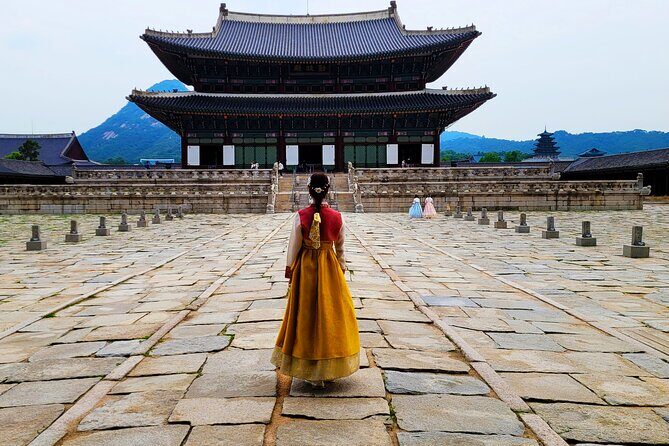
Insadong is the kind of place that can look touristy from the outside, but with the right orientation it becomes much more useful. This stop is a short walk into the Insadong area, known for traditional goods, restaurants, and tea houses.
What I like about opening here is that it sets a tone. You’re already in the old Seoul mood—crafts, antiques, and that slower market rhythm—before you jump into major historic institutions. It’s a “warm-up” stop where you learn how the neighborhood is used today, not just how it looked in the Joseon era.
Tip for your visit: even if you’re not shopping during the tour, use this as your bearings moment. You’ll be better at spotting where to circle back for tea, souvenirs, or snack breaks later, because the guide’s explanations help you recognize what you’re seeing.
Jogyesa Temple: Calm in the Middle of the City
Next is Jogyesa Temple, the head temple of the Jogye Order of Korean Buddhism. It’s founded in 1910 and functions as a calm sanctuary inside the city’s urban flow.
This stop works because it shifts your focus from royal architecture to religious space. Even if you don’t know much about Korean Buddhism, you’ll get a sense of how temple life fits into Seoul’s daily rhythm. And since the admission is listed as free here, it’s a low-pressure, no-additional-cost moment to slow down.
A practical way to enjoy this more: treat it like a reset. Stop, breathe, watch how people move through the grounds, and let the tour commentary tie it into what you’ll see at the palaces next. That contrast—temple quiet versus palace authority—helps the whole story click.
Gwanghwamun Square: The Center of King Sejong and Yi Sun-sin
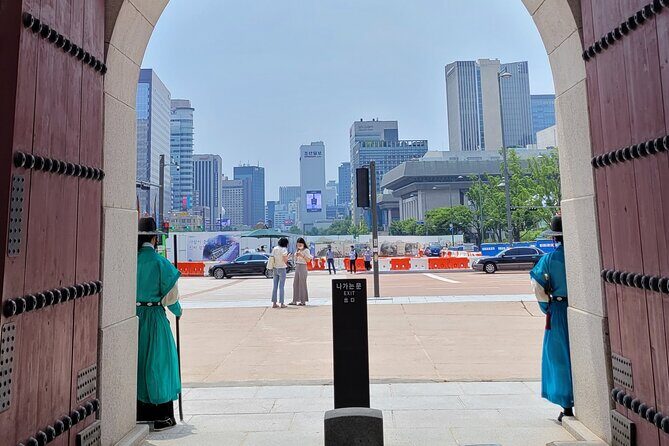
From Jogyesa, you move toward Gwanghwamun Square, a major public plaza in front of Gyeongbokgung Palace. This is where the tour becomes more obviously “history meets Seoul today.”
The square highlights major national figures—King Sejong the Great and Admiral Yi Sun-sin—so even if you’re not spending hours reading, you get pointed toward the cultural anchors Seoul wants you to remember. It also serves as a visual transition. You go from the reflective temple atmosphere into the civic-palace zone.
If you like photo stops, this is one of the easiest places to get oriented. But more importantly, it’s where you start understanding why the palace sits where it does—and how Seoul’s layout connects government identity to the physical city.



Gyeongbokgung Palace: Joseon Power, Palace Layout, and Included Entry
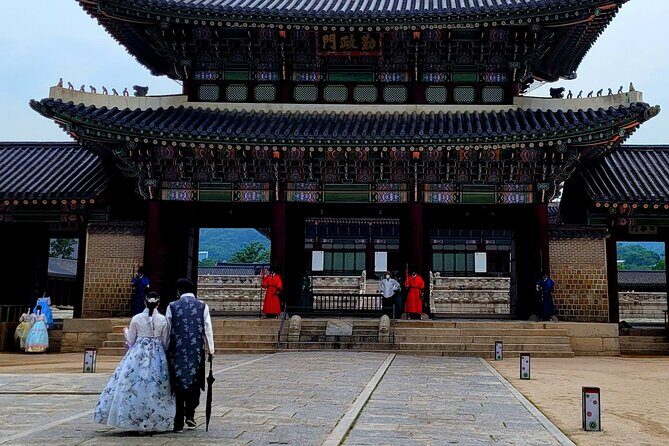
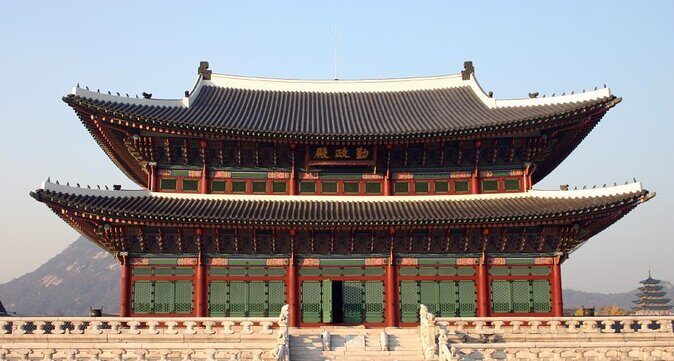
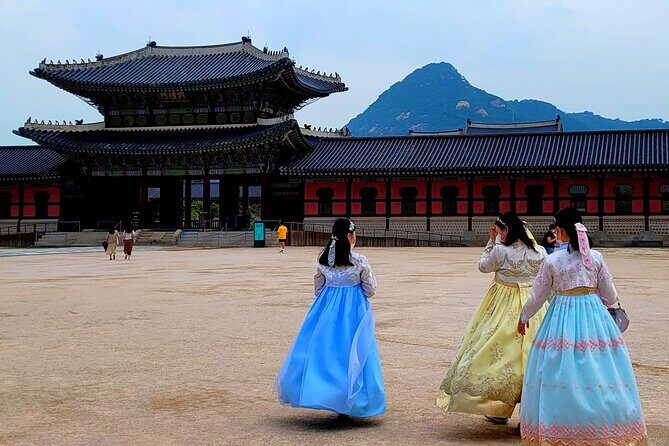
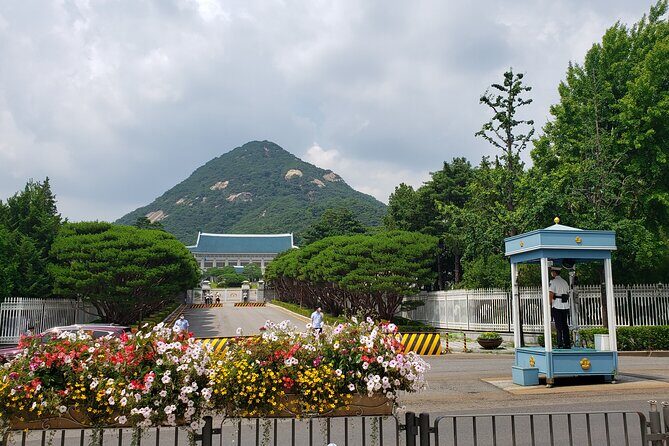
This is the heart of the tour. Gyeongbokgung Palace is the main palace of the Joseon Dynasty, built in 1395. The setting is described as mountains behind and the city in front, which gives you a clear sense of how landscape and power were designed together.
The big value point here: your Gyeongbokgung ticket is included. That matters because palace visits often turn into timing problems—do you buy ahead, do you wait, do you plan what order to see what? Here, that friction is removed, so you can focus on walking, looking, and understanding.
You’ll also spend about 1 hour 30 minutes at the palace area, which is enough time to get beyond surface-level wandering. With the guide’s explanations, you’re not just moving between buildings—you’re learning what each setting represents: authority, beauty, and Joseon-era philosophy.
One more thing I really appreciate: Lee’s style isn’t only lectures. In the positive feedback, you can see that she uses mini learning moments—like mini quizzes and traditional games during break times—to keep energy up. That kind of structure helps at a palace where the walls and courtyards can otherwise blur into one long visit.
Practical note: this is outdoors and you’ll be walking. Wear comfortable shoes and bring a light layer if it’s cool. Even if you’re only here for 90 minutes, it’s still a real visit, not a quick drive-by.
Bukchon Hanok Village: Why the Streets Matter
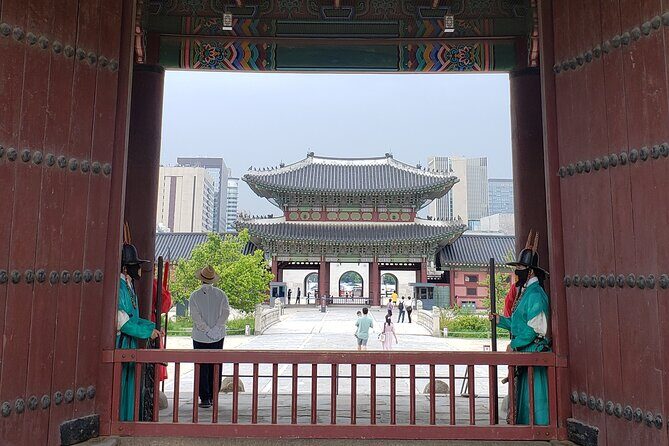
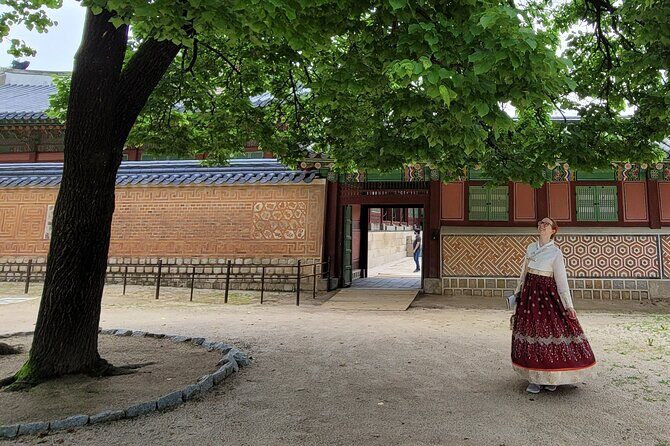
After the palace zone, you head to Bukchon Hanok Village, a historic neighborhood between two royal palaces. It’s known for hanok, the traditional Korean houses with distinctive architecture.
What makes Bukchon special on this kind of tour isn’t just the photo-worthy rooftops. It’s that you’re seeing a neighborhood form that helps explain how people lived alongside the power centers nearby. The tour description frames the area as part of Joseon life—winding alleys, traditional roofs, and that lived-in, historic street rhythm.
You’ll have about 30 minutes here. That’s short enough to avoid feeling trapped in endless backstreets, but long enough to notice details you might otherwise miss: the layout, the narrow lanes, and how the neighborhood sits between major landmarks.
If you love architecture, this is where your earlier palace context pays off. If you don’t, it’s still worth it because it’s the most “everyday Seoul history” stop on the route.
The Guide Makes It: Lee’s History Plus Modern Korea Blend
A tour like this can go one of two ways: either it becomes a list of landmarks, or it becomes a guided story you can actually use. This one lands closer to the second option because Lee focuses on both the past and the present.
In multiple reflections, Lee is praised for providing a strong balance of Joseon history and current Korean culture facts. That’s exactly what helps the palace visit become useful. Instead of treating history like a museum exhibit, you start connecting it to what’s still visible in Seoul’s habits and spaces.
You also get a clear sense that Lee is comfortable with questions. The feedback emphasizes her helpfulness when people ask about Seoul and Korea, and that patience matters on a walking tour where you might want to stop, ask, and take one more photo.
And yes, there are little interactive moments—mini quizzes and traditional games during breaks. That’s not just “fun.” It’s a practical technique: you remember what you just learned because it became a game, not a speech.
Value and Price: What $60.27 Really Buys You
At $60.27 per person, this isn’t a “grab-anything” deal, so I judge value based on what you don’t have to do.
First: you get a structured route through multiple major sites in a half-day window, which saves you time planning and transit hopping. Second: the Gyeongbokgung ticket is included, which is often the part that catches people off guard when they’re trying to coordinate palaces with sightseeing. Third: you’re paying for guidance—Lee’s commentary and the way she keeps the pace engaging (including interactive moments).
If you were to DIY this, you’d still spend time buying entry, mapping routes, and piecing together historical context from guidebooks. Here, you’re paying for the translation layer and the “how to look” help. For many first-timers, that’s where the money goes from cost to value.
Also, it’s booked on average 34 days in advance, which usually means the timing can be popular. If you know you’ll want it, don’t wait until the last minute.
Who This Tour Fits Best (and Who Might Prefer Something Else)
This works best if you:
- Want a high-coverage introduction to old Seoul without committing to a full-day itinerary
- Enjoy history when it’s explained clearly and connected to daily life
- Like small groups and an interactive guide style
It may not be ideal if you:
- Need a fully relaxed pace with lots of free time to wander without guidance
- Are not comfortable walking for most of the 3-hour block
Even then, if you’re flexible and pack water and comfy shoes, you can still make it work—you’ll just need to set expectations that the day is efficient, not slow.
Should You Book This Palace & Old Town Highlights Tour?
Yes, if you’re trying to make your limited Seoul time count. I’d book it if you want a well-paced route that covers Insadong, Jogyesa Temple, Gwanghwamun Square, Gyeongbokgung Palace (ticket included), and Bukchon Hanok Village, all in one go. The small group size and Lee’s mix of history plus modern culture facts are the main reasons this feels worth it.
I’d skip or consider alternatives if you strongly prefer a self-guided day or you need frequent breaks beyond what a normal walking tour provides.
FAQ
FAQ
Where does the tour start?
The tour starts at Anguk Subway Station, Exit 6 (outside).
Does the tour end at the same place?
Yes, the activity ends back at the meeting point.
How long is the tour?
It runs for about 3 hours.
What is the group size limit?
The tour has a maximum of 10 travelers.
Is a ticket included for Gyeongbokgung Palace?
Yes. Gyeongbokgung ticket is included.
Are admission tickets included for the other stops?
The listed admissions for Insadong and Jogyesa Temple are free.
Is this a walking tour?
Yes. It is described as a small-group walking tour.
Do you need a paper ticket?
No. You get a mobile ticket.
What if the weather is bad?
This experience requires good weather. If it’s canceled due to poor weather, you’ll be offered a different date or a full refund.
Can I bring a service animal?
Yes. Service animals are allowed.