REVIEW · SEOUL
Seoul Palace Morning Tour
Book on Viator →Operated by SEOUL CITY TOUR CO. LTD. · Bookable on Viator
Morning palaces in three hours? Sounds great. This Seoul Palace Morning Tour stacks Zen at Jogyesa Temple, a quick look at the Blue House area from the road, and the big royal sights at Gyeongbok Palace, with the changing of the guard at Gwanghwamun to close out your morning. It’s a smart way to get your bearings fast while seeing the highlights without getting stuck in transit all day.
I especially like the hotel pickup and the fact that entrance costs are handled for you, so you spend less time figuring out tickets and more time listening to the stories from the guide. The guide is often described as friendly and professional, and the tour is pitched as family friendly, which usually means explanations are clear and pacing stays manageable when everything runs on schedule.
One key consideration: the tour includes a ginseng center stop, and if you’re not into shopping, that extra time can feel like it takes away from the palace moments you actually came for.
In This Review
- Key highlights worth your morning
- How This 9:00 AM Seoul Palace Tour Fits Your Day
- Jogyesa Temple: Zen Roots, 500-Year Trees, and Sacred Architecture
- Blue House Pass-By: What You See When You Cannot Stop
- Gyeongbok Palace: The Joseon Spaces With Real Names
- The Korean National Folk Museum stop
- Gwanghwamun Gate and the Changing of the Guard
- Price and Value: What $40 Really Buys You
- The Guide, the Pace, and How to Make This Morning Work
- Should You Book This Seoul Palace Morning Tour?
- FAQ
- What time does the Seoul Palace Morning Tour start, and how long is it?
- Is hotel pickup included?
- Are entrance fees included?
- Is lunch included?
- Where does the tour end?
- Does the tour include a ginseng center stop?
- Can I cancel for free?
Key highlights worth your morning
- Jogyesa’s 500-year trees and main hall details: Locust and baeksong trees in front of the Daeungjeon, plus a main building described as built in 1938.
- Seven-storey stone pagoda in the temple grounds: A standout sight near the Daeungjeon area.
- Blue House pass-by without stopping: You can see it while traveling, but the security zone prevents a full stop or close-up viewing.
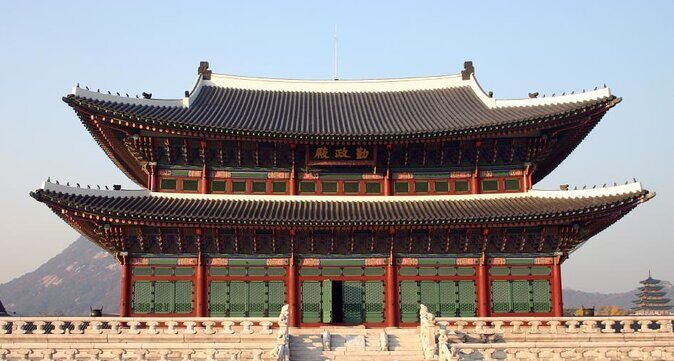
- Gyeongbok Palace interiors with named spots: Geunjeongjeon (throne hall), Sajeongjeon (king’s office), Gangnyeongjeon (king’s living quarters), and more.
- Gwanghwamun Gate changing of the guard: The south gate setting makes this feel like the finale of the whole Joseon story.
- Group tour pacing plus one shopping stop: You’ll move as a group, and the ginseng center stop is part of the structure.
How This 9:00 AM Seoul Palace Tour Fits Your Day
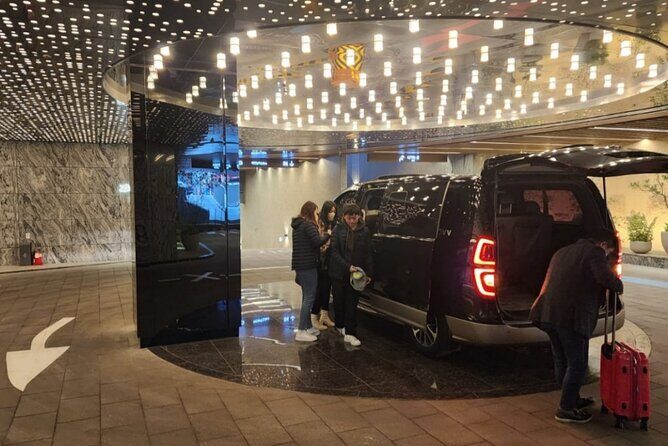
This tour is built for mornings, starting at 9:00 am and running about 3 hours. That matters in Seoul, because travel time and palace opening rhythms can eat up your day fast if you’re doing it solo. With pickup from your hotel and an air-conditioned vehicle, you lose less time to logistics and more time to the sights.
You’ll be in a group (up to 30 travelers), so this isn’t a slow, wander-at-your-own-pace kind of experience. The trade-off is efficiency: you hit multiple major landmarks that many first-timers try to cram into one day anyway. And the tour ends back in Seoul near City Hall (drop-off at City Hall, not your hotel), which is convenient if you want to keep exploring after you’ve seen the palace core.
It’s also priced at $40 per person, which is not just about the bus ride. The tour includes the big-ticket friction points: hotel pickup, driver/guide, air-conditioned transport, and entry fees for the included attractions. If you hate surprise ticket lines, this “we handle it” setup is part of the value.
A few more Seoul tours and experiences worth a look

Jogyesa Temple: Zen Roots, 500-Year Trees, and Sacred Architecture
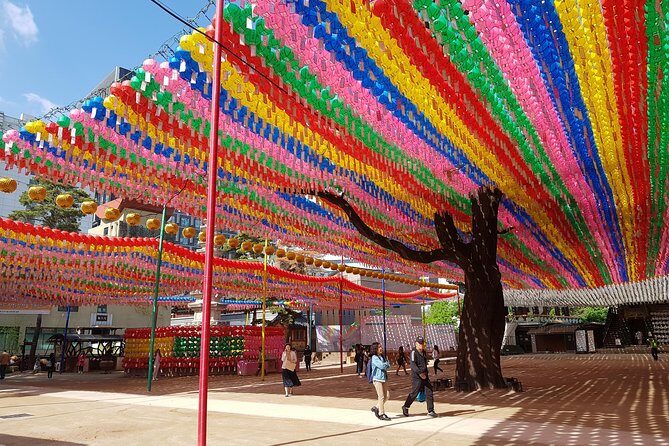
Your morning begins with Jogyesa Buddhist Temple, a central place for Zen Buddhism in Korea. This stop is more than a scenic warm-up. You start with a few specifics that help you “read” the space instead of just walking through it.
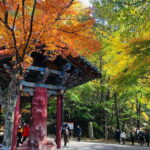
Right in front of the main building (Daeungjeon) you’ll see locust trees and baeksong trees, described as about 500 years old. One of those trees, the baeksong, is designated as a Natural Monument, which gives you a real sense of how long this area has mattered. It’s one of those details that turns a temple courtyard from pretty to meaningful.
The Daeungjeon building itself is described as built in 1938, and it’s noted for its colorful painted exterior. Inside, you can see the statue of Seokgamoni, so there’s at least one moment where you get a clear focal point beyond the yard and pathways.
Then there’s the seven-storey stone pagoda in the temple grounds, linked with Jinsinsari. In a short tour, that kind of named landmark helps you remember what you actually saw later when you’re comparing photos back at your hotel.
Practical note: temples can be busy and quiet at the same time, so dress respectfully and keep your pace steady through the courtyards. If you’re traveling with kids, this is usually a good stop because it’s tangible and visually clear: trees, halls, statues, and pagodas.
Blue House Pass-By: What You See When You Cannot Stop
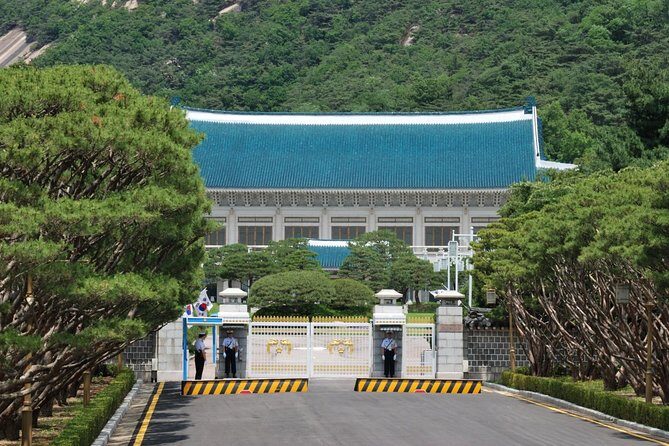
After Jogyesa, the tour heads toward Gyeongbok Palace and includes a pass-by of the Blue House area (the President’s residence). Here’s the reality check that shapes expectations: because it’s a security area, the group cannot stop in front of the Blue House. That means no extended viewing time and no close-up wandering.
Instead, you’ll get a roadside view while you’re traveling to the palace zone. Even if you can’t linger, this still works as context. The Blue House pass-by places Gyeongbok Palace into modern Seoul reality: this isn’t just a museum of the Joseon era. It’s a historic core sitting inside a living, operating capital.
If you’re the kind of traveler who likes crisp photo opportunities, be ready for a quick moment rather than a “stand here for 20 minutes” scenario. Keep your camera accessible once the group is near the area, and trust the guide to cue the best timing.
Gyeongbok Palace: The Joseon Spaces With Real Names
Once you arrive at Gyeongbok Palace, the tour shifts from general history to specific rooms and functions. That’s a big deal for value, because it turns a famous site into a set of recognizable stops.
You’ll look around the palace’s major halls and royal living spaces, including:
- Geunjeongjeon: the main throne hall of Gyeongbok Palace
- Sajeongjeon: the king’s office
- Gangnyeongjeon: the king’s living quarters
- Gyotaejeon: the queen’s living quarters
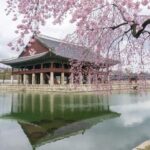
- Gyeonghoeru: where formal banquets were held for foreign envoys
Those names aren’t trivia. They help you understand how the palace functioned across daily life, government work, and state ceremonies. Even in a short visit, having a map in your head makes the architecture feel more like a system than a collection of buildings.
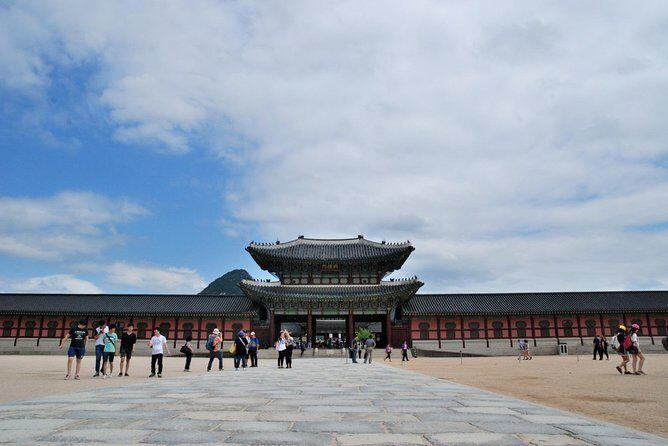
Gyeongbok Palace is described as the city’s finest royal residence from the Joseon Dynasty, with a reign spanning about five centuries. In practical terms, that long timeframe means lots of buildings and lots of symbolism packed into a compact area. A guided route helps you avoid getting lost in the scale.
The Korean National Folk Museum stop
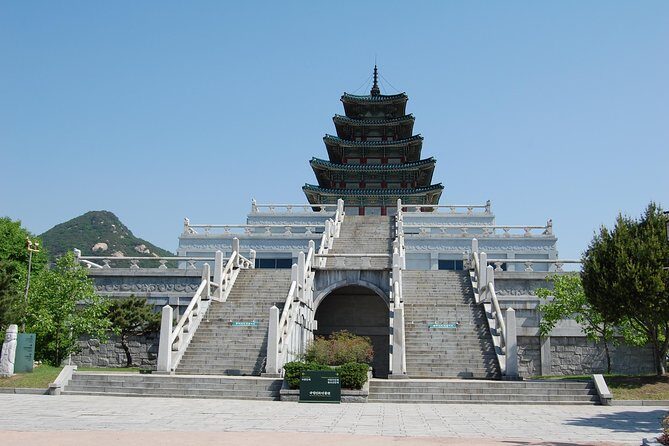
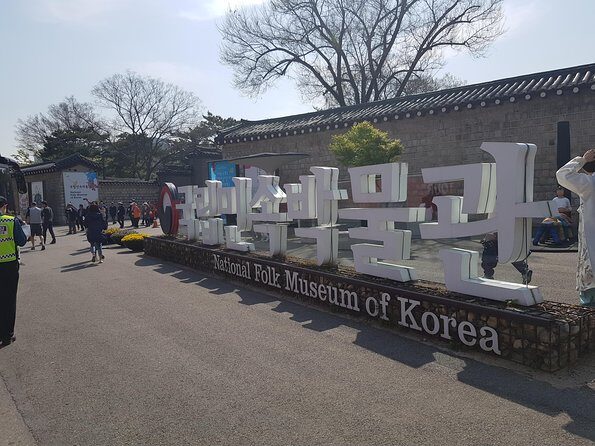
Part of the palace visit includes the Korean National Folk Museum, located within the Gyeongbok Palace grounds. The museum is there to connect palace grandeur to everyday life—daily living and traditional culture, plus educational context for understanding Korean heritage.
If you’re a “see it, then understand it” type, this museum stop adds payoff. Without it, the palace can feel like pure spectacle. With it, you get a better sense of what life looked like beyond throne halls and formal banquets.
One small trade-off: because the tour is about 3 hours total, you’ll likely see museum elements at a brisk, curated level rather than at museum leisurely speed. If you want deep museum time, you may prefer pairing this with a longer independent visit later.



Gwanghwamun Gate and the Changing of the Guard
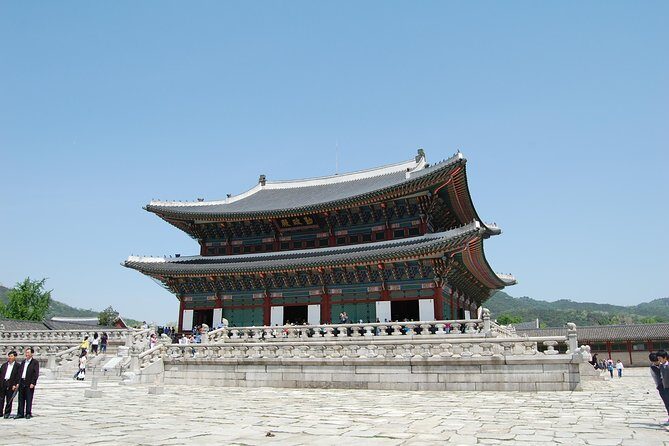
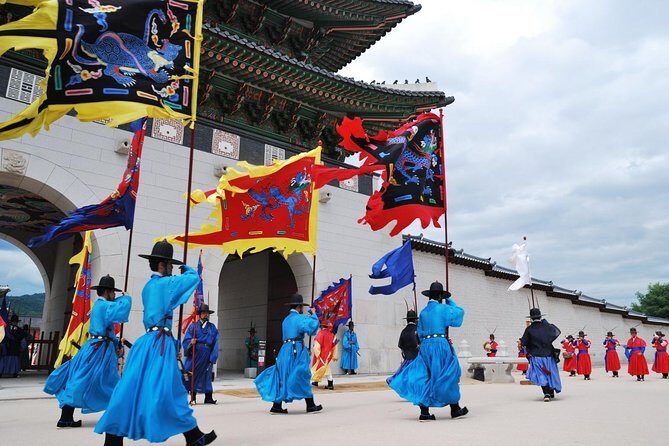
The tour ends at Gwanghwamun Gate, which is the south gate of Gyeongbok Palace. It’s positioned perfectly for the last act: the guide and the group finish with the changing of the guard ceremony.
This ceremony is often the emotional climax of palace visits because it brings a ritual element to the architecture you’ve just learned about. Even if you’re not a hardcore history fan, the ceremony gives you a shared focal moment where everyone can look up, watch, and feel the setting.
Practical tip: dress for temperature and keep your phone ready. Guard routines tend to be time-based, and in a group tour you don’t get much flexibility if you drift away from the viewing area.
Price and Value: What $40 Really Buys You
At $40 per person, the big question is simple: does this tour feel like a deal in Seoul?
Here’s what you’re getting that supports the price:
- Hotel pickup (so you don’t fight morning traffic or metro transfers)
- Air-conditioned vehicle
- Driver/guide and a professional guide
- All entrance fees included
- Free admission to top local attractions (as described in the tour overview)
- A structured route that stacks Jogyesa + major palace areas + the ceremony
What you don’t get:
- Lunch (not included)
- Infant meals (not included)
- Hotel drop-off (you’re returned to City Hall)
The ginseng center stop also affects value, because it’s not automatically useful to everyone. Some people love it as a cultural detour; others see it as a shopping move with limited payoff. If you’re shopping-averse, plan your expectations and treat it as a quick stop, not a required “must do” product experience.
Net-net: the tour is best value if you want a guided morning with minimal ticket hassle and pickup. It’s less of a value win if you already know how to navigate these sites solo and you prefer to control your own pacing.
The Guide, the Pace, and How to Make This Morning Work
This kind of group tour lives and dies by two things: the guide’s communication style and the pace between stops.
On the positive side, some guides are described as sharing helpful stories and being photo-friendly. One guide named Chloe is highlighted for being wonderful, sharing stories throughout, and helping with photos. That’s the sweet spot: a guide who explains what you’re looking at and also lets the group capture the moment.
On the downside, there are signs that pace can vary—some groups report the guide speaking quickly and moving fast enough that viewing time can feel rushed. That doesn’t mean the sights are bad. It means you might want to be ready to speak up. If something matters to you (a specific hall, a statue detail, a tree view), ask a quick question during the stop so you get the context without losing time.
If you’re sensitive to group pacing, here’s how you can still get a good experience:
- Keep your questions short and specific.
- Stay close when the guide cues the next location.
- Don’t plan on long photo sessions at every stop. Pick one or two “must shoot” moments.
Because you also have a built-in shopping stop, pace feels even more noticeable. If you’re going into the tour expecting a straight path with no detours, you’ll be happier if you’ve mentally scheduled that ginseng stop as part of the deal.
Should You Book This Seoul Palace Morning Tour?
Book it if:
- You want a guided hits-of-history morning with pickup and included entrance fees.
- You’re seeing Seoul for the first time and want a fast route through Jogyesa, Gyeongbok Palace, and the changing of the guard.
- You like having named stops (throne hall, office, living quarters) so you can connect architecture to Joseon-era life.
Skip or reconsider if:
- You don’t want a shopping stop and would rather spend more time at the palace grounds.
- You prefer slow travel where you can linger at each building and read every sign without a clock.
- You need a very flexible itinerary with extra time at fewer sites.
If you’re trying to fit major landmarks into a short window, this tour is a practical choice. Just go in knowing it’s a group morning with structured timing—and plan your expectations around the included ginseng center stop.
FAQ
What time does the Seoul Palace Morning Tour start, and how long is it?
It starts at 9:00 am and runs for about 3 hours.
Is hotel pickup included?
Yes. The tour includes hotel pickup and uses an air-conditioned vehicle.
Are entrance fees included?
Yes. All entrance fees are included, and the overview also notes free admission to top local attractions.
Is lunch included?
No. Lunch is not included.
Where does the tour end?
You’ll return to Seoul and be dropped off at City Hall (not at your hotel).
Does the tour include a ginseng center stop?
Yes. One shopping center (a ginseng center) is included as part of the tour.
Can I cancel for free?
Yes. You can cancel for a full refund if you cancel at least 24 hours before the experience’s start time.