REVIEW · SEOUL
Seoul Hop-On Hop-Off Downtown Palace Course
Book on Viator →Operated by Seoul City Tour Bus · Bookable on Viator
Royal palaces, without Seoul’s navigation headache. This Hop-On Hop-Off Downtown Palace Course is built to get you between the big sights—Changdeokgung, Deoksugung, and Gwangwhamun—while an onboard audio guide puts the story in your ear as you ride. You start at 9:30 am, and the circuit time is around 1.5 hours, so you can move at your pace instead of fighting schedules.
Two things I like a lot: first, the whole point is freedom—you can hop off and stay at each palace as long as you like, then board again later. Second, the audio guide is available in many languages (English, Korean, Chinese, Japanese, Russian, German, French, Spanish, Thai, Vietnamese, and Indonesian, plus Malay), which matters when you’re trying to make sense of what you’re looking at.
One drawback to think about: picking the right stop can be tricky. A few visitors report the stop isn’t easy to spot, and the bus may not feel instantly obvious once you’re there. Also, the bus can broadcast Korean over the speakers, so you may need to lean on the earphones to catch the English narration clearly.
Key things to know before you ride
- Start at Seoul 타이거버스 정류장 with a 9:30 am departure window
- Hop on, hop off so you control how long you spend at each palace stop
- On-board audio runs in multiple languages, including English
- Loop time is about 1.5 hours, with departures roughly every 30–40 minutes
- Entrance tickets are not included, so plan for palace entry costs
- No food or drinks on the vehicle, and you may want backup phone service for directions
In This Review
- Seoul Hop-On Hop-Off Palace Course: what the $38 is really for
- The real meeting point test: finding Seoul 타이거버스 정류장
- How the loop works in practice: timing, stop buttons, and pacing
- Changdeokgung stop: spend time your way, not the bus’s
- Deoksugung and the Gwangwhamun area: pairing palaces with Seoul streets
- On-board audio guide: multilingual help, with a real-world catch
- What’s not included (and the small rules that affect your comfort)
- Is this bus worth it for you? (and who should book)
- Should you book the Seoul Downtown Palace Course?
- FAQ
- What is the duration of the Seoul Hop-On Hop-Off Downtown Palace Course?
- Where does the tour start?
- Do I need to pay entrance fees for the palaces?
- How often do the buses run?
- What languages are available for the audio guide?
- Can I cancel for free?
Seoul Hop-On Hop-Off Palace Course: what the $38 is really for
This is not a guided walking tour with a group leader. You’re paying for transportation plus an onboard explanation while you ride between key palace areas in central Seoul. For $38, the value comes from reducing the hassle of getting between sites with Seoul’s complex subway transfers, long walks, and lots of street-level exits.
If you’d rather spend your energy looking at palaces instead of figuring out which exit to use, this bus can make your day easier. The ticket is designed for a “do it your way” day: ride the loop, hop off to sightsee, then return when you want.
Just keep your expectations honest. The bus gets you close and gives you narration, but it does not cover palace entry. You’ll still need to pay whatever each site charges to get inside.
The real meeting point test: finding Seoul 타이거버스 정류장
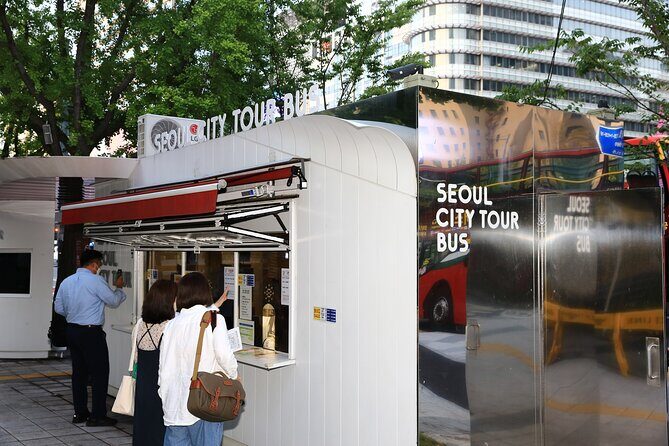
Your tour start is listed as 서울 타이거버스 정류장, and the start time is 9:30 am. That means you’ll want to arrive early and ready to act quickly if the bus is already rolling in.
Here’s the practical part: hop-on hop-off success is all about stop-finding. Several complaints point to difficulty spotting the bus stop or figuring out exactly where to board. I’d treat this as a “confirm before you commit” situation. Before you leave your hotel, get oriented around the stop area on your phone and screenshot it. Also, check which side of the street you’re on—one wrong side can turn a quick hop on into a long wait.
If you’re traveling on a tight schedule, build in buffer time. Even when the bus runs on time, the day can slip if you’re hunting for the right boarding spot.
You can also read our reviews of more tours and experiences in Seoul.

How the loop works in practice: timing, stop buttons, and pacing
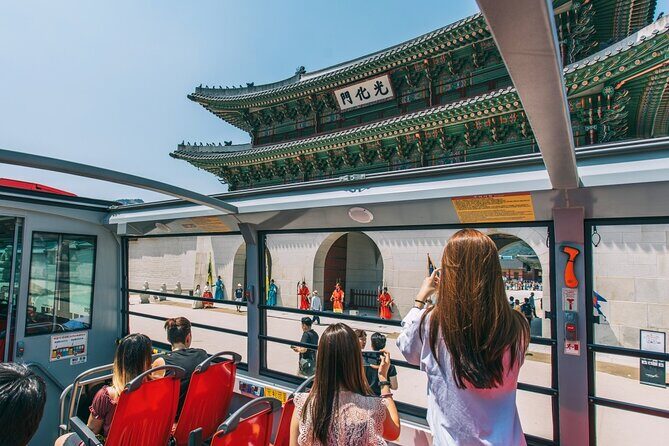
The circuit time is around 1.5 hours, and buses run every 30 minutes (with other timing notes describing about every 40 minutes). So the rhythm is frequent enough that you shouldn’t need a minute-by-minute plan—as long as you can locate the stop easily.
The biggest tip I can offer: when you want to get off, make sure you’re using the bus’s stop request method. Some riders specifically advise pressing the stop button to ensure the driver knows you want to exit. It sounds basic, but in a hop-on hop-off setup, small mistakes can mean you ride past the place you wanted.
Pacing is your friend on this route. Since you can stay as long as you like at each palace, a smart strategy is:
- Ride once through the full loop to learn where everything sits relative to each other.
- Then hop off at the stops you care about most for a second pass.
If you only do one loop and you hop off too early, you can end up rushing at sites instead of letting the palace areas unfold at a comfortable speed.
Changdeokgung stop: spend time your way, not the bus’s
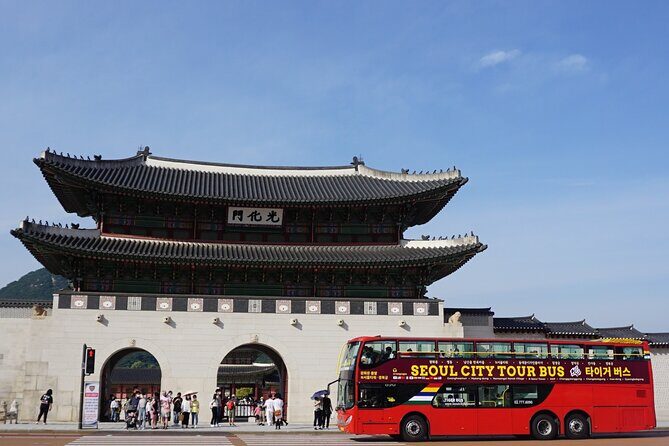
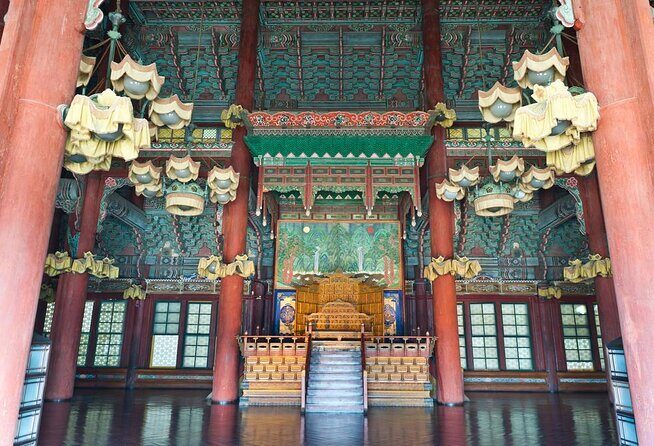
Changdeokgung is one of the palaces included on this route. What makes this stop work well on a hop-on hop-off bus is simple: you’re not tied to a fixed group schedule. You can step off, walk at your own pace, and decide when you’re ready to move on.
The best part is that the bus narration can help your visit feel less random. Even if you’re not catching every word, hearing the royal context while you travel gives you a framework for what you’re looking at.
The main drawback is the one that affects all palace stops: entrance fees are not included. So treat the bus as your convenient connector, not your ticket into the grounds. If you plan to go inside, budget that extra cost and try to avoid arriving when you’re too short on time.
Deoksugung and the Gwangwhamun area: pairing palaces with Seoul streets
Deoksugung and the Gwangwhamun area are also part of the Downtown Palace Course. In practice, this is where the bus shines for first-time Seoul planning: two palace stops that sit well for combining sightseeing without doing constant transit juggling.
What I like about pairing these with a hop-on hop-off setup is that you can calibrate your day. If you’re more interested in one palace than another, you can let that drive your timing. If you’re just trying to see the highlights and get a sense of the city’s royal core, you can ride the loop once and pick up quick visits at multiple stops.
A smart add-on here is to look for hanbok rental shops around the palace areas. One rider pointed out that hanbok rental is available nearby, and it’s an easy way to add color to your photos and make the atmosphere feel more connected to the setting.
The watch-out is practical: audio clarity and stop-finding still matter. If you hop off and struggle to get back on, you can waste time that would otherwise go toward actually enjoying the sites.
On-board audio guide: multilingual help, with a real-world catch
The bus includes an audio guide in a long list of languages: English, Korean, Chinese, Japanese, Russian, German, French, Spanish, Thai, Vietnamese, and Indonesian, plus Malay. That’s a big deal because it reduces the need to pull up separate apps while you’re riding.
But I want to give you the honest operational note that can affect your experience: some buses broadcast Korean commentary loudly over the speakers, and English narration may be harder to hear unless you’re relying on the earphones. If you’re the type who likes to follow every detail, plan to concentrate on the audio through your earphones, not the main speakers.
Also, audio can stop when the driver announces a stop, so you may want to be ready to glance at the area outside when that moment hits. It’s not a problem, but it means you shouldn’t expect perfect continuity while you’re hopping off.



What’s not included (and the small rules that affect your comfort)
Entrance fees are not included for any sites or museums. That means you’ll still need to buy palace admission separately when you decide to go in. If you like knowing costs ahead of time, look at entry options for the palaces you plan to visit before your day starts.
Food and drinks are not allowed on the vehicle. This is common for sightseeing buses, but it matters if you’re doing a long day. Bring water if you’ll be walking, but keep in mind you may not be able to consume it on the bus.
One more real-life factor: hop-on hop-off buses can feel like a mixed bag depending on which bus you end up on. A few riders reported differences between bus types and audio loudness. You can’t control that, but you can control your expectations: think of this as a transportation-and-narration service, not a hotel-level experience.
Is this bus worth it for you? (and who should book)
This works best if:
- You want to see multiple palace areas without wrestling subway exits and long walks back-to-back.
- You like the idea of a self-paced day where you can linger when something catches your interest.
- You’ll use the audio guide to add context while you ride between stops.
It may be less ideal if:
- You hate uncertainty around meeting points and stops.
- You need perfectly clear English audio from the main speaker (because Korean announcements can be loud).
- You’re extremely time-sensitive and can’t spare extra time to locate the bus stop again if you miss it.
On the plus side, it’s designed for most people to participate, and service animals are allowed. The stop location is also described as near public transportation, which helps if you need a backup plan.
Should you book the Seoul Downtown Palace Course?
I’d book it if you want an easy way to connect Changdeokgung, Deoksugung, and the Gwangwhamun area with minimal stress. The $38 price feels reasonable when you compare it to the time and effort saved versus DIY subway hopping and constant exit searching. The multilingual audio is also a real comfort, especially if you don’t want to rely on your phone all day.
I’d think twice if stop-finding stress ruins your day. For this route, your success depends on locating the 서울 타이거버스 정류장 stop cleanly and being ready to act when the bus arrives. If you’re nervous, arrive early, double-check your boarding side, and keep a backup plan for getting back to the palaces by public transport.
If you can handle a little logistics and you’re aiming for convenience over precision, this hop-on hop-off palace bus can be a smart, efficient way to spend a Seoul morning and afternoon.
FAQ
What is the duration of the Seoul Hop-On Hop-Off Downtown Palace Course?
The circulation time is around 1.5 hours, and the total tour duration is listed as approximately 1 hour 30 minutes.
Where does the tour start?
The meeting point is 서울 타이거버스 정류장, with a start time of 9:30 am.
Do I need to pay entrance fees for the palaces?
No. Entrance fees to any sites or museums are not included in the ticket.
How often do the buses run?
Buses run about every 30 minutes, with other timing notes describing departures roughly every 40 minutes.
What languages are available for the audio guide?
The audio guide is available in English, Korean, Chinese, Japanese, Russian, German, French, Spanish, Thai, Vietnamese, and Indonesian, plus Malay.
Can I cancel for free?
Yes. You can cancel up to 24 hours in advance for a full refund. If you cancel less than 24 hours before the experience starts, the amount paid will not be refunded.