REVIEW · SEOUL
Korean Palace and Temple Tour in Seoul: Gyeongbokgung Palace and Jogyesa Temple
Book on Viator →Operated by KOREA TOUR (DMZ TOUR) · Bookable on Viator
Seoul’s old worlds run close together. This 3.5-hour tour strings together Gyeongbokgung Palace, the National Folk Museum, and Jogyesa Temple, with hotel pickup and an easy pace that works well for a half-day plan.
I especially like the smooth logistics: hotel pickup, an air-conditioned vehicle, and a small group size (up to 20) so you spend less time herding yourself around. I also like the way the tour links past and present, from Joseon royal life to how everyday Koreans lived at the National Folk Museum.
One thing to factor in: there’s a ginseng center stop built in, and that portion can feel more sales-focused than sightseeing.
In This Review
- Key highlights you’ll care about
- Price and Logistics: What $40 Gets You in Half a Day
- Meeting at 8:30 and Riding Past Cheongwadae
- Gyeongbokgung Palace Grounds: Where Joseon Royal Life Comes Into Focus
- National Folk Museum of Korea: Daily Life Between Then and Now
- Jogyesa Temple in Seoul: Zen Buddhism in a Very Real City
- The Ginseng Center Stop: Interesting Topic, Salesmanship Risk
- Seoul City Hall Finish: What “End of Tour” Really Means
- How the Guide Style Shapes the Whole Day
- Who Should Book This Tour (and Who Might Skip It)
- Should You Book This Korean Palace and Temple Tour?
- FAQ
- What sites are included on this Seoul tour?
- How long is the tour?
- What time does the tour start?
- Is hotel pickup included?
- Is there admission included for the main attractions?
- Are food and drinks included?
- Do I need to walk a lot?
- Does the tour include an air-conditioned vehicle?
- Where does the tour end?
- What should I do about the ginseng center stop?
- What is the cancellation window?
Key highlights you’ll care about
- Hotel pickup + AC transport so you’re not juggling Seoul transit with tired legs
- Gyeongbokgung Palace with guided context to help the big spaces make sense fast
- National Folk Museum time that connects historical life to modern Korea
- Jogyesa Temple for Zen Buddhism in the middle of the city
- Short, efficient stops including a ginseng center and Seoul City Hall (worth going in with the right expectations)
Price and Logistics: What $40 Gets You in Half a Day
For about $40 per person, you get a tight, guided hit of Seoul’s biggest cultural moments. The value here is mainly time: hotel pickup, transport, and included admission fees mean you don’t have to plan separate tickets and routes while you’re on vacation.
The day is built around a morning start at 8:30 am and runs about 3 hours 30 minutes. Expect moderate walking, so comfortable shoes matter, but this isn’t a hike. You’ll also be using a mobile ticket, which is handy—your phone becomes the “paper ticket” substitute for the key admission stop(s).
The biggest practical detail: hotel drop-off isn’t included. You’ll end near Seoul City Hall, so plan your next move accordingly (metro/taxi options are easy from that area, but it’s still something to know).
You can also read our reviews of more tours and experiences in Seoul.
Meeting at 8:30 and Riding Past Cheongwadae
The tour starts with pickup from your Seoul hotel, then a drive that gives you a quick sense of where the power sits in modern Korea. You’ll pass Cheongwadae (the Blue House), the executive office and residence of South Korea’s head of state.
This is brief, but it’s a nice way to anchor what you’re seeing later. Gyeongbokgung is about Joseon-era rule; the Cheongwadae pass is about today’s leadership. Together, they frame Seoul as a city that stacks time on top of itself.
In the vehicle, your guide keeps the group moving and helps with context you’d miss if you were just scanning signs. That matters because palace and temple sites can be overwhelming when you’re left alone with a map and a lot of gate names.
Gyeongbokgung Palace Grounds: Where Joseon Royal Life Comes Into Focus
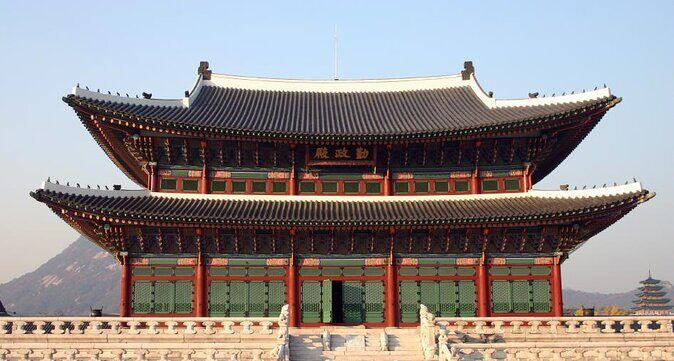
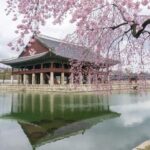
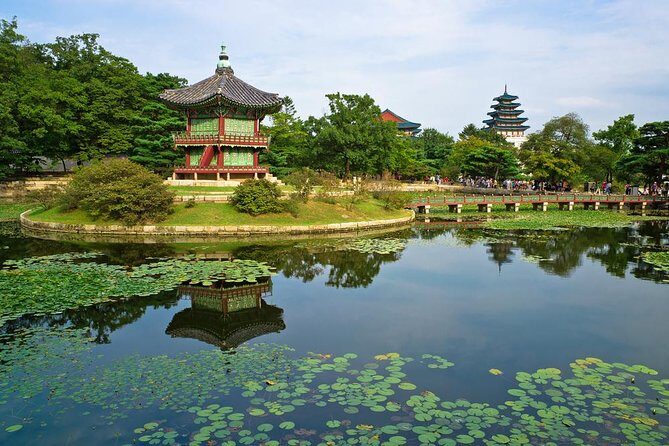
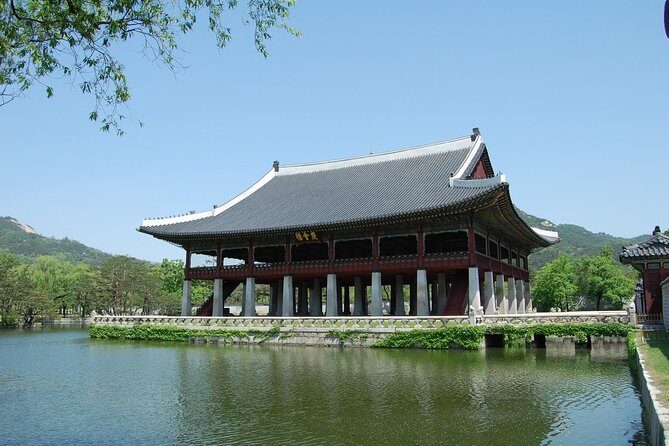
Your first major stop is Gyeongbokgung Palace, the largest of Seoul’s Five Grand Palaces and often considered the most beautiful. You’ll spend about 1 hour inside, with your guide pointing out details that make the place feel less like a postcard and more like a functioning royal space.
What makes this stop work on a half-day tour is guidance. You’re not only looking at buildings; you’re learning how the palace operated as a system—who used what areas, what the layout meant, and why specific spaces mattered. Even if you’ve seen palace photos before, the scale and order on-site can still surprise you.
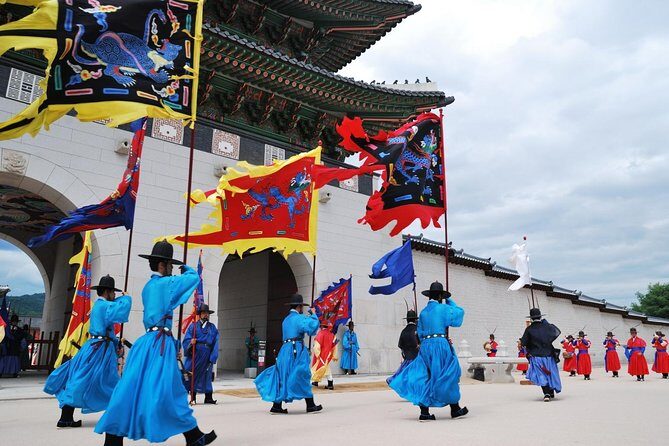
Timing can matter here. One of the common “wow” moments people look for at Gyeongbokgung is the changing of the guard at the gate. The schedule may shift a bit depending on how your day is running, so if you care about that, arrive mentally ready for a faster rhythm in the palace area.
Drawback to keep in mind: you’ve only got around an hour. If you’re the type who likes to linger in every courtyard and read every placard, you might feel the palace is moving fast. The tour is designed for breadth and understanding, not for slow wandering.
National Folk Museum of Korea: Daily Life Between Then and Now
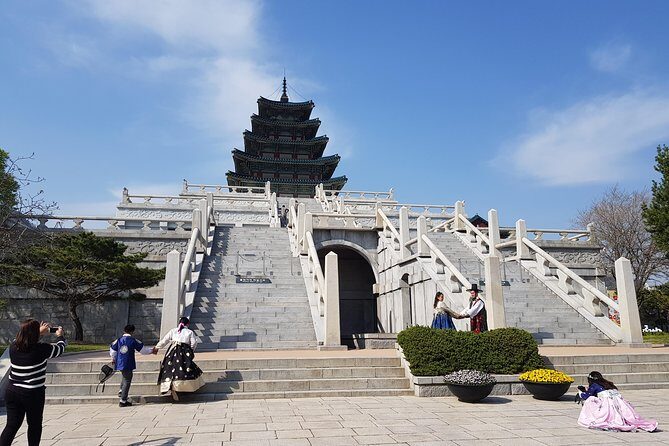
Next comes the National Folk Museum of Korea, about 20 minutes on-site. This is a smart pairing with Gyeongbokgung because it answers a different question: not how royals lived, but how ordinary Koreans lived before the country’s rapid modernization.
The museum visit is short, so it’s not about seeing every room. Instead, your guide helps you pick up the big ideas—customs, daily routines, and the everyday culture that shaped people’s lives. In a place like Seoul, where you can go from high-rise streets to palace gates quickly, this stop gives you a grounded sense of what used to be normal.
If you enjoy culture that feels practical rather than ceremonial, this is the kind of stop that makes the rest of the day click. You’ll often leave with clearer mental images of historical life: what people owned, how they dressed, and how home life worked.
Best for: people who want historical context without turning the tour into a full-day museum marathon.
Jogyesa Temple in Seoul: Zen Buddhism in a Very Real City
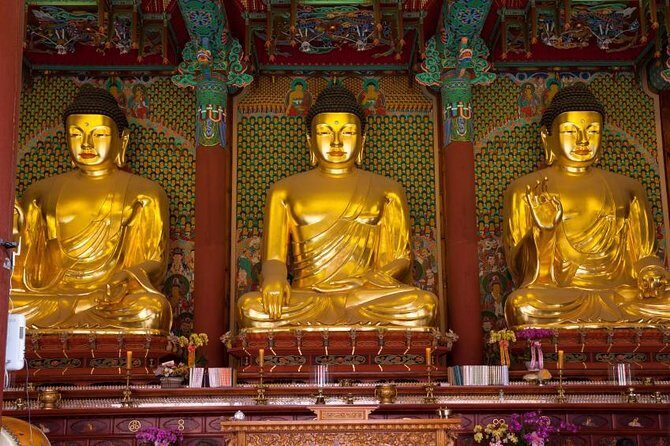
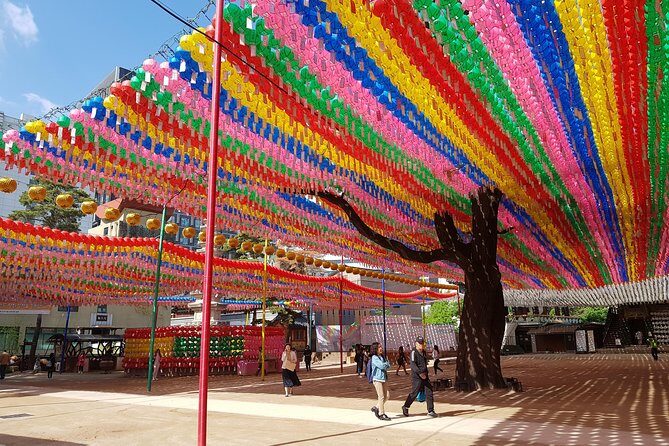
Then you head to Jogyesa Temple, the leading center for Zen Buddhism in Korea. You’ll have about 20 minutes here, which is enough time to soak in the mood and understand what you’re seeing without feeling rushed at the gate.
Jogyesa is powerful because it’s not tucked away in quiet countryside. You’re in central Seoul, and the temple still creates a different atmosphere. Your guide explains Buddhism’s importance in Korean culture and connects what you see to the Joseon Dynasty context.
If you time it right, you may catch religious activity happening during your visit. Some guides have been able to coordinate the group when prayer or ceremonial moments are taking place, and those instances can turn the visit from pretty to meaningful. Even without that, the space itself makes the contrast with palace architecture feel real.
Possible consideration: because the day is structured, you may have less free time than you’d want for a slow, meditative walk. Think of this stop as a “taste with context,” not a long retreat.
The Ginseng Center Stop: Interesting Topic, Salesmanship Risk
At some point, you’ll visit a ginseng center for about 30 minutes. Admission to the overall tour includes fees, but this stop is more of a cultural-commercial hybrid than a museum.
Learning about ginseng can be interesting—your guide typically provides background on why it matters in Korean life. The tradeoff is that this part of the day can feel like a pitch. Some people have described it as hard sell, and it can drag the feeling of the morning’s history into something more shopping-focused.
If you love product learning, you might find the stop useful. If you hate being pressured, go in with a plan: browse, ask neutral questions, and don’t let the experience slow your momentum.
Seoul City Hall Finish: What “End of Tour” Really Means
After the ginseng stop, the tour includes time at Seoul City Hall for about 30 minutes. This isn’t the same type of cultural stop as the palace or temple, but it’s a practical ending point—easy to navigate from and convenient for arranging your next ride or meal.
The key is to think ahead. Since hotel drop-off isn’t included, you’ll want to have your plan ready: metro route, taxi app, or whatever you’re doing next. City Hall is a major hub area, so you’re not stuck in the middle of nowhere—you just want to avoid the “walk around figuring it out” moment.
How the Guide Style Shapes the Whole Day
A big theme in the tour quality is guide performance. Names like AJ and Katie show up with praise for being organized and making history feel understandable. Other guides—Chloe, Grace, Eden, Sadie, Jun, Charles, Rebecca, Lizzy, Yeoni, and David—are described as energetic, funny, patient with questions, and good at keeping the group together.
What you should take from that: this tour isn’t just a checklist. A skilled guide turns doors into stories. They point out details you’d miss at Gyeongbokgung, explain the meaning behind Jogyesa’s role, and connect the Folk Museum exhibits to everyday life.
It also helps that the pacing is managed. One of the strengths people consistently mention is how the guide keeps timing under control so you fit multiple sites into a half-day schedule.
Who Should Book This Tour (and Who Might Skip It)
You’ll likely love this tour if:
- you want major Seoul cultural highlights without planning separate tickets and transit
- you prefer guided context over self-guided guesswork
- you’re working with limited time and want a 3.5-hour plan that feels efficient
You might reconsider if:
- you hate shopping stops and don’t want any “sales pitch” vibe in your schedule
- you’re the type who wants more than an hour at Gyeongbokgung and less structured time at each site
- you’re very strict about avoiding schedule changes (on at least one day, the order of temple vs. palace has been adjusted to meet timing needs)
Should You Book This Korean Palace and Temple Tour?
I’d book it if your priority is a fast, well-run cultural circuit: palace first for Joseon atmosphere, Folk Museum for everyday context, then Jogyesa for the spiritual contrast. The value is in the package—pickup, transport, included admission, and a guide to connect everything.
I’d hesitate only if you strongly dislike shopping pressure. The ginseng center is part of the experience, and it can dilute the clean “history and temple” tone of the morning.
If you want a practical first pass at Seoul’s culture and history, this is a solid choice.
FAQ
What sites are included on this Seoul tour?
You’ll visit Gyeongbokgung Palace, the National Folk Museum of Korea, and Jogyesa Temple. The tour also includes a ginseng center shopping stop and a stop at Seoul City Hall.
How long is the tour?
The tour lasts about 3 hours 30 minutes.
What time does the tour start?
The start time is 8:30 am.
Is hotel pickup included?
Yes. Hotel pickup is included.
Is there admission included for the main attractions?
Yes. Admission fees are included as part of the tour.
Are food and drinks included?
No. Food and drinks are not included.
Do I need to walk a lot?
There’s a moderate amount of walking, so comfortable shoes are recommended.
Does the tour include an air-conditioned vehicle?
Yes. You’ll be transported by an air-conditioned vehicle.
Where does the tour end?
You’ll be taken to the Ginseng Center and then dropped off at Seoul City Hall. Hotel drop-off isn’t included.
What should I do about the ginseng center stop?
The tour includes one shopping center visit at the ginseng center for about 30 minutes. Go in knowing it’s part of the program.
What is the cancellation window?
You can cancel for a full refund if you cancel up to 24 hours in advance of the experience’s start time.