Ten bites in three hours.
Heart of Seoul is a food-and-culture walking tour that strings together iconic areas of Seoul: a food stop inside a former station, a rooftop walkway, the chaos and comfort of Namdaemun Market, and two big shopping zones in Myeongdong. The appeal is that it’s not a Western-style tasting menu. It’s built around what Koreans actually eat, with a guide helping you make sense of what you’re looking at and why it matters.
I especially like how the tour works both for first-timers and repeat Seoul lovers. You get traditional staples (like bibimbap and tteokbokki) and modern, casual bites (like street-food-style fried chicken and the kind of dumplings you can snack on fast). Another win is the pacing: it’s compact enough to do after a morning of sightseeing, yet long enough to feel like you moved around with purpose instead of just hopping between stalls.
One possible drawback: this is a walking-focused experience. If your legs are limited, you’ll want to plan carefully, because it’s designed as a route you follow on foot with market walking and shopping-street time.
Key highlights worth planning for
- 10 different foods over about three hours, so you don’t leave hungry or stuck guessing what to order.
- A guide who connects food to place, including history/meaning at key stops like Culture Station Seoul 284.
- Namdaemun Market time (about an hour), enough to actually browse and eat instead of feeling rushed.
- Myeongdong variety: street foods up top, then brand-heavy shopping underground to slow down and finish.
- Small group size (max 12), which usually makes it easier to move together and ask questions.
In This Review
- A 3-Hour Seoul Food Walk That Actually Feeds You
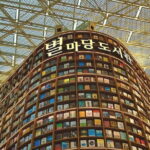
- Culture Station Seoul 284: Starting With a Place, Not Just a Bite
- Seoullo 7017: Rooftop Walkway Time and Why It’s in This Tour
- Namdaemun Market: The Main Event for Snacks and Ordering Confidence
- Myeongdong Shopping Street: Street Food Meets People-Watching
- Myeongdong Underground Shopping Center: Slower Finish and Gelato at the End
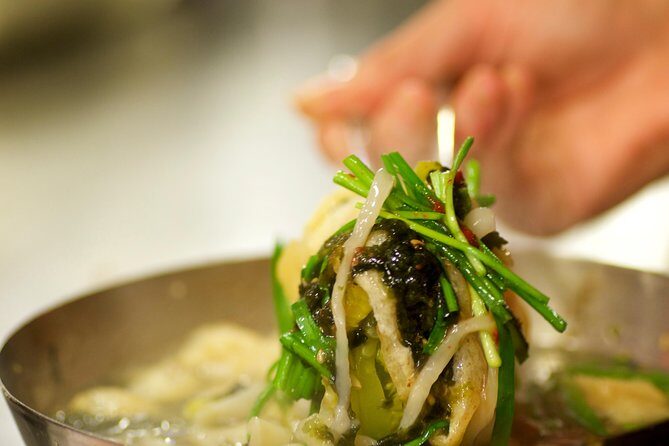
- What You’ll Taste: 10 Foods That Cover the Seoul Spectrum
- Price and Logistics: Why $115 Can Feel Fair
- Who This Tour Fits Best (and When to Choose Something Else)
- Should You Book Heart of Seoul?
- FAQ
- How long is the Heart of Seoul tour?
- How much does the tour cost?
- Is the ticket mobile?
- What’s included in the tastings?
- Is any alcohol included?
- Where does the tour start and end?
- How big is the group?
- Can I cancel for a refund?
A 3-Hour Seoul Food Walk That Actually Feeds You
Heart of Seoul is priced at $115 per person for a roughly 3-hour walking loop, and the math mostly checks out because food is the point here. You’re not just getting a “look at street art” stroll with a few snack bites. The included list is substantial, and the tour uses it to cover both comfort foods and quick-on-the-go classics.
Also, the tour is structured around a reality check: Korea doesn’t run on tasting-menu culture the way some places do. Instead of pretending there’s a set course for everyone, this format lets you eat what locals genuinely crave, then explains how that food fits the neighborhood you’re standing in. That’s the difference between randomly eating street snacks and actually getting oriented.
The mobile ticket helps too. You’re not juggling paper while you’re walking, checking menus, and trying not to spill sauce on your day.
Culture Station Seoul 284: Starting With a Place, Not Just a Bite
The tour meets at 122-18 Bongnae-dong 2(i)-ga, Jung District, and it begins at Culture Station Seoul 284. The guide meets you at the entrance and explains the building—about what it is and what you’re seeing—before you move on.
This stop matters because it sets the tone: food here isn’t random. Even when you’re eating market-style, there’s a story behind why certain areas became food magnets and why particular spaces feel like they belong to daily life. A good guide helps you notice details you’d normally miss: the feel of the space, how people flow in and out, and what kind of food environment it supports.
One practical note: Culture Station Seoul 284 is the kind of place where you’ll want to stand where the group can hear you. Don’t wander off right away. You’ll get more value by staying close at the start.
You can also read our reviews of more tours and experiences in Seoul.
Seoullo 7017: Rooftop Walkway Time and Why It’s in This Tour
Next comes Seoullo 7017, where the guide brings the group up to the walkway and you move through the elevated stretch toward the next stop. This is your “breather” portion of the route—still part of the walk, but a different vibe than the street-level food streets.
Why is this included in a food tour? Because getting from one neighborhood to another in Seoul isn’t only about transportation. It’s also about perspective. From above, you can read the city differently: you see patterns in movement, the density of shopfronts, and how fast the street life shifts when you’re down at ground level.
If you’re someone who gets easily turned around in Seoul, this part helps you build a mental map before you hit the real food chaos of markets.
Namdaemun Market: The Main Event for Snacks and Ordering Confidence
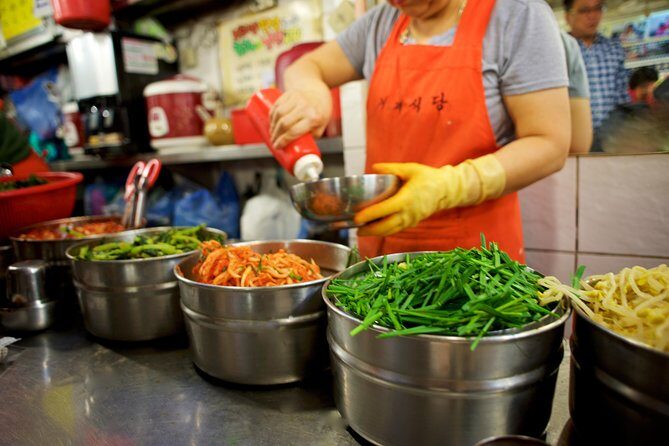
After the rooftop walkway, the tour heads to Namdaemun Market and gives it about one full hour. This is where the tour leans into classic Seoul market energy: the guide explains interesting food stalls and restaurants, then brings you to taste items there.
This stop is a big deal because Namdaemun is the sort of place where you can easily feel lost. There are plenty of choices, lots of smells, and menus that can be confusing when you’re hungry. A guide reduces that stress and also helps you avoid the common mistake of ordering only what looks familiar.
What you can expect from a guided market hour:
- You’ll get help picking items that fit the rest of the tasting plan.
- You’ll likely cover both savory snack categories and a couple of heavier comfort-food styles.
- You’ll move with the group instead of spiraling into “maybe this stall, maybe that stall.”
Drawback to consider: market stops can be tight. Plan for a slower walk pace and keep your bag close. If you’re bringing a camera, be mindful—this is active, not a museum lane.
Myeongdong Shopping Street: Street Food Meets People-Watching
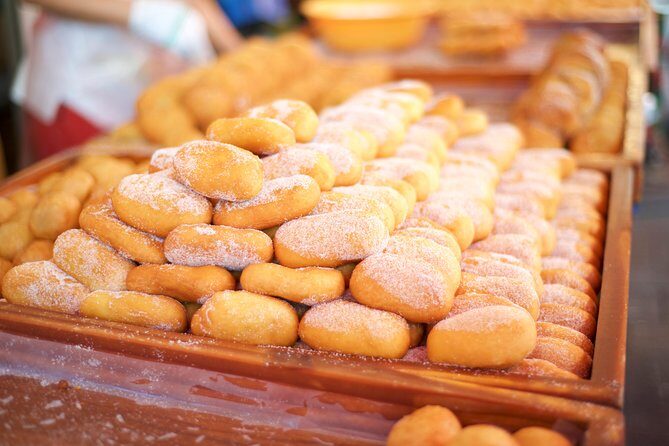
The route then shifts to Myeongdong Shopping Street, about one hour of time. This is one of the biggest and most popular areas in Seoul for cosmetics and street foods, and the tour uses that mix to keep things interesting. You’ll visit places to taste food, while also seeing how the shopping streets function.
Here’s the good part: Myeongdong is where “tourist Seoul” meets “everyday Seoul.” Even if you don’t shop for cosmetics, you’ll get a feel for how food and quick impulse purchases live side-by-side. The guide helps you focus on eating spots rather than getting pulled into endless browsing that doesn’t satisfy your hunger.
If you’re picky about temperature or texture—some Korean street foods are best eaten hot and right away—this is still manageable. Just stay close to the group and eat when your food arrives. Letting it sit while you wander can turn a great bite into an awkward one.
Myeongdong Underground Shopping Center: Slower Finish and Gelato at the End
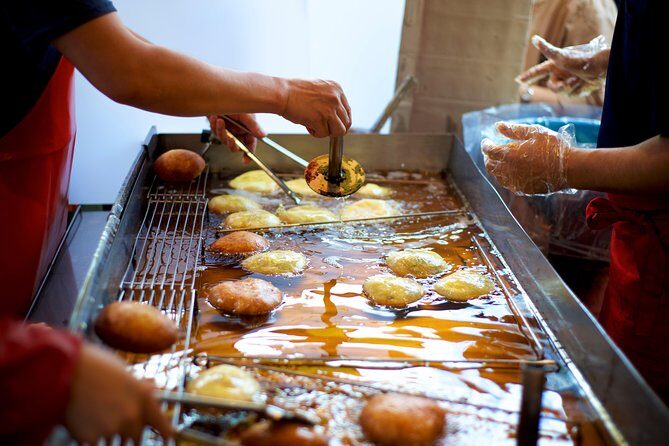
The last stop is Myeongdong Underground Shopping Center, about 30 minutes. This is where the tour slows down. The underground layout also changes the pace: it’s more controlled than the open streets, and it’s known for brand shops trusted by many people.
It’s also the final stop, with extra time built in to linger. The tour ends at Myeongdong Cathedral area, and the information specifically notes a gelato shop at the final spots. That’s a smart way to close: sweet and cooling after savory, plus a chance to regroup after a lot of walking.
At this stage, I’d treat it like your decompression zone. If you want photos, snack-level souvenirs, or just a moment to sit and cool down, this is your window.

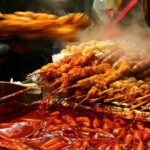
What You’ll Taste: 10 Foods That Cover the Seoul Spectrum
The included tastings are the heart of the value. You should expect about 10 different foods, and the included list is:
- Kalguksu (칼국수)
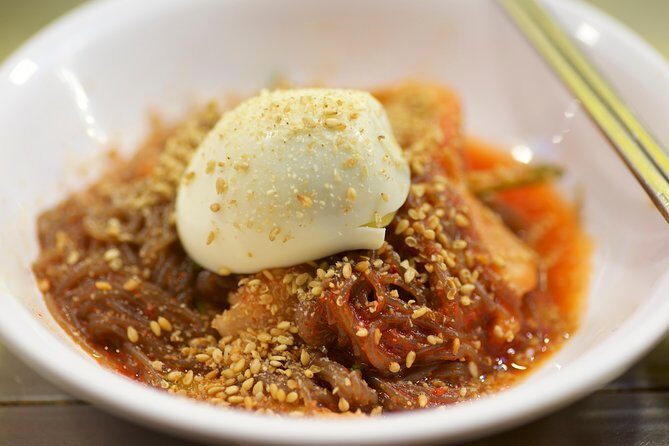
- Naengmyeon (냉면)
- Bibimbap (비빔밥)
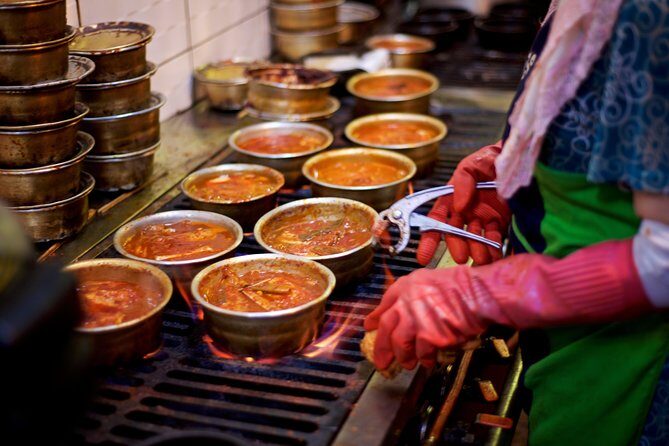
- Tteokbokki (떡볶이)
- Eomuk (어묵)
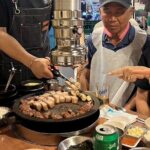
- Tongdak (통닭) old-styled crispy fried chicken
- Korean local beer (with the fried chicken portion)
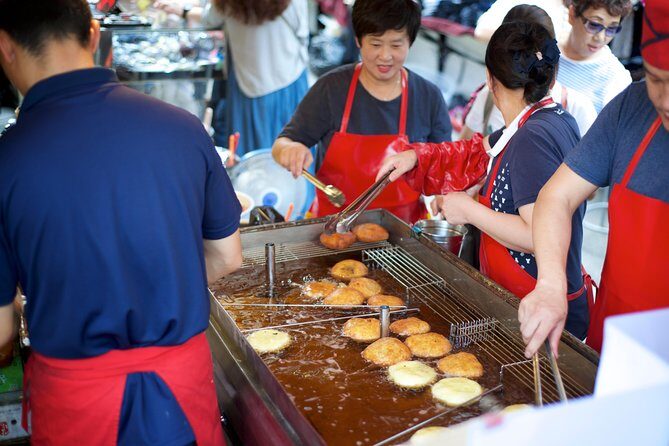
- Mandoo (만두) (Korean dumplings)
- Local gelato
A few helpful ways to think about this selection:
- You’ll cover noodles (kalguksu and naengmyeon), so you get both warm comfort and cold-refresh balance.
- You’ll get spicy-sweet and chewy textures (tteokbokki), plus crispy fried (tongdak).
- You’ll experience Korean “grab-and-go” food logic (eomuk and dumplings), which is useful even after the tour when you’re choosing snacks on your own.
Important practical note: only a glass of beer is included with fried chicken. If you want more alcohol or other drinks, plan to pay separately.
Also, because the tour packs a lot into a short window, treat it like lunch. Wear something comfortable and plan to eat slowly when you can. You’re not just collecting bites—you’re actually being fed.
Price and Logistics: Why $115 Can Feel Fair
At $115 per person, you’re paying for:
- A guided route through multiple major food areas
- 10 tastings
- Food coordination (getting you from stop to stop in a way that actually works)
- A group limit of 12 travelers, which typically makes it easier for a guide to keep an eye on everyone and keep questions flowing
Is it expensive? Compared to DIY market roaming, yes. But compared to paying for a guided experience plus ten separate food orders, it often comes out fair—especially because your tastings include a mix of dishes that can be pricey or hard to order without confidence.
If you want maximum value, show up hungry, not starved and not fully stuffed. You’ll get more enjoyment from the variety when you’re actually ready to taste each item as it comes.
Time-wise, it starts at 1:00 pm. That makes it a strong option if you’ve got a morning of sightseeing and want your midday meal handled for you.
Who This Tour Fits Best (and When to Choose Something Else)
This tour is ideal if you want:
- A structured food plan without spending your whole day comparing menus
- A guide to help you connect the dots between food and the neighborhoods you’re walking through
- A compact outing that hits big names like Namdaemun and Myeongdong without feeling like a full-day commitment
It’s also well-suited for people who learn by doing. Walking through each food zone while being told what to look for is often faster than reading guidebooks and then guessing what to order.
On the other hand, consider a different style of tour if:
- You have mobility limitations. The route is walking-based, and the guidance says someone with leg problems should use a wheelchair and have someone helping them.
- You can’t eat many different items close together. This is a tasting tour, not a choose-your-own-adventure meal.
Small group size helps here. With a maximum of 12, you’re more likely to feel part of the tour rather than squeezed into a large crowd.
Should You Book Heart of Seoul?
I think you should book this tour if you want a high-effort, low-planning Seoul experience. You’ll get a guided route across major food zones, and the included tastings do the heavy lifting for you. If you’re the kind of traveler who likes learning what you’re eating and why that food belongs in that place, this format works.
Skip it if you’re looking for long scenic stops, museum-style history, or lots of free wandering. This is purpose-built for food and motion. And if you’re sensitive to walking time, plan around it.
If your goal is to leave Seoul with your taste buds sorted and your street-food instincts improved, Heart of Seoul is a solid way to get there in a single afternoon.
FAQ
How long is the Heart of Seoul tour?
It’s about 3 hours.
How much does the tour cost?
The price is $115.00 per person.
Is the ticket mobile?
Yes, it uses a mobile ticket.
What’s included in the tastings?
The tour includes kalguksu, naengmyeon, bibimbap, tteokbokki, eomuk, old-styled crispy fried chicken (tongdak), a glass of Korean local beer with the fried chicken, mandoo (dumplings), and local gelato.
Is any alcohol included?
A glass of beer is included with the fried chicken. Extra drinks are paid separately.
Where does the tour start and end?
It starts at 122-18 Bongnae-dong 2(i)-ga, Jung District, and ends at Myeongdong Cathedral area on Myeongdong-gil, Jung District.
How big is the group?
The maximum group size is 12 travelers.
Can I cancel for a refund?
Yes. You can cancel for a full refund up to 24 hours before the experience starts.