REVIEW · SEOUL
365-day DMZ Special Tour including Monday & Public Holiday
Book on Viator →Operated by Seoul N Tour · Bookable on Viator
Seoul to the DMZ is a lot easier with a plan. This full-day tour focuses on the places you actually remember from Korean War history—Freedom Bridge, Gloster Hill, the 3rd Tunnel route, plus observatories that give you a real sense of the line dividing the peninsula. I like that you get pickup from multiple subway stations and a private group guide who keeps the day readable, not just scenic.
My other big win: the tour runs even on Mondays and public holidays, using alternate stops when the 3rd Tunnel can’t operate. One possible drawback to keep in mind: you move fast, with short time windows at each stop and a long day that can include physically demanding walking at certain sites.
In This Review
- Key Highlights You’ll Feel in Real Life
- How This 9-Hour DMZ Day Fits Into Your Seoul Schedule
- Pickup, Mobile Tickets, and the Real Logistics of Going Without a Car
- The Monday and Holiday Route: Still Seeing the DMZ When the 3rd Tunnel Can’t Run
- Imjingak Peace Nuri Park: Freedom Bridge and the Refugee-Memory Core
- North Korea Experience Hall: A Fast, Guided Primer Before You Look Across
- The 3rd Tunnel Route (Tuesday–Sunday): Where the Geography Turns Tactical
- Dorasan Peace Park, Theater/Exhibition, and Dorasan Observatory: Seeing the Line From Official Points
- Unification Village and Tongilchon-gil: Short Stops With a Big “Civilian Zone” Feel
- The Monday Substitutions: Gloster Hill Memorial Park and Heroes Suspension Bridge
- British Army and Seolmari: Where the Story Gets International
- Odusan Unification Observatory: A Backup Viewpoint That Still Works
- Weather, Fog, and Security Shifts: How to Keep the Day From Feeling Wasted
- What the Guide Really Changes (Sookhee, Young, Roy, Chloe, Veronica)
- Time at Each Stop: Worth It, But Don’t Plan a Long Wandering Day
- Price and Value: Why $59 Can Work for You
- Who Should Book This DMZ Tour (and Who Should Skip)
- Should You Book the 365-Day DMZ Special Tour?
- FAQ
- FAQ
- How long is the DMZ day tour?
- Where are the pickup and drop-off points?
- Is lunch included?
- What days include the 3rd Tunnel visit?
- What is the itinerary on Mondays and national holidays?
- What happens if weather or security restrictions affect stops?
- What is the cancellation rule?
Key Highlights You’ll Feel in Real Life
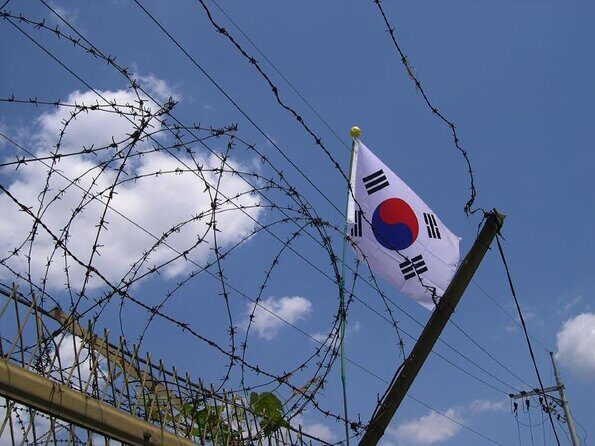
- Monday and holiday routing works: you still see major DMZ-area memorials and viewpoints even when the 3rd Tunnel is closed
- Border views from Doha Observatory: you get a chance to peek across North Korea from an official observation point
- Freedom Bridge + Gloster Hill + memorial stops: the day is built around visible, teachable landmarks
- Short-film context before you look: the DMZ theater/exhibition stops come with guided interpretation and video content
- Small-group feel with a hard cap: maximum of 40 travelers, so you’re not swallowed by chaos
How This 9-Hour DMZ Day Fits Into Your Seoul Schedule
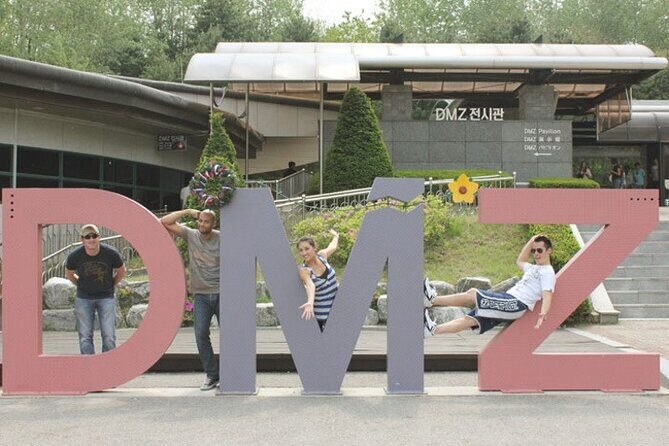
This is a long one-day outing—about 9 hours—starting early and ending around 3:30pm at Seoul City Hall Station. Pickup times vary by season, with peak-season departures earlier in the morning and low-season starting a bit later. In plain terms: you should plan to use your morning and early afternoon for the DMZ, then treat the rest of the day in Seoul as a recovery window.
The early start matters for two reasons. First, you’re heading out of the city before traffic gets ugly. Second, the DMZ operates under rules that can tighten up during the day, so arriving on time is part of making the schedule work.
You also get pickup from your choice of four Seoul subway stations, and the meeting point is flexible. That’s a quality-of-life thing. Instead of trekking across town to a single hotel district pickup, you can choose a station that already makes sense for your lodging.
You can also read our reviews of more tours and experiences in Seoul.
Pickup, Mobile Tickets, and the Real Logistics of Going Without a Car
You’re not on your own for transportation. The tour includes pickup from limited spots on the pickup list, and the day is built around a guided, bus-based route out toward the DMZ area. The tour uses a mobile ticket, which usually means less hassle at check-in—just make sure your phone battery is healthy.
One practical note: the tour departs in time at every meeting point. You’re expected to be ready about 10 minutes before. That’s not a big ask, but it matters in early mornings when it’s easy to lose time finding your group.
The tour also comes with a clear safety expectation. You need a moderate physical fitness level. And if you have heart conditions or other serious medical issues—or if you’re pregnant—this is not the right fit. Certain stops (including the 3rd Tunnel route and the Heroes Suspension Bridge area) involve more demanding terrain.
The Monday and Holiday Route: Still Seeing the DMZ When the 3rd Tunnel Can’t Run
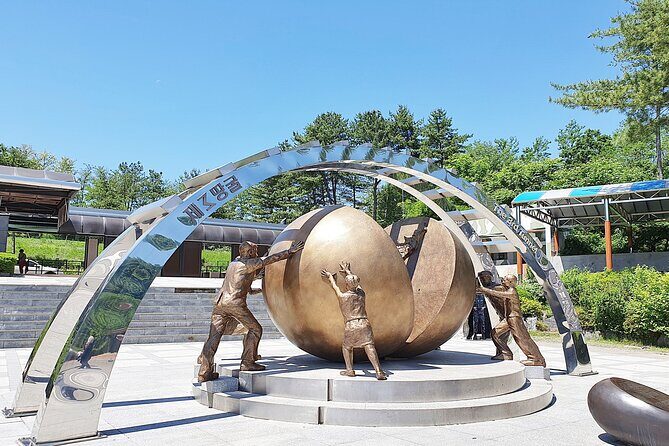
The whole point of the 365-day framing is that you don’t get stuck with a “sorry, closed” day. On Mondays and national holidays, the itinerary is designed around what can operate. Instead of the 3rd Tunnel, you go to a chain of sites that keep the story moving.
A typical Monday/holiday flow looks like this:
- Imjingak Peace Nuri Park
- DMZ Peace Gondola
- Jangsan Natural Observatory or Odusan Unification Observatory
- Gloster Hill Memorial Park
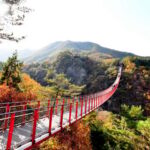
- Heroes Suspension Bridge
- Drop-off near City Hall Station
Why this works: the DMZ isn’t only about one tunnel. It’s also about memorial landscapes, prisoner-of-war and battle remembrance, and long-range views that show where the line feels real. On Monday you still get symbolic sites like the Freedom Bridge area and you still get the kind of observatory time that lets you see far enough to make the geography click.
The Gondola stop is also a smart choice for Monday logistics. It gives you a different way to experience the area without relying on the tunnel being open. And if weather or security restrictions shift things, the day can switch among nearby viewpoints.
Imjingak Peace Nuri Park: Freedom Bridge and the Refugee-Memory Core
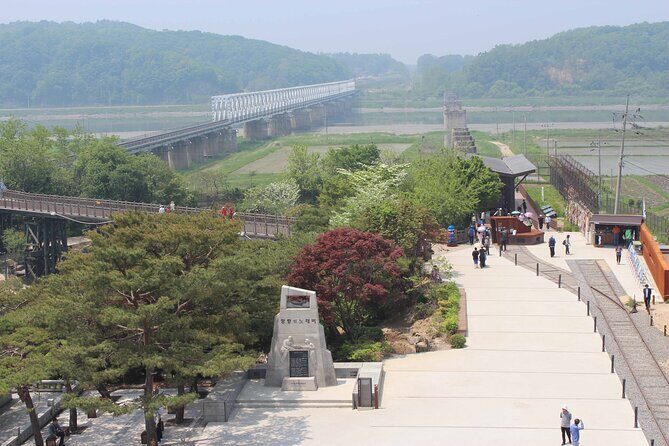
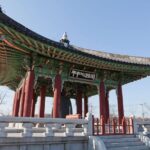
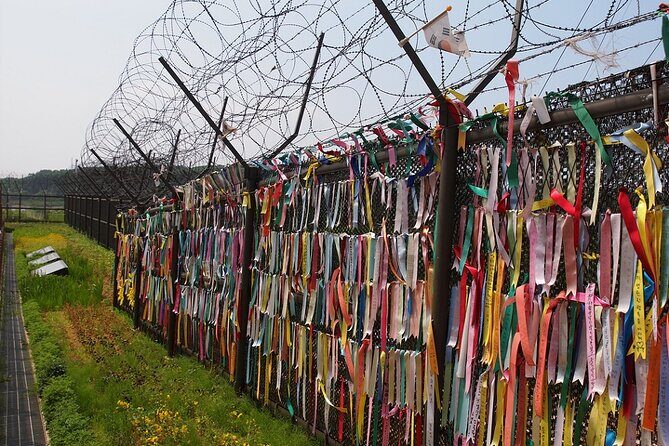
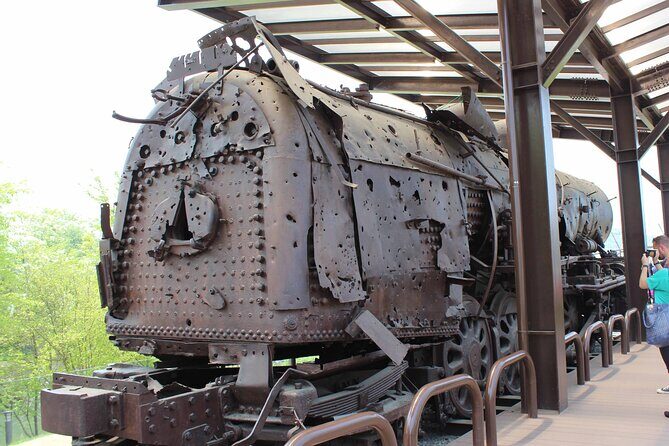
The day almost always begins at Imjingak Peace Nuri Park, a place originally created to offer solace for refugees from North Korea during the Korean War. Even if you only have a short time here, the park’s symbolic stops do the heavy lifting.
Expect monuments and strong photo points, including:
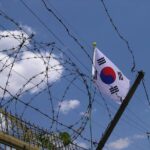
- Freedom Bridge
- a Soldiers’ Memorial area
This is one of the key moments where the DMZ doesn’t feel like an abstract border. It feels like a human event—movement, displacement, and war spilling into everyday life. If you want your guide to explain the Korean War in a way that makes sense, this is where the explanation starts to land.
A good mental tip: look for how each stop in the park represents a different part of the war’s legacy—escape, sacrifice, and separation. Your guide’s job here is basically translation: turning symbols into story.
North Korea Experience Hall: A Fast, Guided Primer Before You Look Across
One stop that’s fairly new in DMZ touring is the North Korea Experience Hall (listed along the Imjingak-ro area). It’s built for people who are curious beyond the slogans: you get a chance to satisfy that question of what life and conflict look like from different angles.
Time is limited—about 30 minutes—so treat it as a brief primer. Your goal isn’t to memorize details. Your goal is to leave with a framework your later view points can attach to.
If you like guided narration, this kind of indoor stop helps. It gives your brain something to hold while you’re outside staring at distant points.


The 3rd Tunnel Route (Tuesday–Sunday): Where the Geography Turns Tactical
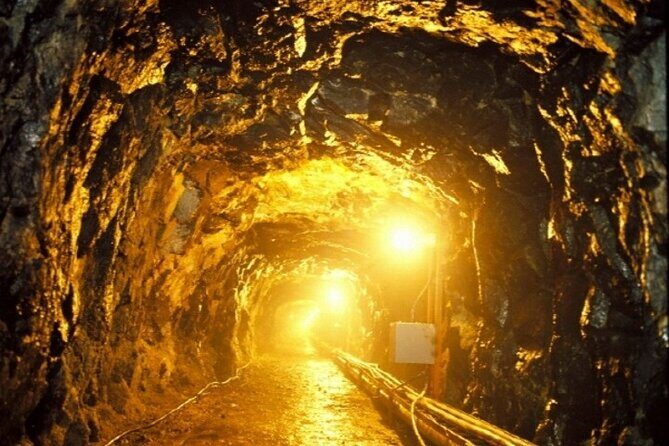
From Tuesday to Sunday, this tour includes the 3rd Infiltration Tunnel. The tunnel was discovered in 1978 and built for invading the South. It runs 1,635 meters in length and the visit is part of the day’s core “how the war was planned” explanation.
This stop is also where your body needs to cooperate. The tour notes that the tunnel and the Heroes suspension bridge area are physically demanding. If you’re fit enough to walk quickly and handle uneven ground, you’ll likely be fine. If not, it can be the hardest part of the day.
Also note the reality: DMZ sites can change suddenly due to security schedules. If the 3rd Tunnel route isn’t available on your day, the tour can shift to substitute options. That’s not an uncommon outcome in DMZ travel.
Dorasan Peace Park, Theater/Exhibition, and Dorasan Observatory: Seeing the Line From Official Points
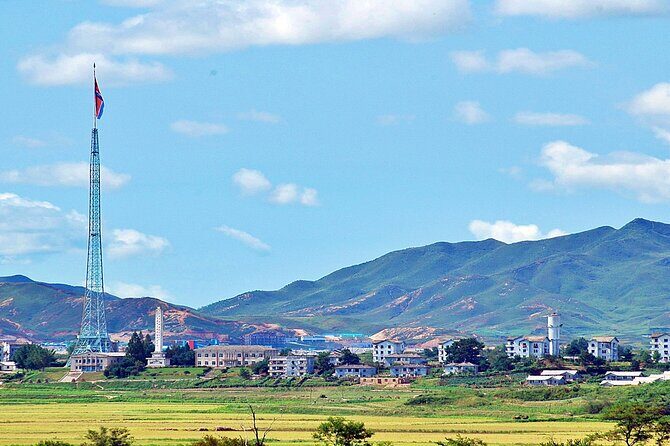
After the tunnel, the Tuesday–Sunday route continues toward Dorasan Peace Park and Dorasan Observatory (also listed as Dorasan Observatory for the viewing stop). This is where the day becomes visual.
At Dorasan Peace Park, you can watch an 8-minute short film at the DMZ theater and exhibition hall, giving you a South Korea–framed perspective on the conflict. That’s not filler. It helps you interpret what you’re seeing outside after the film—especially if your background on the Korean War is light.
Then you move to Dorasan Observatory. It’s perched on Dorasan Mountain and positioned for panoramic border-area views. The value here is simple: you get a view that makes the DMZ feel close, even though you’re miles away. If weather is clear, your photos will be better. If it’s foggy, the day still has meaning—your guide’s interpretation and the theater content can carry you through when sightlines are limited.
Unification Village and Tongilchon-gil: Short Stops With a Big “Civilian Zone” Feel
The itinerary includes Unification Village (on Tuesday–Sunday) and Tongilchon-gil (on Tuesday–Sunday). Tongilchon-gil is specifically described as a settlement within the Civilian Control Zone (CCZ) on the western front of the DMZ, and it’s not shown on most maps.
These stops are brief—like 20 minutes at Tongilchon-gil—so you won’t have time to wander like you would in a normal museum district. But the short timing can be a good thing. You get the sense of place without wasting energy. Your guide’s commentary is what makes these quick points meaningful.
In this part of the day, I recommend you slow down for a few minutes even if you feel rushed. If you’re taking in CCZ context properly, it’s easier to remember what matters later.
The Monday Substitutions: Gloster Hill Memorial Park and Heroes Suspension Bridge
When the 3rd Tunnel isn’t part of the plan, the Monday/holiday itinerary leans more heavily into Gloster Hill Memorial Park and the Heroes Suspension Bridge area.
Gloster Hill is a key memorial site, and it’s the kind of place where the story is tied to a specific battlefield location. The itinerary lists it as a stop on Monday/holiday routing and also notes closures may happen due to weather.
Then comes the suspension bridge viewpoint. This is one of those spots where the structure and the war story reinforce each other. It’s also physically demanding enough that the tour flags it in the fitness guidance, so expect some walking and uneven footing.
One detail that stood out in the experiences shared by past groups: people talk about a scenic, temple-like feel in the area connected with the bridge walk. Even without that specific expectation, the main point stays the same—this stop helps you connect memory and geography with your eyes.
British Army and Seolmari: Where the Story Gets International
On Mondays and national holidays, the itinerary includes the British Army Seolmari Battle Memorial Park, described as being built to honor British Army Gloucester Regiment soldiers at the Seolmari site. That’s a useful reminder that the Korean War wasn’t only a two-country conflict.
If you’re used to thinking of the DMZ in simplified lines—North versus South—this helps broaden it. It gives you another angle on why the peninsula mattered to multiple powers and why the war’s legacy is still visible in the memorial landscape.
Odusan Unification Observatory: A Backup Viewpoint That Still Works
The tour mentions that on Monday/holiday routing you may go to Jangsan Natural Observatory or Odusan Unification Observatory. And if weather or restrictions close other stops (like Gloster Hill or the Heroes Bridge), the plan may shift to Odusan Unification Observatory or the War Memorial of Korea.
The value of this kind of backup is practical: you don’t waste the whole day waiting for cancellations. You pivot to another viewpoint that still teaches you something about the border region.
Weather, Fog, and Security Shifts: How to Keep the Day From Feeling Wasted
DMZ travel has a built-in uncertainty factor. The tour is clear that the DMZ is a military zone and may be suddenly closed without prior notice. If that happens, the schedule can change and refunds aren’t provided.
That said, the day isn’t automatically a loss in bad weather. When visibility is limited, you still have indoor content—especially the theater/exhibition film on the Dorasan route—and guides who can steer your attention toward what you can see and what the sites mean even when the view is blocked.
My advice: go in expecting the plan to be flexible. If you treat it like a guided education day instead of a guaranteed photo day, you’ll be happier.
What the Guide Really Changes (Sookhee, Young, Roy, Chloe, Veronica)
This tour lives or dies on the guide. In the feedback, certain names show up again and again: Sookhee, Young, Roy, Chloe, and Veronica. Across all those experiences, the common thread is clear: the guide keeps the day organized and makes the history make sense.
Even if you’re not a history buff, you’ll benefit because the DMZ can feel like random stops. A good guide turns it into a timeline you can follow. And you’ll feel it most at the memorial sites, where symbolic elements are easy to misunderstand without explanation.
One more thing I like: the day feels like it’s timed for flow. Even when time is tight, the schedule doesn’t feel chaotic. You know what’s next and why it matters.
Time at Each Stop: Worth It, But Don’t Plan a Long Wandering Day
One fair caution based on on-the-ground experience: you don’t have unlimited time at each site. The stops are relatively short, so between the main attractions there’s not much drifting.
Plan for quick walking and staying close to the group. If you want a slow museum pace, this isn’t that day. Think more like an intense guided class with views.
The tradeoff is that you’ll see several different types of DMZ-related sites in a single outing. That’s the value. You just have to accept the tempo.
Price and Value: Why $59 Can Work for You
At $59 per person, this tour is priced as a budget-friendly way to access a difficult area from Seoul. The value isn’t just the bus ride. It’s the combined package: guide, pickup from subway stations, and the fact that many admissions are free. The 3rd Tunnel visit is listed as included on the route where it operates.
You’re also not paying for lunch here. That’s an extra cost you should plan for. But even with lunch on your own, the price can still feel reasonable given that the alternative is arranging your own transportation and still needing to navigate the schedule and access limits.
Also consider this: DMZ travel is one of those “worth doing once with a guide” experiences. The difference between a self-arranged trip and a guided day is how much meaning you take home.
Who Should Book This DMZ Tour (and Who Should Skip)
You’ll likely love this if you:
- want a guided, history-focused DMZ experience without renting a car
- have limited days in Seoul and need a Monday or holiday option
- like seeing multiple sites in one go (observatories + memorials + tunnel route when available)
You might want to skip or choose another option if:
- you don’t handle physically demanding walking well (especially the tunnel/bridge areas)
- you’re hoping for lots of slow free time at each location
- you can’t tolerate uncertainty if security/weather forces route changes
This tour is best for first-timers who want context, and for people who want the DMZ experience even on days when many attractions are closed.
Should You Book the 365-Day DMZ Special Tour?
I’d book it if you’re in Seoul and you want a structured DMZ day that still runs on Mondays and public holidays. The alternate routing is the real selling point, and the guide-led storytelling is where your money turns into understanding.
Book with the mindset that you’re trading flexibility and wandering for access and interpretation. If you can handle a fast-paced day and the possibility of weather/security changes, this is a strong value way to connect the Korean War’s history to the geography you can actually see.
FAQ
FAQ
How long is the DMZ day tour?
It runs for about 9 hours (approx.) and usually ends around 3:30pm at City Hall Station.
Where are the pickup and drop-off points?
Pickup is from one of the listed Seoul subway stations (with options described as limited places), and the tour ends at City Hall Station.
Is lunch included?
No. Lunch and food and drinks are not included.
What days include the 3rd Tunnel visit?
The 3rd Tunnel is listed as a visit from Tuesday to Sunday.
What is the itinerary on Mondays and national holidays?
On Mondays and national holidays, the tour route is listed as: Imjingak Peace Nuri Park, DMZ Peace Gondola, Jangsan Natural Observatory or Odusan Unification Observatory, Gloster Hill Memorial Park, Heroes Suspension Bridge, then drop-off at City Hall Station.
What happens if weather or security restrictions affect stops?
If stops like Gloster Hill Memorial Park or the Heroes Suspension Bridge are closed due to weather or security restrictions, the itinerary may switch to places such as Odusan Unification Observatory or the War Memorial of Korea. In general, the DMZ may also close suddenly, and the schedule can be adjusted.
What is the cancellation rule?
You can cancel for a full refund up to 24 hours before the experience’s start time. If you cancel less than 24 hours before, the amount paid is not refunded.