REVIEW · SEOUL
Seoul E-bike Tour
Book on Viator →Operated by We Ride Korea Bicycle Tours · Bookable on Viator
A few hours on an e-bike beats a whole slog. You’ll roll through Seoul’s biggest sights—Cheonggyecheon Stream, Gyeongbokgung Palace, Bukchon Hanok Village, and Jogyesa Temple—on electric bikes with a small-group local guide who keeps the pace manageable. I like that the route is planned to get you seeing the famous places without you feeling stuck in peak-time chaos, plus you’ll get a snack stop at a traditional market.
What I especially like is the mix of icons and neighborhoods: Seochon’s old gate area and the Blue House route add variety beyond the usual palace-and-temple loop. One thing to consider: this is a fast tour with short viewing windows (often 10–15 minutes per stop), so if you want long entry time inside buildings, plan to come back later on your own.
In This Review
- Key things to know before you ride
- Seoul on e-bikes: the value of moving fast but staying human
- Price, duration, and what’s actually included (and what isn’t)
- Meeting point and timing: arrive early so the ride stays smooth
- The itinerary, stop by stop: what you’ll see and what to watch for
- Stop 1: We Ride Korea Bicycle Tours & Rentals (setup and bike fit)
- Stop 2: Cheonggyecheon Stream (a city history pause)
- Stop 3: Gyeongbokgung Palace (iconic gates and tight timing)
- Stop 4: Tongin Market (snacks with real local flavor)
- Stop 5: Seochon (defense walls, old gate areas, and a short walk)
- Stop 6: The Blue House area (a major Seoul landmark from the bike)
- Stop 7: Bukchon Hanok Village (hanok photos without the full-day grind)
- Stop 8: Jogyesa Temple (quiet ending, good final reset)
- Stop 9: Back to We Ride Korea Bicycle Tours & Rentals (wrap-up)
- Guides and group feel: why the experience doesn’t feel rushed
- What it’s like to ride: comfort, safety, and staying together in Seoul
- Who should book this Seoul e-bike tour?
- Should you book this tour?
- FAQ
- How long is the Seoul e-bike tour?
- What does the tour cost?
- What’s included in the price?
- Where does the tour start and end?
- Are tickets included for the sights?
- Do I need to bring anything?
- Is there a weather or cancellation backup plan?
Key things to know before you ride
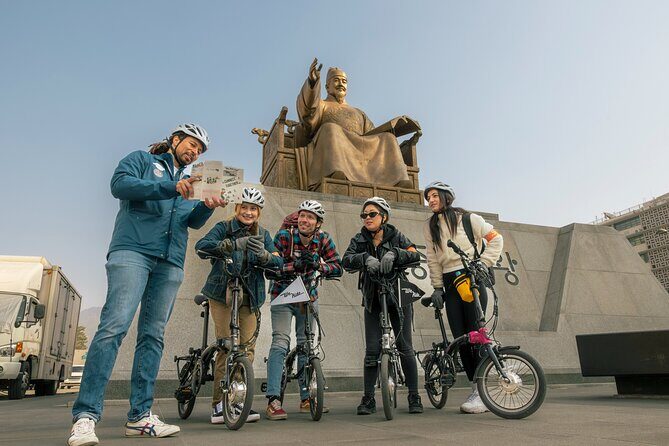
- Short, high-impact timing: about 3 hours with quick photo and sightseeing breaks.
- Electric assist makes hills easy: even on more hilly stretches like Bukchon.
- Traditional market food is part of the deal: snacks included during the tour stop at Tongin Market.
- You’ll likely get great photo moments: guides capture pictures during key stops.
- Small group size (max 15): easier to hear instructions and stay together on busy roads.
Seoul on e-bikes: the value of moving fast but staying human
This tour is built for people who want Seoul’s highlights without turning the day into a blur of walking, heat, and wrong turns. With electric assist, you can cover a lot of ground in just a few hours, but you’re still moving slowly enough to actually look around—street-level Seoul, not just window-shopping from a bus.
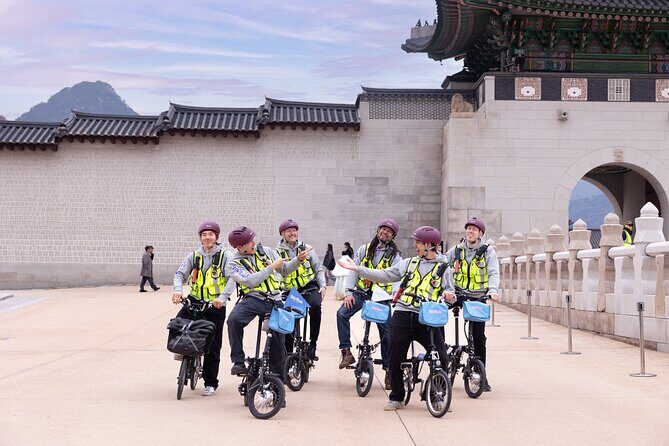
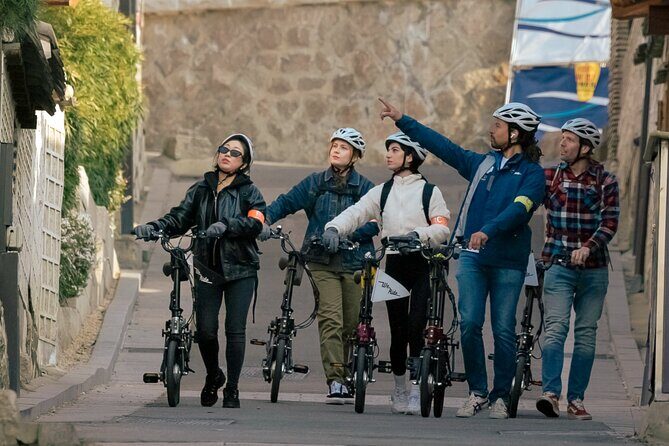
The “small group” part matters more than it sounds. You’ll be fitted on arrival, geared with a helmet and safety vest, and taught how the bike works before you start. Guides also keep the group moving as a unit, which helps when roads get crowded or when the route shifts with the season.
Price-wise, $120 per person is in the “experiential tour” range, so you want to get real value. Here, you do: the tour includes the e-bike, safety equipment, comprehensive insurance, a local guide, and market snacks. If you’d otherwise spend money on bike rental plus a guided sightseeing plan, this starts to look like a smarter bundle than piecing it together.
You can also read our reviews of more cycling tours in Seoul
Price, duration, and what’s actually included (and what isn’t)
The tour runs about 3 hours and uses a mobile ticket. You’ll meet back at the same starting location at the end, which keeps logistics simple—no mystery ending location.
Included items you should care about:
- E-bike use
- Helmet and safety vest
- Comprehensive insurance
- Snacks from the traditional market stop
- Local guide
- Pre-tour arrival time for setup and bike fitting
Not included (practical notes):
- Lunch is not included.
- You must bring a reusable bottle for water, or buy water from the operator before the tour.
- The start point includes a note that an admission ticket is not included (this reads more like bike-rental/registration info than a paid attraction fee).
Also, the tour depends on good weather. If conditions are poor, you’ll be offered another date or a full refund.
Meeting point and timing: arrive early so the ride stays smooth
Your start point is Le Meilleur Jongno Town, 19 Jong-ro, Jongno District. It’s close to public transportation, so you won’t need a car or taxi just to begin.
Plan to arrive 20–30 minutes early. This isn’t busywork. That time is used for bike fitting, safety education, and getting comfortable on the electric assist before you join traffic. When I see how often guides mention safety and pacing, this pre-ride window looks like one of the reasons the tour runs as cleanly as it does.
Duration is tight, so you’ll want to avoid arriving late and rushing. If you’re thinking of bringing extra layers for photos or comfort, do it early—once you’re fitted and rolling, you’ll focus on the route.
The itinerary, stop by stop: what you’ll see and what to watch for
This route strings together major sights and nearby cultural neighborhoods. Stops are short—often 10 minutes, sometimes 15—so treat each place as a “see it, understand it, move on” moment. You can always return later if something really grabs you.
Stop 1: We Ride Korea Bicycle Tours & Rentals (setup and bike fit)
You start at the bicycle tours and rentals shop at Le Meilleur Jongno Town. Expect a real pre-ride setup: safety education, bike fitting, and getting briefed before you’re on the move.
The practical upside: you won’t be left figuring out the bike on your own. The drawback: you’ll lose some of your total sightseeing time to getting ready, so arriving on time matters.
A few more Seoul tours and experiences worth a look
Stop 2: Cheonggyecheon Stream (a city history pause)
Cheonggyecheon Stream is one of those places that instantly changes the mood—calmer, scenic, and a nice break from traffic. The tour gives you about 10 minutes to explore and enjoy the surroundings.
This is a good stop to orient yourself. The stream is a major part of Seoul’s modern identity, and it also gives context for how the city mixes old and new.
Stop 3: Gyeongbokgung Palace (iconic gates and tight timing)
At Gyeongbokgung Palace, you’ll have around 10 minutes. The focus is on the palace’s gate area—the kind of iconic Seoul photo most people come for.
One note from the experience pattern: the guides time the visit so you can catch special moments when schedules align. If you’re interested in the changing of the guard, this is the stop where you’d want to pay attention and be ready.
Main drawback: if you wanted a long, inside-the-palace visit, the 10-minute window won’t be enough. Use this as a fast “first look,” then plan a deeper visit on another day.
Stop 4: Tongin Market (snacks with real local flavor)
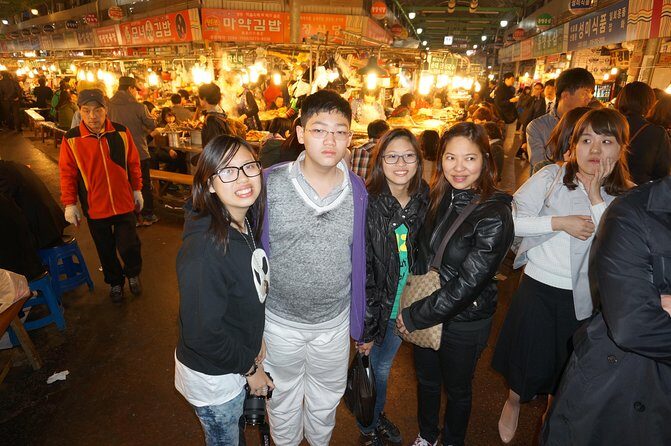
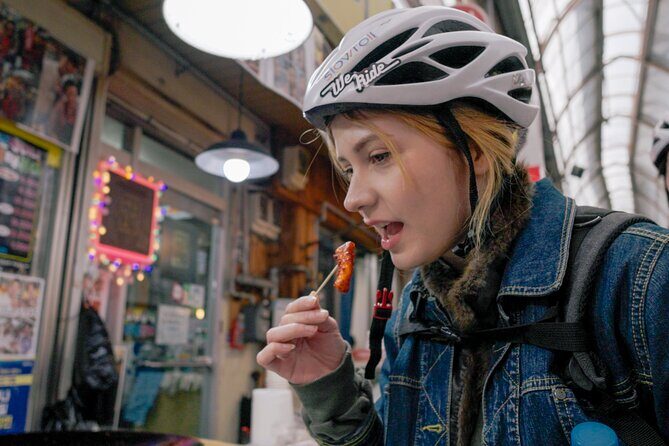
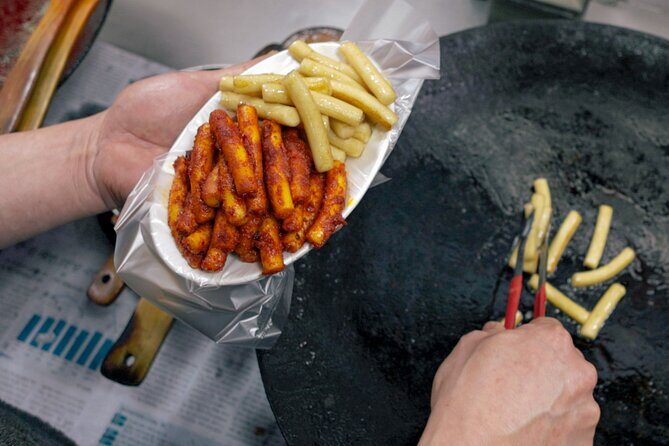
Tongin Market is where the tour earns its keep as more than just sightseeing. You’ll try street food recommended by the local tour team, with snacks included.
From the tour feedback you can expect variety—people talk about tasting different rice cakes and standout snacks like tteokbokki. If you’re picky, you can still have a good time here because the stop is about sampling, not committing to a full meal.
A practical tip: eat light before you go, because you’ll likely leave this stop satisfied.
Stop 5: Seochon (defense walls, old gate areas, and a short walk)
Seochon gets you out of the biggest tourist track and into a more residential-feeling historic zone. You’ll have about 10 minutes here, including a short walk along the area tied to old city defenses and passing by the oldest surviving gate in the city wall.
There’s also an optional hot drink mentioned as part of this stop. Even if you skip it, the timing makes sense: you get the flavor of a place without losing a big chunk of tour time.
Watch-out: because it’s a walk segment, wear shoes that are comfortable for short uneven surfaces and a bit of curb-hopping.
Stop 6: The Blue House area (a major Seoul landmark from the bike)
The tour includes a ride to the Blue House area (the Presidential House). It’s about 10 minutes—again, think “see it, get the context, keep moving.”
Because access rules and viewing angles can vary day to day, don’t treat this as a guaranteed long look. Treat it as part of the route experience and the guide’s storytelling.
Stop 7: Bukchon Hanok Village (hanok photos without the full-day grind)
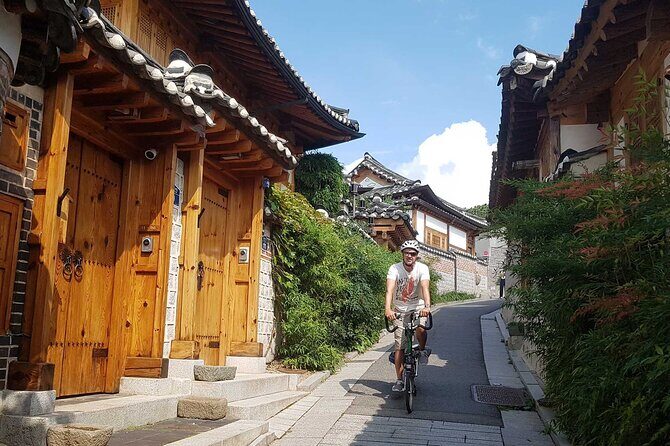
Bukchon Hanok Village is famous for a reason: you’ll see traditional hanok homes and get a photo stop. This is one of the most enjoyable parts for people who want Seoul’s heritage look without standing in long lines all morning.
You’ll have about 15 minutes. With an e-bike, you’re also more likely to enjoy the area on your terms instead of arriving exhausted from a steep walk.
Drawback: photo stops go fast. If you want to explore side streets in detail, you’ll need extra time later. Use this stop to decide what you want to return for.
Stop 8: Jogyesa Temple (quiet ending, good final reset)
Jogyesa Temple is a peaceful way to end. You’ll get about 15 minutes, with the tempo slowing just enough to feel like a real break after the sights.
This stop works well because it balances the landmarks. You’ve covered palaces, markets, and historic streets—now you get a calm finishing note.
Stop 9: Back to We Ride Korea Bicycle Tours & Rentals (wrap-up)
You return to the meeting point. You’ll have time to reset after the ride, and the tour also typically wraps with guidance on where to go next around the city.
Guides and group feel: why the experience doesn’t feel rushed
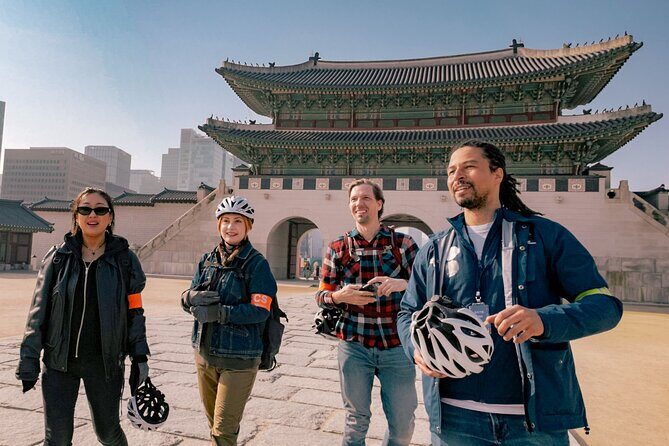
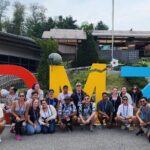
What pops from the guide-related details is consistency: multiple guides are named across experiences—people like TJ and Harry, Vincent, Jun, Taejin, and Hagar. The consistent theme is professionalism mixed with a friendly pace.
Another high point is photo handling. You’ll have pictures taken at key stops, and many groups mention receiving photos by email afterward. That’s a real value add because it means you don’t have to fight with your camera timer in a crowd.
Also, the group setup seems intentional. Even with ages ranging widely in at least one group, the e-bike assist and the safety instruction keep it accessible for moderate physical fitness levels.
What it’s like to ride: comfort, safety, and staying together in Seoul
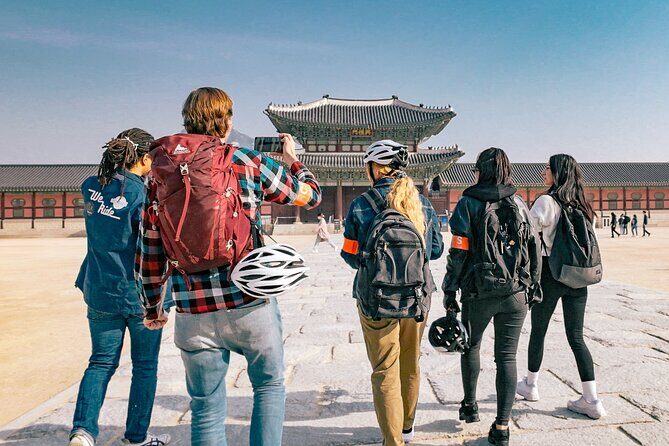
E-bikes remove a lot of the “will I survive this?” stress. You’ll still pedal at times, but electric assist takes the strain off—especially useful for Seoul’s hilly moments and the quick hops between neighborhoods.
Safety equipment is provided: helmet and safety vest. The tour also includes comprehensive insurance. And the route planning aims to keep you on bike lanes as much as possible, plus it’s designed to avoid the most overwhelming crowds by starting early.
Your job is simple:
- listen at every briefing
- keep your spacing
- bring water (reusable bottle preferred)
- wear comfortable shoes
Who should book this Seoul e-bike tour?
Book it if you want:
- a fast, guided overview of Seoul’s major historic sights
- an easy way to cover distances without exhausting yourself
- included snacks and a market experience built into your route
- a small group setting where instructions feel personal
It’s also great if you’re the type who likes to know what you’re looking at, even when you’re moving. You’ll get short, clear context at stops like Gyeongbokgung Palace, Seochon, and Bukchon.
Should you book this tour?
I’d book it if you’re visiting Seoul with limited time and you want a smart “first pass” through the city. The e-bikes make the route doable in a short window, and the value is strong because snacks, safety gear, and insurance are included—not just bike rental and a generic route.
Skip it (or at least consider a different option) if you’re someone who needs long ticketed time inside major sites. This tour is structured for quick viewing and photo moments, not deep museum or palace interior stays.
If you do book, come ready for a short, energetic morning or early afternoon: arrive early for the fit, bring your water bottle, and wear shoes you can walk in for those 10–15 minute stop segments. You’ll leave with a clear sense of where to spend more time later.
FAQ
How long is the Seoul e-bike tour?
It’s about 3 hours.
What does the tour cost?
The price is $120.00 per person.
What’s included in the price?
You get use of the e-bike, safety equipment (helmet and vest), comprehensive insurance, a local guide, and snacks from a traditional market stop.
Where does the tour start and end?
It starts at Le Meilleur Jongno Town, 19 Jong-ro, Jongno District, and ends back at the same meeting point.
Are tickets included for the sights?
Cheonggyecheon Stream, Gyeongbokgung Palace, Tongin Market, Seochon, the Blue House, Bukchon Hanok Village, and Jogyesa Temple are listed with free admission for the stop time. The tour’s start stop notes admission ticket not included.
Do I need to bring anything?
You must bring a reusable water bottle for water or purchase one from the operator before the tour.
Is there a weather or cancellation backup plan?
The tour requires good weather. If it’s canceled due to poor weather, you’ll be offered a different date or a full refund. Free cancellation is available up to 24 hours in advance for a full refund.