REVIEW · SEOUL
Half day Morning Seoul City Tour(Temple & Gyeongbok Palace)
Book on Viator →Operated by Cosmojin Agency · Bookable on Viator
A Palace, a temple, and a quick hit of everyday culture in one morning. This half-day Seoul city tour is a smart way to get your bearings fast and pack in big landmarks without wrestling with transit.
I especially like that it’s guided and admission fees are included, so you spend less time budgeting and more time looking. Guides like Cathy and Molly get praised for turning palace gates, architecture, and Joseon history into something you can actually picture.
One possible drawback: the pace can feel rushed if you want slow, deep time at each stop, and there’s a ginseng museum stop that some people feel takes longer than expected.
In This Review
- Key things I’d watch for before you go
- A tight 4-hour route built for first-timers
- Gwanghwamun Square to Jogyesa: the city’s contrast, up close
- Gyeongbokgung Palace: royal gates, big views, and guard timing
- The National Folk Museum: daily life beats only-photo history
- Blue House pass-by (Cheongwadae Sarangchae): what you can expect
- Ginseng Museum stop: useful info, variable tolerance for sales
- Pickup, transport, and pace: why this tour feels easier than DIY
- Price and value: why $32 can make sense here
- Who should book this morning Seoul tour
- When things change: rain, Tuesdays, and security reality
- Should you book the Half-Day Morning Seoul City Tour?
- FAQ
- How long is the half-day tour?
- What time does the tour start?
- Do I get hotel pickup and transport?
- What is included in the tour price?
- Which main sites are included?
- Is the royal guard changing ceremony guaranteed?
- What happens if Gyeongbok Palace is closed?
- Can I always pass by the Presidential Blue House?
- Is lunch included?
Key things I’d watch for before you go
- Gyeongbokgung + royal guard timing: the ceremony can be canceled if it rains, so check the weather.
- A temple right in the middle of downtown: Jogyesa offers a rare pause from the streets.
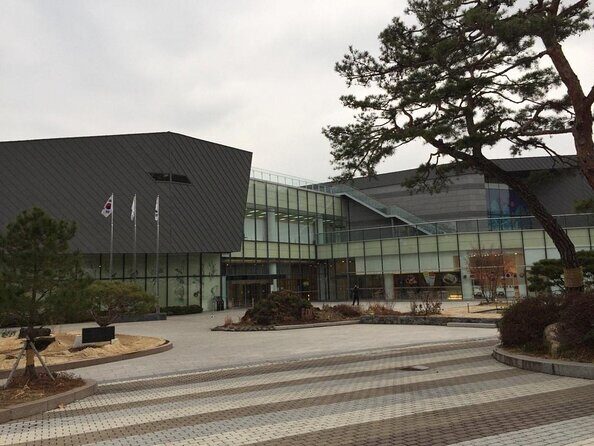
- National Folk Museum is inside the palace grounds: you’re not switching locations for history.
- Blue House is pass-by only: security rules can limit what you see.
- Insadong drop-off at the end: you finish in an area built for shopping and wandering.
A tight 4-hour route built for first-timers
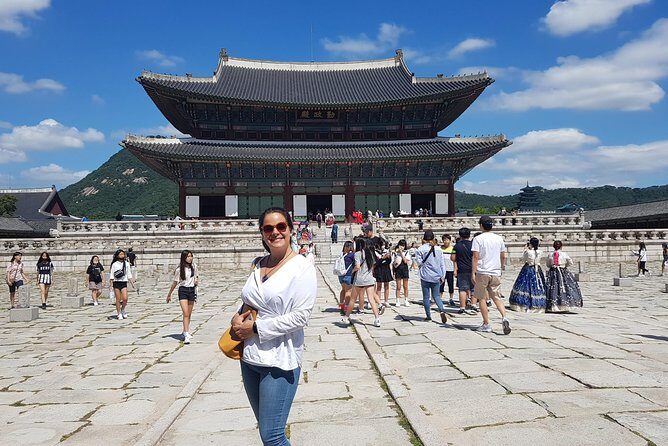
This tour is designed like a morning sprint: start around 8:30am, then hit the core sights you’d normally scatter across multiple trips. With hotel pickup in Seoul and drop-off in Insadong, you don’t have to coordinate trains, taxis, or “where do we meet?” logistics. It’s also a practical choice if you’re only in town for a short stay and want a strong intro without paying for a full day.
The tour runs about 4 hours (approx.) and keeps group size to a maximum of 44 travelers. That’s not tiny, but it’s large enough that having a guide matters—especially at places like Gyeongbokgung, where lines and crowd flow can make or break photos and viewing spots.
Also, this is the kind of route that gives you choices afterward. If you love palace architecture, you’ll know where to go next. If temples are your thing, you’ll have a baseline for what Jogyesa is doing spiritually and historically. And because you end in Insadong, you can extend the morning with tea stops, souvenirs, and artsy streets without backtracking across the city.
You can also read our reviews of more city tours in Seoul
Gwanghwamun Square to Jogyesa: the city’s contrast, up close
The tour begins at Gwanghwamun Square, a central landmark and a natural entry point to Seoul’s cultural core. From there, you head to Jogyesa Temple, one of the best examples of Buddhism living in the present—not just preserved for tourists.
Jogyesa is especially interesting because it’s not ancient in the myth-and-museum way some visitors expect. It was founded in 1935, and that date shows in the way the site functions in daily life: it feels active. You’re getting a calm pocket inside a loud city, which is a nice palate cleanser after the outdoor energy around Gwanghwamun.
The stop is about 30 minutes and includes free admission, so you’re not paying extra to get that contrast. The main “value move” here is how the tour strings together moods: city landmark energy, then temple quiet, then the gravitas of a royal palace later. If you tend to burn out in busy cities, this sequencing helps.
A small caution: because this is a morning tour, you’ll be walking in the same general central Seoul area. Wear comfortable shoes and don’t plan to start your day with a heavy breakfast that requires constant bathroom breaks—your schedule is already tight.
Gyeongbokgung Palace: royal gates, big views, and guard timing
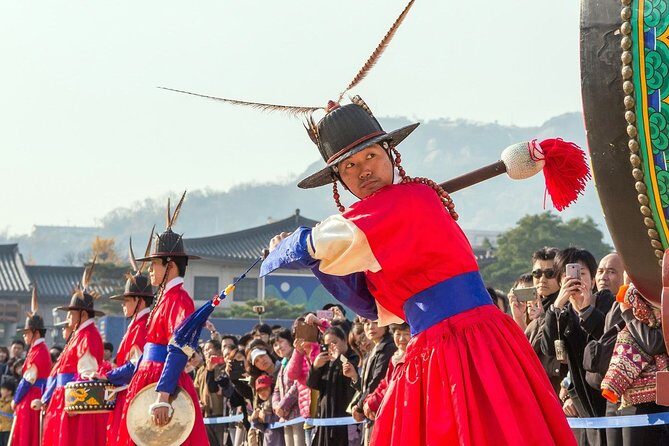
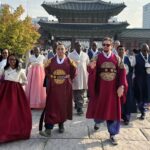
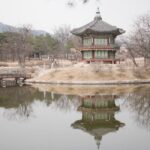
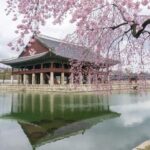
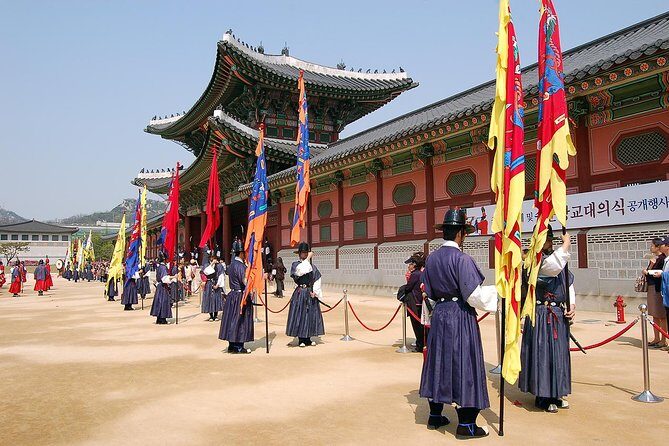
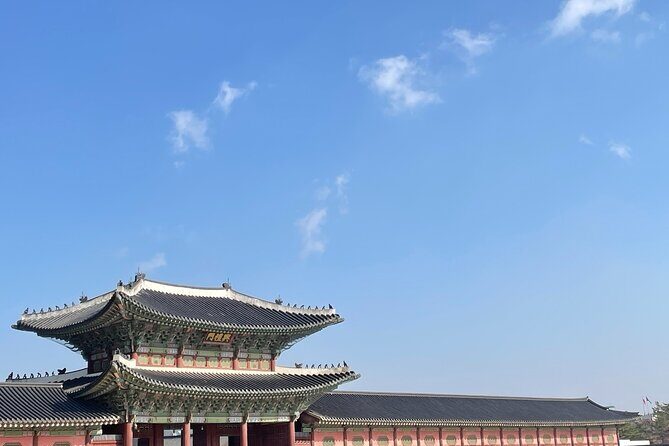
Gyeongbokgung Palace is the headline. This is Joseon-era Seoul at maximum scale, and the route is built around reaching the most important moments. The guide takes you to Gwanghwamun Gate area for the Royal Guard Changing Ceremony, which is the signature spectacle most people come for.
The practical reason this stop matters so much is timing. The ceremony is a set performance, and if you show up late you risk missing the best viewing positions. One review detail that’s useful: guides (like Cathy) have been praised for getting people there early enough for good photos before bigger waves arrive. So, if photography is part of your goal, this tour format can actually help.
Plan on about 1 hour at the palace complex, and admission fees are included. That’s important value-wise because palace entry alone can eat part of your budget if you’re building your own itinerary.
Two real-world considerations:
- The royal guard changing ceremony can be canceled when it’s rainy. If the forecast looks wet, manage expectations for that specific moment.
- If Gyeongbok Palace is closed on Tuesdays, it will be replaced by another tourist attraction. You’ll still get the palace-theme experience, but don’t count on the exact same highlights on that day.
If you like K-dramas, palace visits, and that feeling of stepping into another era, this is the part of the tour you’ll remember.
The National Folk Museum: daily life beats only-photo history
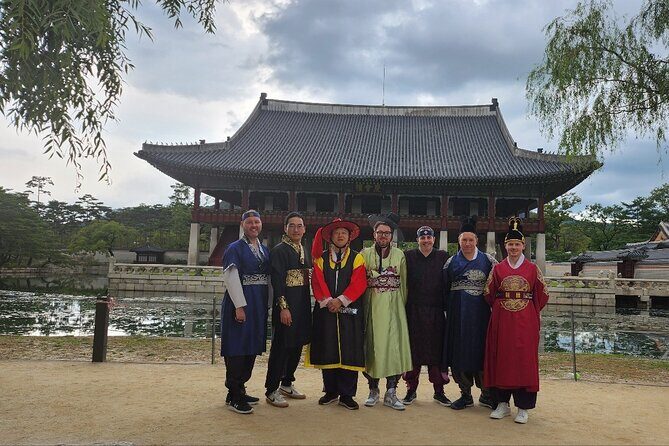
Right inside the palace grounds, you’ll also visit the National Folk Museum of Korea. This is one of those stops that upgrades a tour from seeing buildings to understanding people.
The museum focuses on the everyday lives of Korean people throughout history, using thousands of artifacts to show clothing, tools, homes, and cultural habits. The value here is balance: after the palace gives you royal power and formal ceremony, the museum grounds the story in how regular life worked—how people ate, dressed, worked, and celebrated.
This stop runs about 45 minutes, and, again, admission is included. That makes it easier for you to commit to the visit without thinking, “Do I really want to pay for one more ticket today?” In a half-day format, removing decision fatigue is part of the benefit.
Drawback? The time is fixed. If you’re the type who reads every label, you might wish you had more than 45 minutes. But if you’re after a guided overview that helps you choose where to go next later, it hits the sweet spot.
Blue House pass-by (Cheongwadae Sarangchae): what you can expect
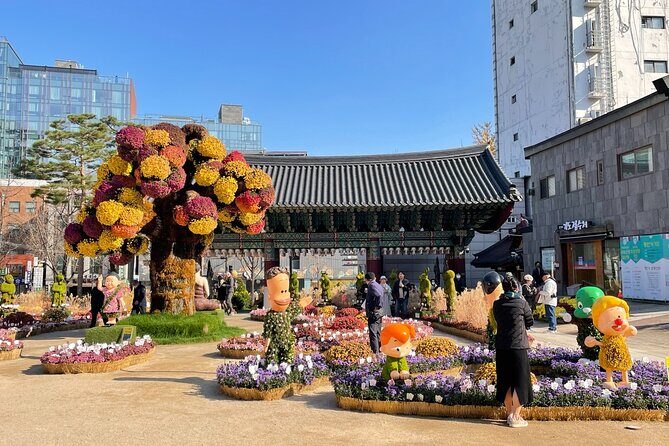
Next comes a pass-by stop at Cheongwadae Sarangchae, commonly referred to as the Presidential Blue House area. The tour is set up to let you see it from the outside.
Important reality check: you might not be allowed to pass by the Presidential Blue House for security. That means this is best treated as a “try for a glimpse” moment, not a guaranteed photo stop. If you get restricted, it doesn’t mean the tour fails—it just means security rules trump sightseeing.
The time here is short (about 15 minutes), and the admission is free. The value is mostly contextual. It gives you a sense of where modern Korea’s leadership sits relative to the historic core of Seoul you’ve been visiting.
A few more Seoul tours and experiences worth a look

Ginseng Museum stop: useful info, variable tolerance for sales
The final scheduled site is the Cheongha Korea Ginseng Museum (a ginseng museum & shopping stop) with about 20 minutes on the clock. Admission is free on this tour, so you’re not directly paying to enter.
Here’s the honest part: reviews include criticism that the tour can feel rushed, and in at least one case the extra time seemed tied to the ginseng museum segment, including some pressure toward purchasing packaged products. You can still get value by focusing on the educational side—ginseng is a big cultural and commercial thread in Korea—but you should know this stop isn’t just a passive museum visit.
How to handle it:
- Treat it as a cultural stop with a shop attached.
- If you’re not buying, don’t linger past what you need to see.
- Use the time to ask basic questions if your guide is interactive in that moment (guides tend to be strong at explaining context and history).
If you’re specifically hoping for a calmer, purely historical route, you may wish this time were allocated to one more palace-lane walk. If you’re curious about Korea’s traditional medicine culture, it can be a quick, informative add-on.
Pickup, transport, and pace: why this tour feels easier than DIY
The smoothest part of this experience is the structure. Hotel pickup removes the hardest step of sightseeing in Seoul: getting from your neighborhood to the palace-temple core without wasting time. The guide and transport also keep you moving between stops efficiently, which matters when you only have a morning window.
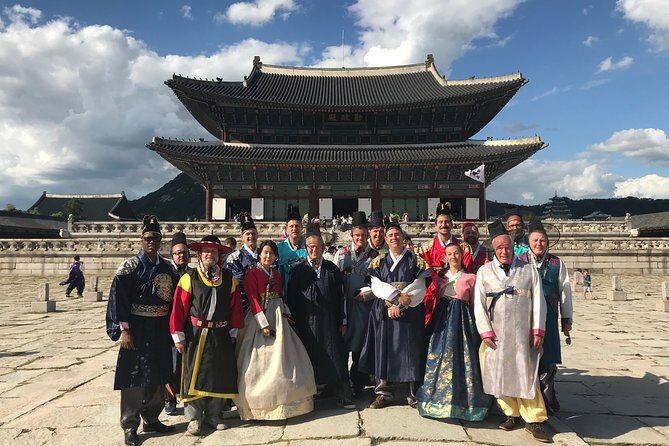
In reviews, one pattern pops up again and again: guides are praised for staying on schedule while also explaining the “why” behind what you’re seeing. Names mentioned include Cathy, Molly, Rose, JJ, June, Lee, Moon, and KC, and several people highlighted that the guide did more than point—you learned architectural and historical context. Some also mention guides taking pictures and making everyone feel included, including families.
One small practical note: at least one review flagged that microphone clarity could be tough at times. That’s not unique to this tour, but it’s worth considering. If you’re sensitive to audio issues, sit where you can hear clearly and don’t be shy about raising your hand if you can’t catch something.
Overall, this is the kind of tour where the value isn’t just the sites. It’s the reduced mental load. You show up, follow along, and end the morning in Insadong, ready to explore on your own.
Price and value: why $32 can make sense here
At $32 per person, this is priced like a serious half-day deal, not a casual add-on. The big value lever is that admission fees are included—so you’re not paying separately for palace or museum entry on top of your guide and transport.
You’re also getting:
- Professional English-speaking guide
- Transportation
- Hotel pickup
- Mobile ticket
- Drop-off in Insadong
Lunch isn’t included, so you’ll want to plan for food on your own after the tour. But even with lunch added, this can still come out cheaper and less stressful than buying tickets and building a tight DIY route for a limited morning.
One caution on value: if you really want long stays at every stop, the pace may not feel like “value”—it may feel like time pressure. In that case, a full-day itinerary (or adding your own independent time at Gyeongbokgung afterward) might fit better.
Who should book this morning Seoul tour
This tour is ideal if you fit one of these profiles:
- You’re in Seoul for a short trip and want a concentrated cultural sampler.
- You’re a first-timer who needs a guided layout of the city’s historic core.
- You want both a palace moment and a museum that explains daily life, not just ceremonies.
- You like learning from a guide who can connect architecture, Joseon-era context, and what you’re looking at in real time.
It’s also a decent family option. Reviews mention kids being engaged, which usually means the guide is good at keeping the energy up and making stops feel concrete instead of purely lecture-based.
If you’re the kind of traveler who hates shopping stops, go in with a mindset of quick viewing only at the ginseng museum. If you’re a strict “no shop, only history” person, you might find that segment annoying.
When things change: rain, Tuesdays, and security reality
A good half-day plan has built-in contingencies, and this tour has a few:
- Rain: the royal guard changing ceremony can be canceled when it’s rainy. That means the palace stop may shift toward general viewing and explanations.
- Tuesdays: Gyeongbok Palace will be replaced by another tourist attraction if it’s closed. You’ll still get a palace-style highlight, but the exact structure won’t match your expectations.
- Blue House access: you might not be allowed to pass by because of security. Expect this to be limited and plan photos accordingly.
Also, the tour is about momentum. If you expect slow, lingering time, you may feel the schedule. A review specifically called out that it can be rushed, and another pointed to the ginseng museum time feeling heavier than the rest. That doesn’t mean it’s bad—it means you should match the tour to your travel style.
Should you book the Half-Day Morning Seoul City Tour?
If you want an efficient, guided introduction to Seoul’s historic center—palace, temple, and a museum that explains everyday life—this is a strong pick for the money. The combination of hotel pickup, admission included, and ending in Insadong makes it easy to turn one morning into a full cultural start.
I’d especially recommend it if you’re traveling light on time and want structure without feeling trapped. It’s also a good match if you like having a guide with real explanations rather than just a checklist.
Don’t book it if you’re allergic to any shopping-oriented stop, or if you need long, quiet time at each site. For that style, you’ll likely be happier pairing a shorter guided tour with extra self-guided hours afterward.
If you go, bring comfortable shoes, check the weather for ceremony chances, and treat the ginseng museum as a quick cultural stop—not a must-buy experience.
FAQ
How long is the half-day tour?
The duration is about 4 hours (approx.).
What time does the tour start?
The start time is 8:30am.
Do I get hotel pickup and transport?
Yes. The tour includes hotel pickup service and transportation.
What is included in the tour price?
The tour includes a professional English-speaking guide, transportation, admission fees, and hotel pickup service. It also uses a mobile ticket.
Which main sites are included?
You’ll visit Jogyesa Temple, Gyeongbokgung Palace (including the royal guard changing ceremony area), and the National Folk Museum of Korea. The tour also includes a pass-by of Cheongwadae Sarangchae (Blue House) and a stop at the Cheongha Korea Ginseng Museum.
Is the royal guard changing ceremony guaranteed?
No. The royal guard changing ceremony will be canceled when it is rainy.
What happens if Gyeongbok Palace is closed?
If Gyeongbokgung is closed on Tuesdays, it will be replaced by another tourist attraction.
Can I always pass by the Presidential Blue House?
You might not be allowed to pass by the Presidential Blue House due to security.
Is lunch included?
No. Lunch is not included in the tour price.