REVIEW · BUSAN
Busan: Haeundae 100-Minute Walking Tour
Book on GetYourGuide →Operated by GaNaDaRa Tour · Bookable on GetYourGuide
Busan’s beach isn’t what it seems at first.
This 90-minute Haeundae walk turns the shoreline into a story you can follow on your own feet, with stops tied to rail lines, seaside hot springs, war-time memories, and the scholar who gave the area its name. I like that it focuses on one compact area (so you actually understand it), and I especially like the way the guide connects modern Busan to what came before. One thing to consider: it includes a 50-meter hill and about 2 kilometers of walking.
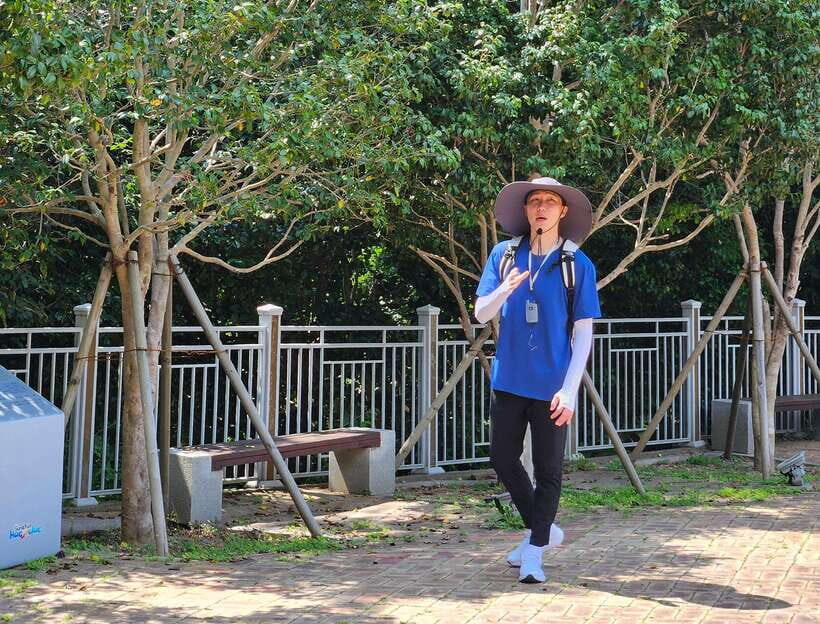
You’ll get a clear, English-speaking narrative from Kim Ingyu, who comes across less like a lecturer and more like a local friend with a well-organized storyline. I also like the audio setup: a wireless transmitter with complimentary earphones, plus an easy option to use your own 3.5mm wired earphones for hygiene. The main drawback is timing: this tour is great as a first orientation, but it is not a long, slow beach day—so pack your beach time for after.
In This Review
- Key things you will notice
- Haeundae’s surprise factor: beach time meets Korea’s turning points
- Starting at 옛 해운대역 and the former station story
- Practical note: where to show up
- Gunam-ro: the seaside hot spring that shaped social life
- Haeundae Beach with a wartime context
- What you should do with this information
- Old Haeundae station exhibits: turning artifacts into story
- Dongbaek Island: Choi Chi-Won and the calm end to your walk
- Price and walking reality: what $29 buys you
- Audio comfort: wireless earphones are included
- Who should book this tour, and who might skip it
- Should you book Busan’s Haeundae 100-Minute Walking Tour?
- FAQ
- How long is the Haeundae walking tour?
- Where is the meeting point?
- What language is the tour guide?
- Is the tour wheelchair accessible?
- How much walking is involved, and is it hard?
- What should I bring?
- Is audio recording allowed during the tour?
- What audio equipment is provided?
- Is the tour suitable for kids and older adults?
- Do you offer free cancellation or reserve & pay later?
Key things you will notice
- Old Haeundae Station and how the Donghae-Nambu Line helped reshape the coast
- Gunam-ro and Gunam Oncheon, Korea’s only seaside hot spring
- Haeundae Beach as a place shaped by the Korean War, not just summer crowds
- Dongbaek Island and the legacy of Choi Chi-Won, who named Haeundae
- A hill climb built into an easy route, so bring water and shade if it’s sunny
Haeundae’s surprise factor: beach time meets Korea’s turning points

Haeundae looks like a classic beach district at street level: wide sand, tall buildings nearby, and a lot of day-to-day life. What makes this tour special is that it refuses to treat the shoreline as just scenery. Instead, you walk through layers—transport, leisure culture, and the South-North story—so the place starts to make sense fast.
I like this approach because it gives you a map for understanding Busan. You don’t just see the coastline; you learn why this coast mattered, and how those reasons shaped what you’re standing in front of today. And that matters, because Busan’s modern face can feel sudden if you don’t know the earlier chapters.
You can also read our reviews of more walking tours in Busan
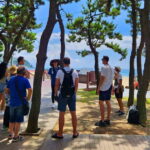


Starting at 옛 해운대역 and the former station story

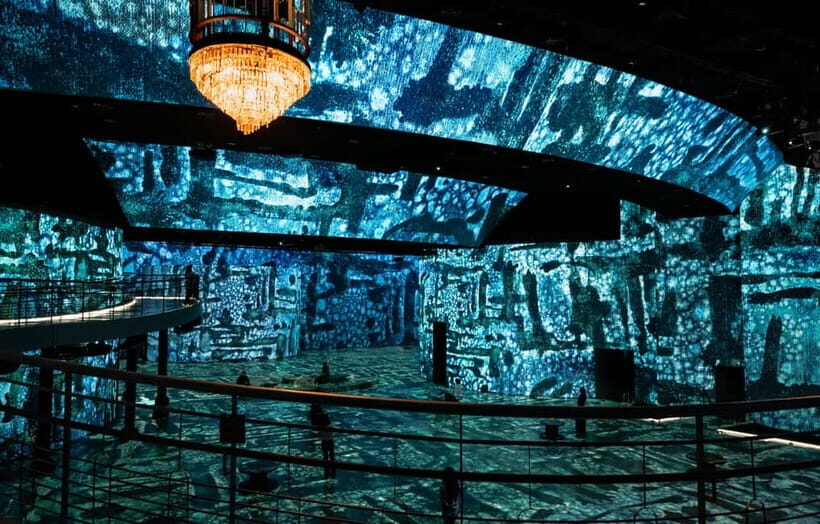
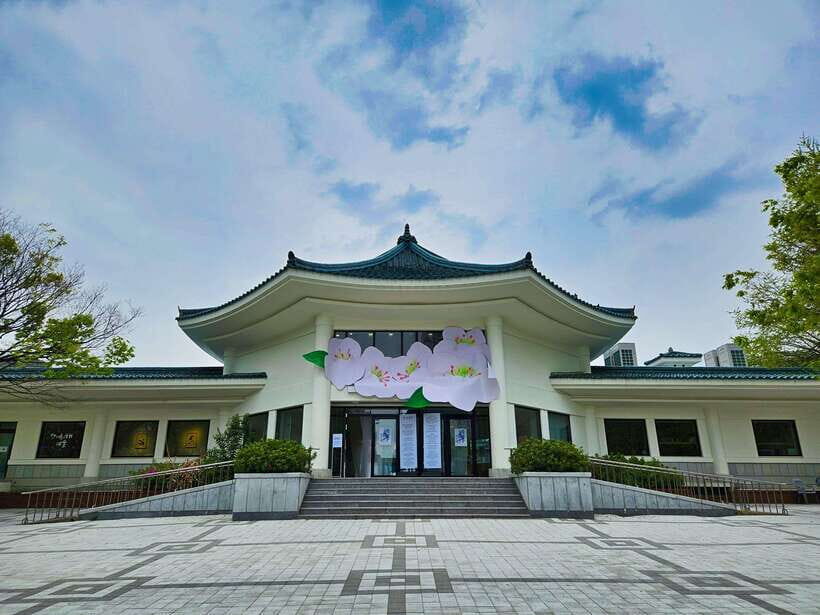
The tour begins at the old station area at Haeundae Atelier Chik Chik Pok Pok (옛 해운대역), which also connects with state-heritage media art at the old Haeundae station site. This is a smart opener because railroads are the hidden engine behind so much coastal change, and the guide uses this spot to anchor the story.
You’ll hear how the former Haeundae Station linked into the Donghae-Nambu Line during the Japanese colonial period, and how that rail connection helped rewire the region’s development. Even if you don’t know the dates, the point lands: where trains go, daily life follows.
You’ll also see how older infrastructure can become part of modern Busan. The tour’s framing highlights that the old railway has been repurposed into today’s attractions like the Blue Line Park area. That connection is useful for you later, because it helps you spot what’s genuinely historic versus what’s simply photographed.
Practical note: where to show up
You meet at the old station area by the plaza in front of Exit 4 at Haeundae Station (Busan Metro Line 2). As you come out, you’ll see a public square on the right and the guide holding a flag. Wear shoes you’d trust for city sidewalks and uneven edges near the coast.
Gunam-ro: the seaside hot spring that shaped social life
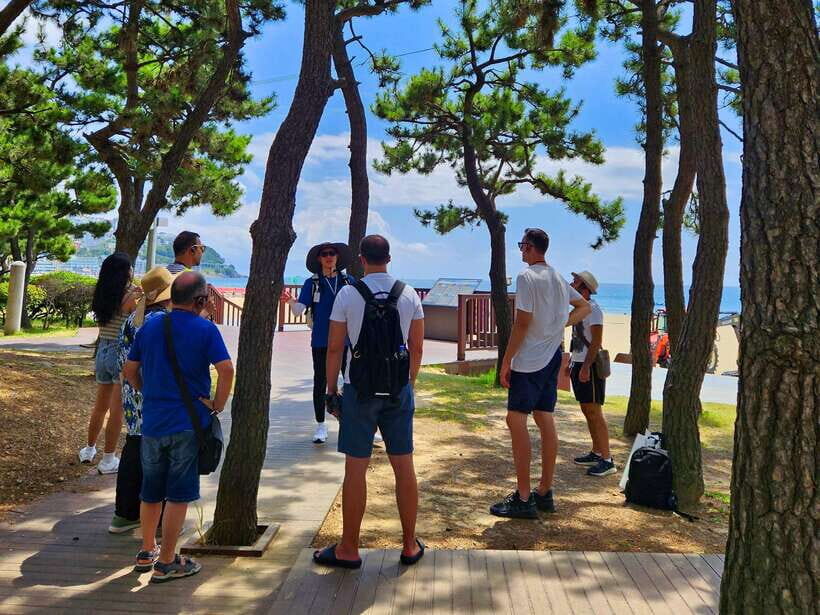
Next you move onto Gunam-ro, a street that the tour treats like the spine of Haeundae’s culture. This is one of those spots where your eyes can glide over storefronts and street signs—unless someone gives you a reason to look closer. The guide does that by tying the area back to Gunam Oncheon, described as Korea’s only seaside hot spring.
The big idea here is how leisure becomes community. A seaside hot spring wasn’t only about bathing—it influenced patterns of gathering, social visibility, and even prestige. The tour shares that Gunam Oncheon was loved by Korean royalty, which helps explain why this wasn’t just a casual stop for travelers. It was part of a higher-status leisure culture that shaped how Haeundae grew.
As you walk Gunam-ro, you’ll understand why the street still feels like a hub. You’ll also pick up a useful mindset for the rest of Busan: look for water-based history. In places like this, coastlines aren’t passive. They’re part of local identity.
Haeundae Beach with a wartime context
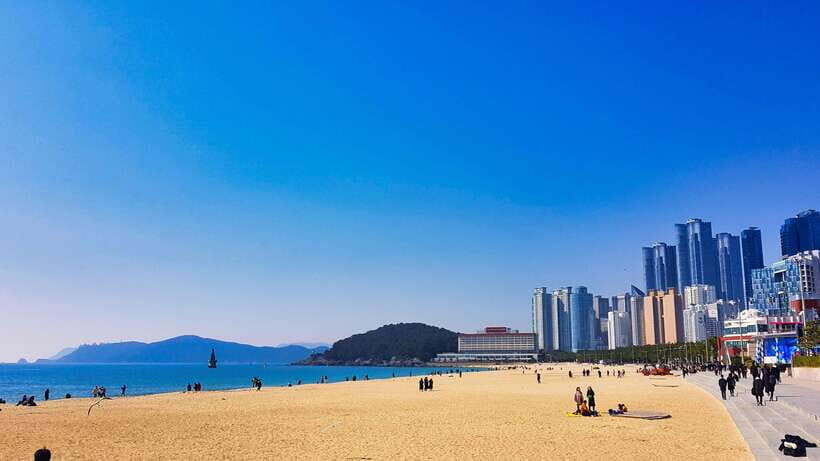
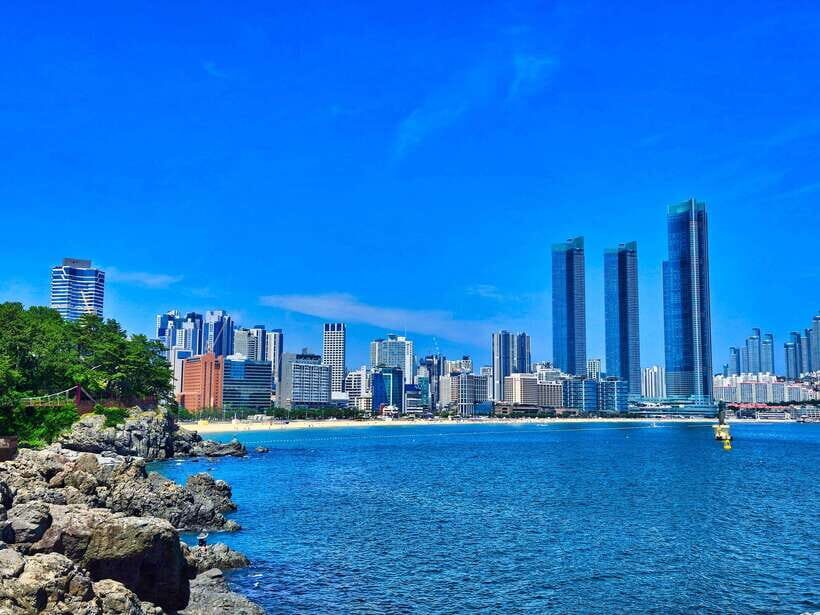
Yes, you’ll admire Haeundae Beach—that’s the point. But the tour’s real value is the context. Instead of treating the beach as a neutral backdrop, the guide explains how, after the Korean War, the beach became a U.S. military base. That historical detail changes how you read the shoreline.
This is where the South-North relationship comes into the story in a direct, human way. Even if you’re only passing through for photos, understanding why certain areas were used, reshaped, or controlled gives you a fuller picture of how the peninsula’s tensions affected everyday life in coastal cities like Busan.
You’ll also get a more thoughtful experience of the contrast you’re seeing. Today, people come for relaxation and views. Earlier, the beach had a different purpose. Once you know that, you notice how places can hold multiple meanings at once.





What you should do with this information
I suggest you use what you learn here as a lens while you explore on your own. When you see new buildings, piers, or redevelopment, you’ll be asking better questions:
- What changed because of transportation?
- What changed because of strategic needs?
- What stayed because it was already culturally important?
That’s the difference between a quick sightseeing loop and a tour that actually upgrades your trip.
Old Haeundae station exhibits: turning artifacts into story
Mid-tour, you spend time at the old station area again through the guided segment tied to the old Haeundae station stop (the tour route lists a guided visit there for about 20 minutes). This isn’t wasted repetition. It’s how the tour builds meaning.
On your first approach, you understand the rail connection. Then, at the station exhibits, you get to see how the past is presented in a modern format—so you can connect story to place. If you like history but don’t want to drown in dates, this is a good balance: enough background to matter, enough pacing to keep it enjoyable.
Also, the guide’s style helps here. The tour feedback I’ve seen emphasizes that Kim Ingyu keeps things clear, entertaining, and organized. That’s not just personality—it’s practical. When history is explained in a structure you can remember, it actually sticks.
Dongbaek Island: Choi Chi-Won and the calm end to your walk
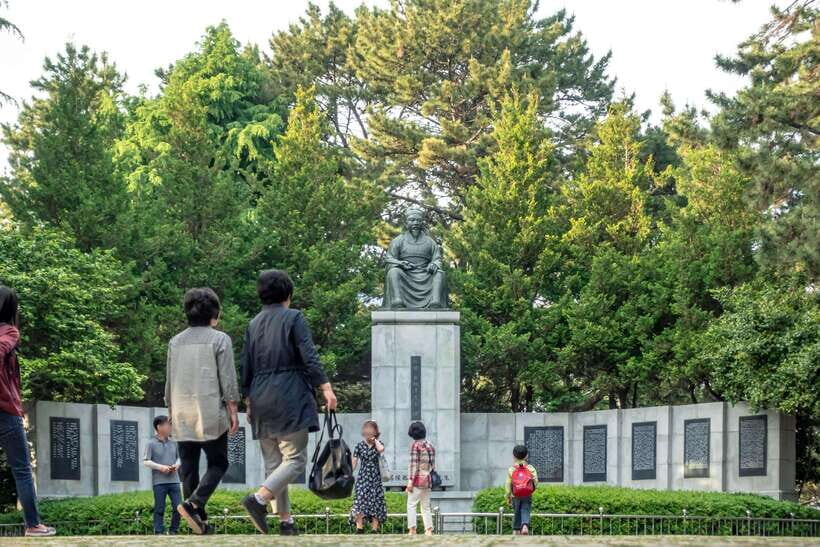
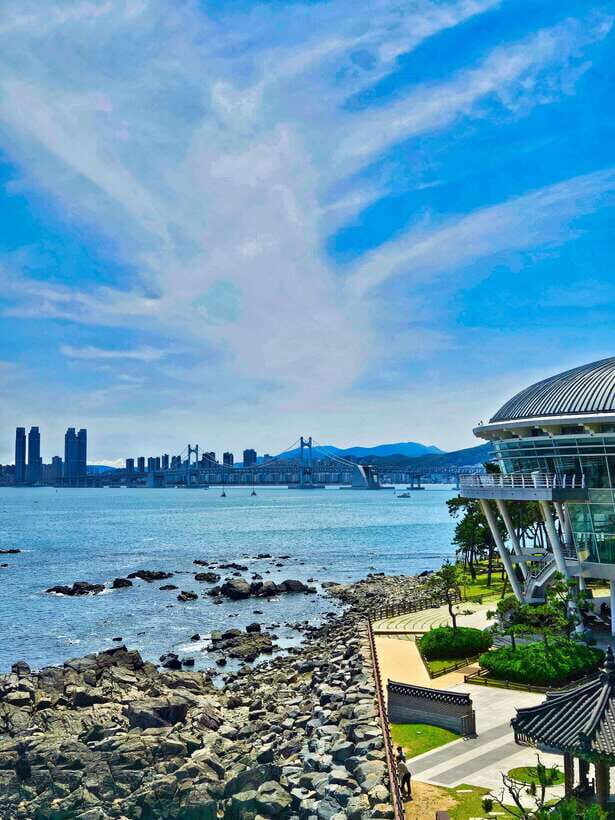
The tour finishes at Dongbaekseom (Dongbaek Island), where the atmosphere shifts from city energy to coastal quiet. This is a nice way to close because your brain has already absorbed the bigger historical frame. Now you get views and reflection.
You’ll learn about Choi Chi-Won, the scholar credited with naming Haeundae. Even if the name doesn’t sound important before the tour, hearing the story behind it makes the place feel more grounded in Korean intellectual history, not only modern development.
The island walk is also a practical breather. You’re near the coast, you can slow your pace, and you get the kind of photo opportunities that don’t feel forced. It’s a good ending point for photos because the views naturally open up.
Price and walking reality: what $29 buys you
At about $29 per person for 90 minutes, this is priced like a tour that wants to be useful rather than flashy. You’re not paying for transportation (you’re walking), and you’re not paying for a long checklist of far-flung stops. You’re paying for a guide who can connect specific locations in a tight area into one coherent story.
That value shows up in two ways:
- You get a focused narrative in a short time window, ideal for your first day in Haeundae.
- You get a local framing of the peninsula’s history that you won’t easily spot from street-level signs alone.
The walking is easy overall, but I wouldn’t ignore the details. The route includes about 2 kilometers and a hill roughly 50 meters high. The tour is considered easy for most fitness levels, yet hills are still hills—especially in sun. Bring water and consider a sun umbrella if the weather is bright.
Audio comfort: wireless earphones are included
The tour provides a wireless transmitter and receiver, with complimentary earphones. That’s convenient for most people. If you’re picky about hygiene (or just prefer your own audio style), the tour recommends personal 3.5mm wired earphones—a small detail, but it’s the kind that can make the experience more comfortable.
One other rule: audio recording isn’t allowed. So come ready to listen, not to capture.
Who should book this tour, and who might skip it
This is a great fit if you want history but don’t want a full-day commitment. You’re walking through the heart of Haeundae and leaving with a clearer understanding of how this coast changed over time—from a hot spring area to a developed seaside district influenced by rail and war-time needs.
It’s also a smart choice if you prefer your tour guides to be chat-friendly. The tour’s tone, as described by people who did it, leans toward conversation and questions. That makes a difference because you can ask what you’re actually curious about, not just what’s on a slide.
On the other hand, the tour isn’t set up for everyone. It’s not suitable for children under 10 and people over 70, and the hill means you’ll want to think carefully if you have mobility limits.
If you’re planning a pure beach day and you don’t care about context, you might find it too history-forward. But if you want a quick upgrade in understanding, this tour is a strong move.
Should you book Busan’s Haeundae 100-Minute Walking Tour?
I’d book it if you like your trips organized by story. You get the old station starting point, Gunam-ro’s hot spring roots, a Korean War perspective at Haeundae Beach, and an ending at Dongbaek Island tied to Choi Chi-Won. That’s a lot of meaning for 90 minutes.
Skip it if you’re chasing a long lounging schedule, or if the 50-meter hill feels like a problem. Also, if you hate walking at all, save your time and do a self-guided beach stroll instead.
But if you’re in Haeundae anyway and want to understand why it developed the way it did, this tour is a fast, practical route to seeing more than just the postcard view.
FAQ
How long is the Haeundae walking tour?
The tour lasts about 90 minutes (listed as 1 hour 40 minutes).
Where is the meeting point?
Meet at Haeundae Atelier Chik Chik Pok Pok (Old Haeundae Station), 621, Haeundae-daero, Haeundae-gu, Busan. The meeting spot is the plaza in front of Exit 4 of Haeundae Station (Line 2).
What language is the tour guide?
The tour is conducted in English.
Is the tour wheelchair accessible?
Yes, the tour is wheelchair accessible.
How much walking is involved, and is it hard?
You’ll walk about 2 kilometers and climb a hill about 50 meters high. The walking difficulty is listed as easy and suitable for all fitness levels, but the hill is still a real factor.
What should I bring?
Wear comfortable shoes and bring your own drinking water. If it’s sunny, a sun umbrella is recommended for shade.
Is audio recording allowed during the tour?
No. Audio recording isn’t allowed.
What audio equipment is provided?
You’ll receive a wireless transmitter and receiver. Complimentary earphones are provided, and you may want to bring your own 3.5mm wired earphones for hygiene.
Is the tour suitable for kids and older adults?
It’s not suitable for children under 10 years old, and it’s also not suitable for people over 70.
Do you offer free cancellation or reserve & pay later?
Yes. You can cancel up to 24 hours in advance for a full refund, and you can reserve now and pay later (pay nothing today).