REVIEW · BUSAN
Busan city tour from Seoul by KTX bullet train
Book on Viator →Operated by Tagytravelkorea · Bookable on Viator
A KTX day trip to Busan is a time-cruncher’s dream. You’ll cover major sights in one long day, starting with a Jagalchi Market seafood stop and ending at the cliffside Haedong Yonggungsa Temple.
I especially like the logistics: round-trip KTX economy seats plus hotel pickup from Seoul means you spend less time figuring things out. The other big win is the private guide pacing, with time built in for photos and short breaks between stops.
One consideration: it’s a 9 to 10 hour day, with a 7:00 am start and plenty of riding time. If you hate early mornings, plan on a very full day—no slow sightseeing.
In This Review
- Key things worth knowing before you go
- Busan in one day: what this tour actually delivers
- Price and Logistics: what $415 buys you
- The 7:00 am start: why the day feels full (and how to handle it)
- Riding KTX with a guide: the best part is losing fewer minutes
- Stop 1: Jagalchi Fish Market—where Busan smells like the sea
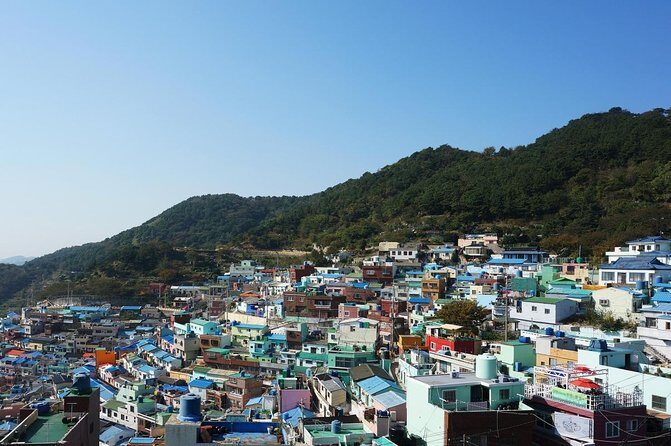
- Stop 2: Gamcheon Culture Village—art streets with a history behind them
- Stop 3: Haeundae Beach—famous, photo-ready, and good for a break
- Stop 4: Haedong Yonggungsa—your coastal temple moment
- Stop 5: Dongbaekseom (Camellia Island) and Nurimaru APEC House
- Stop 6: Ami-ro 128beon-gil and Choi Min-shik Gallery—photo culture in 20 minutes
- Stop 7: Amidong Tombstone Culture Village—stairs made of stories
- Pacing and guide style: why people keep praising the people, not just the places
- What to do to make the most of your one day
- Who this Busan-by-KTX day tour is best for
- Should you book this Busan city tour from Seoul by KTX?
- FAQ
- How long is the Busan city tour from Seoul?
- What time does the tour start in Seoul?
- What’s included in the price?
- Are meals included?
- Do the stops have admission fees?
- Is this a private tour?
- Can I get a full refund if I cancel?
Key things worth knowing before you go
- Hotel pickup in Seoul and a guide-led handoff make the train day feel less stressful.
- Round-trip KTX seats are handled so you don’t waste your limited day hunting carriage numbers.
- Most major stops are admission-free in the itinerary, which helps your budget.
- The route mixes classic Busan (Jagalchi, Haeundae) with War-era story neighborhoods (Gamcheon, Amidong).
- You’ll get a rare coastal temple stop: Haedong Yonggungsa sits right on the shoreline.
- Guides may personalize pace and interests; names like Mr. Jay, Mira, Solomon, Young, and Amy show up in past experiences.
Busan in one day: what this tour actually delivers
This is a high-effort, efficient day that’s built for people who only have a short window in Korea. You’re not “seeing Busan slowly.” You’re seeing Busan a lot. And the trade-off is simple: you get variety across the city without the hassle of moving trains, taxis, and timing yourself.
The itinerary hits several of Busan’s headline experiences plus two culture stops that add depth. You’ll start with seafood at Jagalchi, tour the hillside art streets of Gamcheon, take in the beach scene at Haeundae, then switch gears to the seaside temple at Haedong Yonggungsa. After that, it moves through a coastal island outlook, photography, and a very unusual “tombstone village” that gives you a different side of Busan than the seaside postcards.
The overall feel is organized and guide-led. In past tours, guides like Mr. Jay and Solomon were specifically praised for smooth communication and for getting people to their reserved train seats. Mira and Young also came up often for keeping the pace right—busy, yes, but not frantic.
You can also read our reviews of more city tours in Busan


Price and Logistics: what $415 buys you
At $415 per person, this isn’t a budget day trip. But it also isn’t “just a van and a plan.” You’re paying for a package that includes:
- Qualified English-speaking guide
- Hotel pickup service in Seoul
- Round-trip KTX fare (economy)
- A private arrangement for your group
Here’s how I look at value: if you were to DIY this, you’d likely buy a KTX round trip anyway, then pay for local transfers, plus figure out a driver/guide arrangement in Busan. This bundle removes most of the decision fatigue. For two travelers (there’s a minimum of 2 people per booking), it can make your one-day window feel way more controllable.
Also, the tour uses mobile tickets, which matters because Seoul-to-KTX logistics can be annoying when you’re tired. You arrive, you get guided, you go.
The 7:00 am start: why the day feels full (and how to handle it)
The tour meeting point is Seoul with a 7:00 am start. That means you’re already committed to early-morning energy before you even reach Busan. The full duration is listed as about 9 to 10 hours.
Then there’s the real math: round-trip KTX travel consumes a big chunk of the day. In other words, this isn’t a “lie-in day.” You’re doing a lot of sights, but each stop has a defined time window—enough for photos and a feel for the place, not enough for lingering like you might on a multi-day trip.
My practical advice is boring but effective:
- Wear shoes you can walk in for hours (some stops involve stairs and uneven ground).
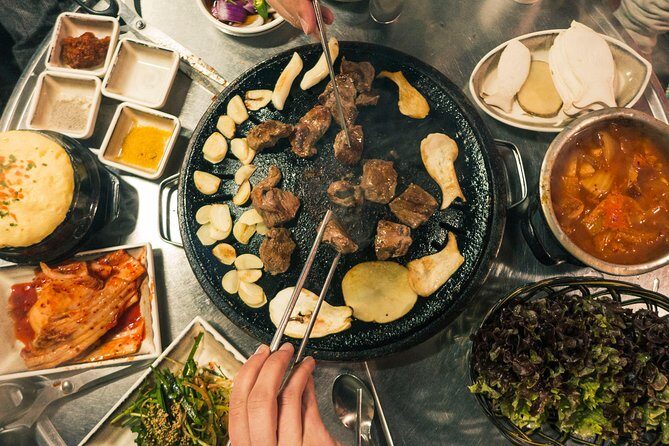
- Have a simple routine for meals—since food and drinks aren’t included, you’ll want to plan for lunch on your own or at a place your guide suggests.
- Bring something for the ride (water, phone charger, maybe a light layer). Coastal areas can cool down.
Riding KTX with a guide: the best part is losing fewer minutes
Getting from Seoul to Busan by KTX is fast. What makes this tour feel smoother is that the train logistics are handled as part of the day.
In multiple experiences, people specifically praised how guides helped them find the right train and even escorted them through the process to reserved seats on both legs. That’s huge on a first day in a new rail system, especially when you’re thinking about time you don’t have.
You’ll also benefit from a guide-led transition once you arrive in Busan. The handoff matters because Busan station navigation can feel like a lot when your day is already scheduled minute-by-minute.
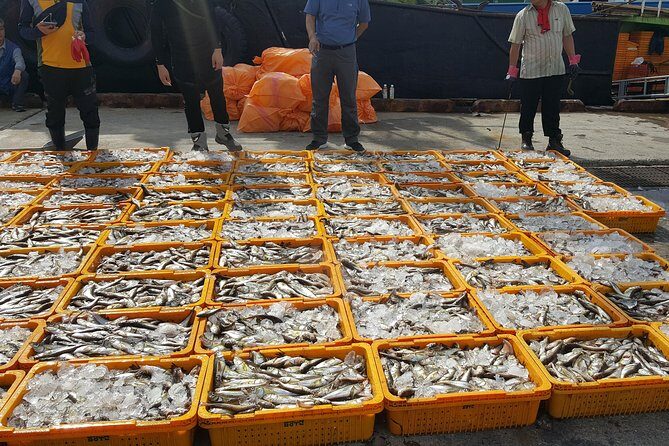
Stop 1: Jagalchi Fish Market—where Busan smells like the sea
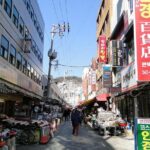
Your first major stop is Jagalchi Market, described as Korea’s largest seafood market. After the Korean War, the market grew into the seafood hub it’s known for today, and it’s widely treated as one of the symbols of Busan.
The best reason to go here isn’t just the shopping. It’s the sensory reality. You get the sights of seafood displays, the energy of a working market, and the chance to see how local people treat fish as daily life—not tourist theater.
You have about 1 hour. If you’re curious about trying food, the itinerary notes that you can eat fresh raw fish right at the market. Even if you don’t go full raw-fish mode, this is the kind of stop that helps you understand the city fast. Busan is a port city. This is where that identity shows up immediately.
Quick caution: markets are active and crowded. Keep your phone secure and don’t plan on perfect slow strolling. The goal is to browse, snack if you want, and reset for the next move.


Stop 2: Gamcheon Culture Village—art streets with a history behind them
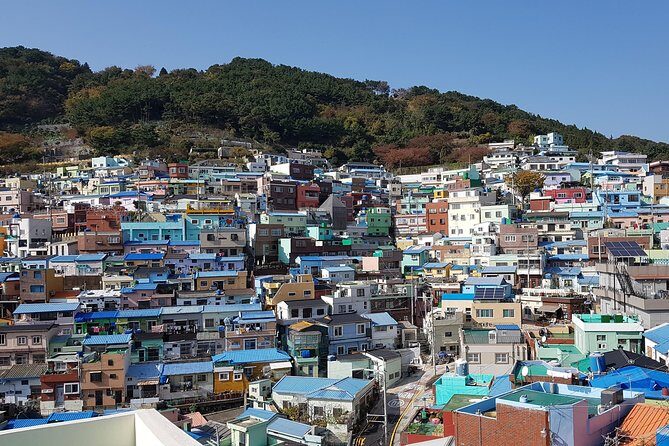
Next up is Busan Gamcheon Culture Village, a hillside neighborhood known for its art and color. The key context is why it exists: Gamcheon became a refuge for people fleeing to Busan during the Korean War. In 2010, a creative urban regeneration project turned the area into the cultural attraction it is today.
This stop is often described with a nickname like Busan’s “Machu Picchu,” which fits the geography: you’re walking up and around, with views and street scenes that feel like they’re built for photos.
You get 1 hour, and admission is listed as free. In that time, aim to:
- Walk a loop that gives you both street views and occasional overlooks.
- Pause where the murals are dense (that’s where your best photos happen).
- Expect the streets to be steep in parts. If you’re sensitive to hills, tell your guide early; in past experiences, guides have adapted pace for older travelers.
The cultural payoff here is not just the pretty streets. It’s the contrast: people rebuilt their lives in a difficult place, and those survival stories helped shape what you see now.
Stop 3: Haeundae Beach—famous, photo-ready, and good for a break
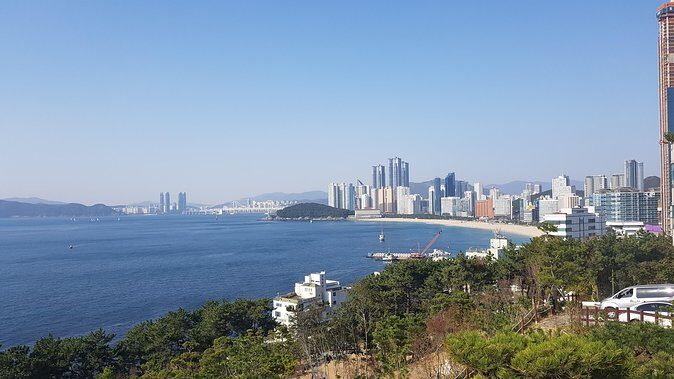
Then you’ll reach Haeundae Beach, Busan’s most famous beach area. The beach is about 1.5 km long and roughly 30 to 50 m wide, which makes it a proper coastline rather than a small city strip.
You’ll spend about 1 hour, admission listed as free. This is a good “reset stop” in the middle of a packed itinerary. You can stretch, look at the shoreline, and get that classic Busan postcard feel.
One practical thought: going to a beach stop in a day tour means you won’t have time for a long swim or a long lounge. But you can still appreciate the setting—especially if you walk the edge of the bay and take in the coastal atmosphere.
Stop 4: Haedong Yonggungsa—your coastal temple moment
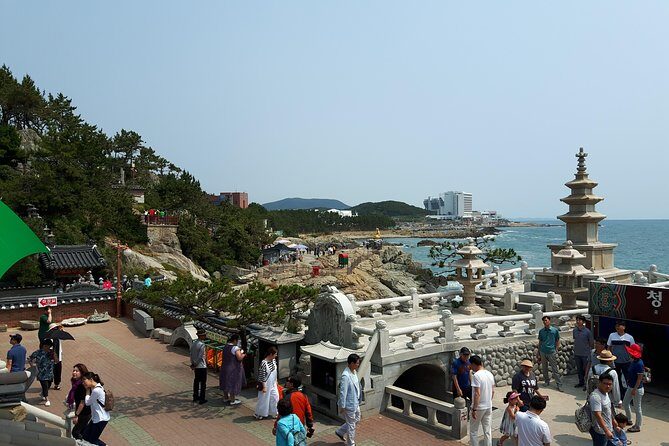
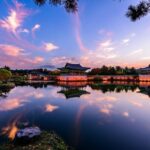
The biggest “wow” stop for many people is Haedong Yonggungsa, a temple located on the northeastern coast of Busan. Most Korean temples are in the mountains, so a seaside temple is a rare change of scenery.
You’ll also get about 1 hour, with admission listed as free. This is the stop where you’ll feel the difference in the air. The coast is close. The views aren’t background—they’re part of the experience.
If you’re the type who likes religious architecture but also cares about setting, this is the one. You get structure, ceremony spaces, and ocean views in the same frame.
If the weather is clear, take advantage of it. If it’s cloudy or windy, you’ll still get a strong sense of place because the shoreline is right there.
Stop 5: Dongbaekseom (Camellia Island) and Nurimaru APEC House
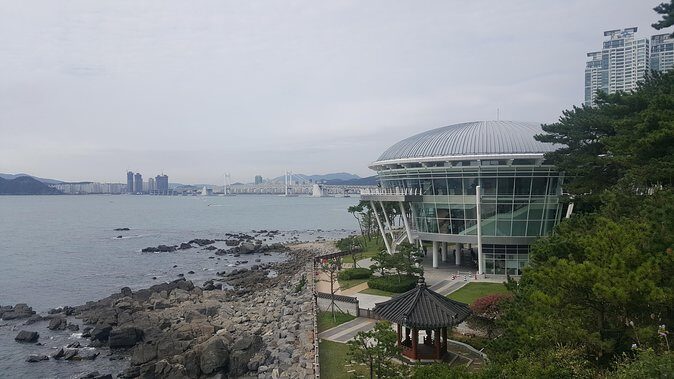
After the temple, the route shifts to Dongbaekseom, translated as Camellia, an island area known for camellia growth around March and for thick, glossy dark green leaves that persist through the seasons.
You’ll have about 1 hour here, admission listed as free. This stop also includes the Nurimaru APEC House, a three-story building built for the final summit meeting of the Asia-Pacific Economic Cooperation conference. Even if you don’t go inside (the data doesn’t specify interior access), the setting is still part of the appeal—an island viewpoint plus a real landmark tied to international events.
Think of this portion as the “coastal sightseeing belt.” It connects the temple coast vibe to the city culture stops.
Stop 6: Ami-ro 128beon-gil and Choi Min-shik Gallery—photo culture in 20 minutes
Stop 6 begins with Ami-ro 128beon-gil, noted as a landmark rather than a specific location. Then you’ll hit Choi Min-shik Gallery, focused on documentary photography.
The gallery highlights Choi Min-shik, described as a first-generation documentary photographer who captured ordinary people’s tough lives tied to war, poverty, and modernization. The theme is Human. You’ll see black-and-white portraits of Koreans in Busan streets.
This is a short stop—about 20 minutes, admission listed as free. So don’t treat it as “a museum day.” It’s more like a quick emotional reset. If you’re the type who likes photo stories, this short gallery stop adds a layer that beach-and-market days can miss.
If photos don’t move you, it still helps you understand Busan beyond seafood and coastline.
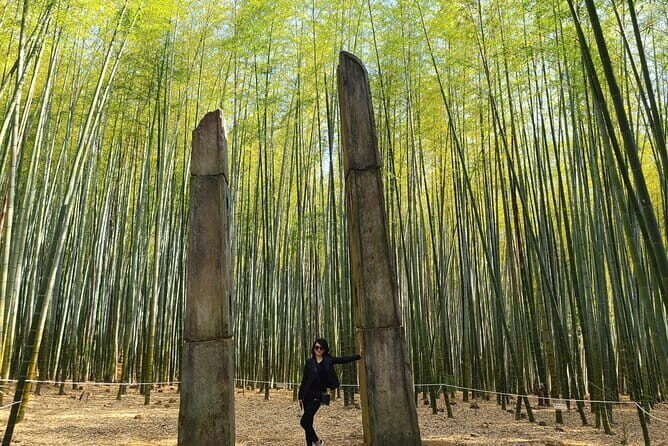
Stop 7: Amidong Tombstone Culture Village—stairs made of stories
Your final culture stop is Amidong Tombstone Culture Village, where the streets and walls are described as made of tombstones.
The story behind it matters:
- People began living in tents here in 1951
- As tents became too small, residents built on top of Japanese graves
- The village offers a view of Busan from Amidong, while reminding you that Busan isn’t only about sea and ships—it’s also a city of hills and mountains
You’ll spend about 40 minutes, admission listed as free. This is one of those places where you’ll likely pause more than you expect. It’s unusual enough to be memorable, and the physical design makes the scale of the past feel immediate.
If you’re photographing, be mindful that this is a memorial-like environment. Keep it respectful and focus on your own learning rather than treating it like a theme park.
Pacing and guide style: why people keep praising the people, not just the places
The itinerary is built for a one-day hit list, so pacing is everything. What stands out in past experiences is that guides tend to keep the day moving while still making room for real needs.
Common praised behaviors include:
- Punctual pickup and process clarity in Seoul
- Reserved-seat assistance on KTX so you don’t lose time
- Guides adjusting to group energy and interests
- Help with family logistics like photos and small movement support for older travelers (like step stools or walking assistance)
Different guides show up in different trips—names like Mr. Jay, Mira, Solomon, Young, and Amy appear in past accounts. The important part for you is the pattern: the job isn’t just reciting facts. It’s helping you avoid common day-trip problems—wrong train, missed meeting point, too much walking for the group, and unclear timing between stops.
So if you want a day trip that feels organized, this is the right format.
What to do to make the most of your one day
You have limited time. Here’s how I’d optimize it without overplanning.
- Decide your priorities early. If you love coastal views, prioritize Haedong Yonggungsa and Dongbaekseom. If you’re food-first, put Jagalchi at the top of your mental list.
- Bring water and a snack plan. Since food and drinks aren’t included, you’ll want energy for the walking and waiting.
- Use the guide for practical questions. The best guides help you with timing and photo spots, not just history talk.
- Pack for stairs. Gamcheon and Amidong both have the “hillside walking” feel. Comfortable shoes beat fancy ones.
- Keep your phone charged. You’ll want photos across markets, murals, coastline, and the gallery.
One more tip: because the day is long, slow down at your favorite stop for 5 extra minutes. It’s the best way to avoid ending the day with only “I saw stuff” memories.
Who this Busan-by-KTX day tour is best for
This tour fits best if you:
- Have limited time in Korea and want a single-day Busan sampler
- Prefer not to manage train tickets and transfers alone
- Want a mix of seaside sights and culture stops
- Like photo-worthy locations, from Gamcheon murals to black-and-white portraits at Choi Min-shik Gallery
It also tends to work well for families because the group format can include practical help and pacing adjustments. On the flip side, if you hate early mornings or you want deep time at each site, you may feel rushed. This tour is for people who want the highlights, not people who want to linger.
Should you book this Busan city tour from Seoul by KTX?
Book it if you want a high-structure, low-stress day. The combination of KTX round-trip, Seoul hotel pickup, and a guide covering multiple top Busan sights makes it a solid way to maximize a short trip.
Skip it (or pick a slower option) if you can’t handle a 7:00 am start or if your ideal travel day is slow and unplanned. This is a packed itinerary, and each stop is designed to be “enough to appreciate,” not “enough to master.”
If your goal is: see the best of Busan quickly, learn a bit along the way, and get back to Seoul without rail worries—this tour is a strong match.
FAQ
How long is the Busan city tour from Seoul?
The tour runs about 9 to 10 hours, including the round trip by KTX.
What time does the tour start in Seoul?
The meeting/start time is 7:00 am in Seoul.
What’s included in the price?
It includes a 1-day private Busan city tour, a qualified English-speaking guide, KTX round-trip fare (economy class), and hotel pickup service in Seoul.
Are meals included?
No. Food and drinks are not included.
Do the stops have admission fees?
Admission is listed as free for the stops in the itinerary.
Is this a private tour?
Yes. It’s private, meaning only your group participates. There is also a minimum of 2 people per booking.
Can I get a full refund if I cancel?
Yes. You can cancel up to 24 hours in advance of the experience start time for a full refund.
If you want, tell me your travel dates and whether you prefer more food, more temples, or more photo stops, and I’ll suggest how to prioritize within this exact one-day route.