REVIEW · BUSAN
Full Day Busan Tour Including Haedong Yonggungsa Temple
Book on Viator →Operated by Busan Tourism Center · Bookable on Viator
Busan feels huge until you ride it with a plan. This full-day tour strings together the coast, the viewpoints, and the city’s modern side, so you see a lot without juggling trains and transfers. You’ll also hit Haedong Yonggungsa, the famous shoreline temple, plus the Oryukdo Skywalk area for that let’s-look-down moment.
Two things I really like about it: the easy pickup + small-group pace and the mix of sights that range from peaceful temples to big-city landmarks. I also appreciate that lunch is handled for you, so you’re not spending the best part of the day hunting down food between stops.
One consideration: the schedule is tight. Even though each stop has its own “worth it” moment, you should expect a grab-and-go day rather than long wandering time at every location. Comfortable shoes and a little patience with crowds at popular beaches help a lot.
In This Review
- Key highlights worth centering in your plan
- Why this 8-hour Busan tour is a smart first-day move
- Hotel pickup and the way your day actually runs
- Dalmaji-gil Road: a calm start with pine trees and beach views
- Haedong Yonggungsa Temple: the shoreline-temple moment
- Dongbaekseom and Haeundae Beach: camellias, APEC architecture, and a famous shoreline
- Oryukdo Island and the Oryukdo Skywalk: your included viewpoint payoff
- Busan Cinema Center and BIFF energy without the full festival scramble
- UN Memorial Cemetery: when the tour slows down emotionally
- Marine City and Centum City: modern Busan after the memorial
- Lunch on the route: Korean BBQ, good timing, and a vegetarian option
- Guides make the difference: from Steve to Beth to Chris
- Pace: packed, but not automatically exhausting
- Price and value: is $159.99 actually fair?
- Should you book this full-day Busan coast tour?
Key highlights worth centering in your plan
- Haedong Yonggungsa Temple by the sea gives you a rare coastal-temple experience without extra ticket hunting
- Oryukdo Skywalk is timed as a quick, included stop with big views and a clear East Sea versus South Sea vibe
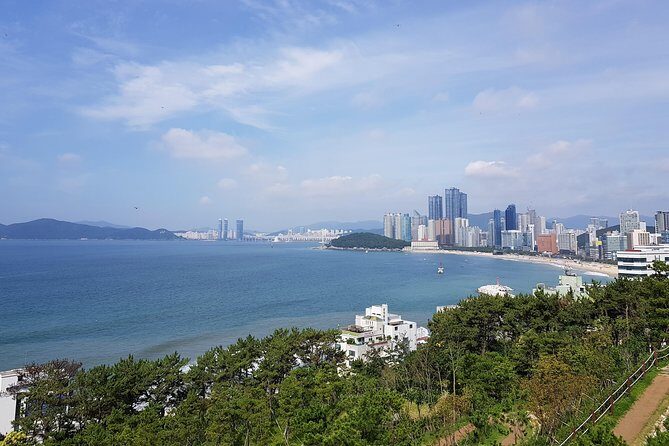
- Haeundae area walking views from Dalmaji-gil Road to Haeundae Beach lets you see Busan’s most famous shoreline up close
- Nurimaru APEC House at Dongbaekseom adds a smart contrast of modern architecture in a coastal setting
- UN Memorial Cemetery is the emotional anchor of the day, with time set aside to actually look and absorb
- Korean BBQ lunch (vegetarian option available) means you avoid the usual mid-tour food chaos
Why this 8-hour Busan tour is a smart first-day move
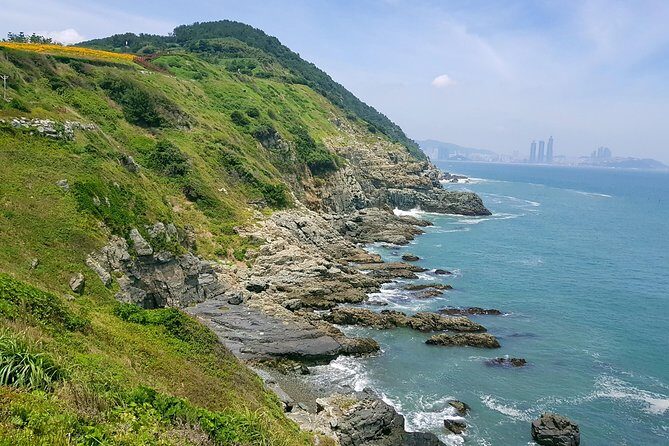
If you’re new to Busan, this kind of tour can be the difference between feeling lost and feeling oriented. You start at 9:00 am and spend about 8 hours moving through key neighborhoods in a vehicle rather than hopping around on your own.
I like that the itinerary is built for variety. You get classic coastline scenery, modern Busan landmarks, and a serious historical stop all in one day. That makes it ideal if you only have a couple of days in the city, or if you want one organized “sampler platter” before you choose what to return to later.
The price—$159.99 per person—doesn’t feel cheap, but it also isn’t just “a guide and a bus.” You’re paying for the convenience of round-trip hotel pickup, coordinated timing, and included admission for major stops (temple and skywalk). If you try to DIY the same mix, you’ll likely spend plenty on transit and tickets just keeping the day connected.
A few more Busan tours and experiences worth a look
Hotel pickup and the way your day actually runs
This is designed to be easy from the first step. You can either get pickup from centrally located Busan hotels or meet the guide and group at a subway station. You’ll receive a mobile ticket, so you’re not dealing with printed vouchers.
Group size is capped at 10 travelers, which is a huge part of why this works. A smaller group means faster coordination, fewer waiting games, and a better chance the guide can answer questions without rushing you.
Most stops are about 30 minutes, with a couple lasting longer (like the temple and UN Memorial). That’s why the day can feel smooth for some people and rushed for others. The good news: you’re not dragging heavy luggage across town. The day is planned so you see a lot without burning half your trip figuring out where to go next.
Dalmaji-gil Road: a calm start with pine trees and beach views
Your morning begins on Dalmaji-gil Road, a walkway near the corner to Songjeong Beach, just beyond Haeundae Beach. The setting matters here: the road runs along the slope of Wausan Mountain, lined with pine trees and (when in season) cherry blossoms.
This stop is listed at 30 minutes and admission is free. Treat it like your warm-up. You’re not meant to conquer it like a hike. Instead, it’s your first “okay, this is why Busan is different” moment—coastline views paired with greenery, and enough time to grab photos and orient yourself visually.
If you’re sensitive to weather, keep an eye on wind here. Coastal areas can feel colder or stronger than you expect, especially compared with inland streets.
Haedong Yonggungsa Temple: the shoreline-temple moment
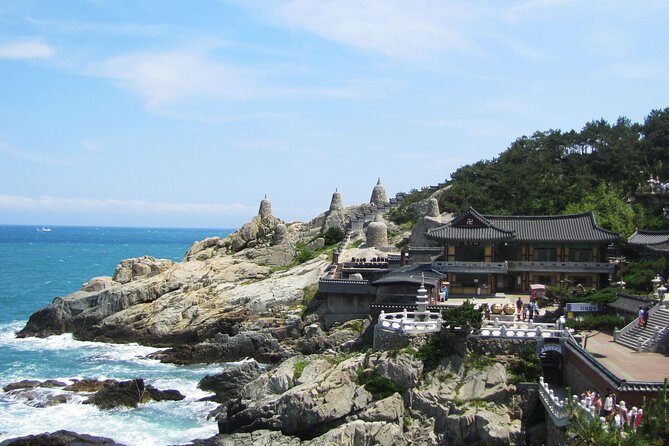
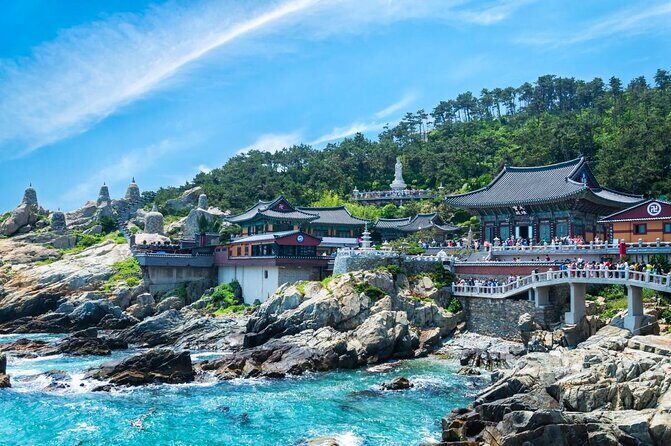
Then comes the headliner: Haedong Yonggungsa. This temple sits along the northeast coast of Busan, and it’s one of the country’s only temples built right on the shoreline. That single detail changes the whole mood of the stop. You’re not just looking at architecture—you’re watching the sea while you take in the temple grounds.
You’ll have about 1 hour here, and the admission is included. From a practical standpoint, that’s a relief: you don’t have to spend time lining up for a ticket before you even start sightseeing.
This is also a place to slow down slightly. The day moves fast, but at a coastal temple you’ll want a minute to actually watch the water and take in the layout from different angles. Even if you only have one hour, it’s enough to feel what makes this location special.
Dongbaekseom and Haeundae Beach: camellias, APEC architecture, and a famous shoreline
Next you head to Dongbaekseom (Island of Camellias). Even though it’s historically described as an island off the end of Haeundae Beach, it’s now connected to the mainland. You’ll still get that “coastal edge” feeling, plus more photo angles than you’d get from just standing at the beach.
The stop is around 1 hour and admission is free. In the route description, this is also where you’ll see the Nurimaru APEC House, known for blending traditional Korean and modern architectural elements. That’s a nice contrast after a temple stop: same coast, but a different kind of Busan story.
Then you move to Haeundae Beach itself for about 30 minutes. This is Busan’s best-known beach, with white sand about 1.5 km long and a coastline that opens into a shallow bay. It’s free to enter, so what you’re buying with your tour time is proximity and context—this is easier to hit on a guided day than trying to stitch it together with other stops.
Just know: Haeundae Beach can be busy. Don’t plan to have it to yourself. Instead, use your time for quick walks, views, and people-watching.




Oryukdo Island and the Oryukdo Skywalk: your included viewpoint payoff
The tour then shifts toward one of Busan’s best “look down” experiences: Oryukdo.
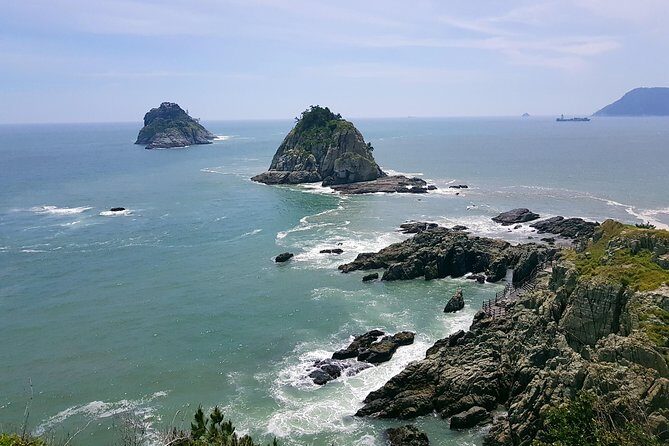
You’ll visit Oryukdo Island for around 30 minutes (admission included), then you’ll spend about 30 minutes at Oryukdo Skywalk (also admission included). The skywalk opened in 2012, and the area is described as the dividing point between the East Sea and the South Sea. That detail is actually useful. It helps you understand why the location is framed like a coastal milestone rather than just a random scenic spot.
If you like viewpoints, this is the kind of stop that makes the time feel justified. Even though it’s not a long stop, the skywalk is a distinct experience you can’t easily replicate on your own without planning.
Wear shoes with traction. You’ll be on a structured walkway, and coastal weather can change quickly. If you’re traveling in warm months, bring water and pace yourself.
Busan Cinema Center and BIFF energy without the full festival scramble
After the skywalk, the day includes Busan Cinema Center, tied to the Busan International Film Festival (BIFF). Even if you aren’t catching the festival itself, the building is a recognizable symbol of the city’s film scene.
You’ll have about 30 minutes here. Admission is listed as free in the itinerary. This stop works best if you like modern architecture or if you want a break from scenery for a bit and then get back outside again.
The roof is described as one of the largest in the world, and that’s one of those details you’ll either notice immediately or it won’t matter much. Either way, it’s a quick photo and context stop before you head to something more reflective.
UN Memorial Cemetery: when the tour slows down emotionally
The most moving part of the itinerary is UN Memorial Cemetery. It honors UN soldiers from 16 countries killed during the Korean War (1950–1953). The grounds are described as a serene park across about 135,000 square meters, with a grassy, open feel that gives you space to think.
You’ll have about 1 hour, and admission is included. This stop can hit different depending on your background and curiosity, but even if history isn’t your main interest, the setting encourages you to be present.
One practical note: timing can matter. Some guests have mentioned that the guide worked to make it in time for a ceremony like flag lowering, when the schedule lined up. You can’t bank on that every day, but it’s a good sign that your guide isn’t treating it like a checkbox.
Marine City and Centum City: modern Busan after the memorial
After UN Memorial, the route continues through areas described as Marine City and Centum City. These are Busan’s modern-growth zones, and you’ll feel the shift from reflective open grounds to more future-facing development.
Even without long time here, this part of the day helps you build a fuller picture of Busan. It’s not only sea views and temples. It’s also the city that has invested in big projects, major event venues, and new neighborhoods that feel different from older parts of town.
If you want to return later, keep a mental note of what stood out most during these modern segments. That’s usually where you’ll find your “I want to explore more” follow-up.
Lunch on the route: Korean BBQ, good timing, and a vegetarian option
Lunch is included, and the tour description calls it traditional Korean barbecue. One of the nice perks of a guided day is that lunch timing is built into the plan, so you don’t end up eating too late or too early because you’re still sorting out your next stop.
A vegetarian option is available if you request it in advance. That’s the kind of detail that makes a big difference when you’re hungry and don’t want to scramble.
Also, some guests mention lunch was served as dishes like bibimbap as part of the included meal. Either way, your goal is the same: eat something filling so you can handle coastal walking and skywalk stairs without turning the day into a snack-only exercise.
Guides make the difference: from Steve to Beth to Chris
This tour is built around a guide-led flow, and the reviews show a pattern: the guide matters. You might meet guides such as Steve, Beth, Chris, or Sue. Some departures also mention extra help from Jake and Amy, and even a guide named Young in one account.
What consistently shows up in guest notes is clear English, friendly humor, and the ability to connect the dots between places. That’s more than small talk. It’s what turns a temple photo into something you understand, and what makes a memorial stop feel respectful instead of rushed.
Another practical bonus: several guests mention guides taking photos and sending them afterward. If you’re traveling with family or you just want fewer selfie moments, that’s genuinely helpful.
Pace: packed, but not automatically exhausting
The biggest split in feedback is pace. Some people felt the tour fit a lot in eight hours and never felt rushed. Others said it could be touch and go at each stop, with not enough free time to soak in the atmosphere.
So here’s my advice: treat the time as planned transitions. Decide in advance what you want longer looks at. Haedong Yonggungsa and the UN Memorial Cemetery are the two that most often deserve your attention. For the beach and the viewpoints, you’ll do better if you accept that you’re there for a focused visit, not an all-day hangout.
If you like slow travel, plan to return on another day. If you like efficient sightseeing with a guide and minimal navigation stress, this format will feel right.
Price and value: is $159.99 actually fair?
For $159.99 per person, you’re getting a lot of “stuff that costs money when done separately.”
Here’s how the value adds up based on what’s included in the itinerary:
- Round-trip transportation from Busan hotels (or guided meeting point via subway)
- Guide-led routing across multiple neighborhoods
- Haedong Yonggungsa Temple admission included
- Oryukdo Skywalk admission included
- UN Memorial Cemetery admission included
- Korean BBQ lunch included (with a vegetarian option available)
- Other stops are listed as free in the itinerary, so you’re mostly paying for time + organization rather than extra ticket fees everywhere
If your plan is to see Busan’s “greatest hits” in one day while keeping stress low, this is a practical spend. If you already know the city well and you prefer totally independent timing, you might find it cheaper to DIY. But you’ll give up the smooth connections and the built-in historical context.
Should you book this full-day Busan coast tour?
Book it if:
- You want a first-time Busan intro and you don’t want to map out multiple neighborhoods yourself
- You care about mixing temples, coastline views, and modern landmarks in one day
- You’re okay with a 30–60 minute rhythm at each stop
- You want lunch handled and don’t want to pause your sightseeing for restaurant hunting
Skip it or adjust your expectations if:
- You know you need lots of free time at each location, especially at beaches and viewpoints
- You’re the type who prefers long, slow exploration over scheduled transitions
- You want a smaller, more flexible itinerary focused on only one theme
If you fall in the first group, this tour is one of the easiest ways to get your bearings and still come away with real stories: a shoreline temple, a skywalk viewpoint, and a UN memorial that puts Busan’s history in perspective.