REVIEW · BUSAN
Best Busan night views : Mountain observatory streets
Book on Viator →Operated by Dorawayo experience activity · Bookable on Viator
Busan at night feels like a rooftop show. This tour is built for mountain ridgeline night views and great photo stops as you walk among street art, temples, and observatories. I like that it mixes real local atmosphere with viewpoints that actually do the heavy lifting, not just a quick photo and off you go.
Two things I’d put at the top: the guided night-photo setup (including professional lighting when it’s time to shoot), and the chance to see Busan from the ridge the way locals do. You’re also walking an active stretch of the city center, so it feels lived-in rather than staged. One thing to consider: it’s a night walk with some stairs (including 168 Stairs), so wear shoes you trust and be ready for slower pacing after dark.
You get a small group (max 8), plus reflective straps and bottled water, so the experience feels organized without feeling rushed. If the weather isn’t cooperating, the tour depends on good conditions, which is worth keeping in mind if you’re on a tight schedule.
In This Review
- Key highlights before you go
- Busan’s mountain night views: why ridge walking works
- From Beomnaegol Exit 5 onto Mangyangro (6km) after dark
- BIFF Square at night: a lively start before the ridge quiets down
- Webtoon Bagu-gil: street art as a night navigation aid
- Yu Chi-hwan Postbox Observatory and the photo moment you’ll care about
- Sky eyes Observatory: looking down at Busan’s night layers
- Geumsusa Temple: a calmer pause on the mountain city edge
- Kim Minbu Observatory: another angle, another kind of night photo
- 168 Stairs: the only part that truly asks for your legs
- Why the professional lighting makes this tour feel different
- Walking after dark: coffee shops and small stops along the way
- Value check: is $55 worth it for a 3.5-hour night view walk?
- Who should book this night observatory walk?
- Should you book Best Busan Night Views: Mountain Observatory Streets?
- FAQ
- Where do I meet for the tour?
- How long is the night views walking tour?
- What’s the walking distance?
- Where does the tour end?
- What’s included in the price?
- Is dinner included?
Key highlights before you go
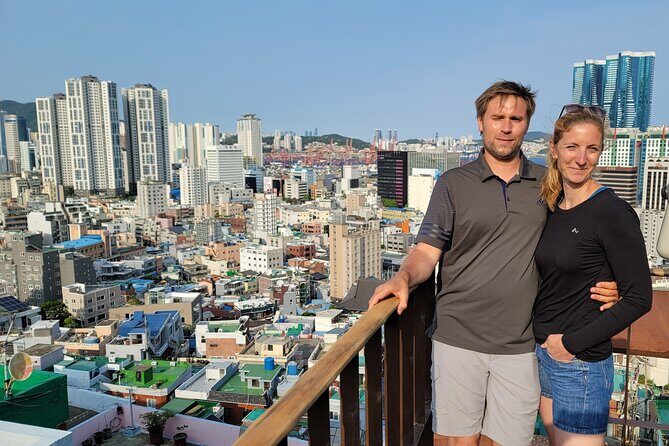
- Mangyangro ridge walk for about 6km: the road name even hints at ocean views.
- Multiple observatories: Sky eyes Observatory and Kim Minbu Observatory for different angles.
- Photo-friendly lighting: professional lighting is prepared to help your night shots.
- Street culture stops: BIFF Square and Webtoon Bagu-gil break up the hiking rhythm.
- Temple + stairs variety: Geumsusa Temple and 168 Stairs add texture to the night.
- Easy handoff to the city: the walk ends near Jagalchi Fish Market subway.
Busan’s mountain night views: why ridge walking works
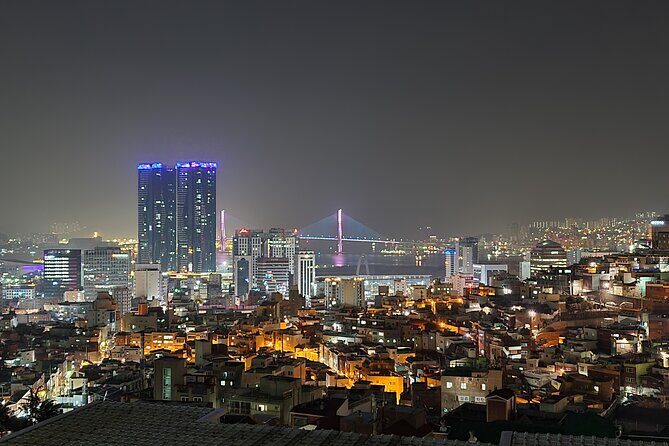
Busan is famous for its coastline, but at night it’s the mountain city layout that makes the views feel special. From the ridge, lights spill across the harbor direction in layers, and you’re not stuck staring straight down a single street.
What makes this style of walking fun is the pace shift. You’ll spend time on viewpoints and photo spots, then move again through streets where locals live and shop. That mix matters: you’re not just chasing a single picture, you’re watching the whole city wake up under night lighting.
The tour also leans into Busan’s “you can walk this” vibe. Even though you’re on the mountain side, the overall route is meant to be manageable for most people—then it adds a few intentional climbing moments (hello, 168 Stairs) to reward you with better sightlines.
You can also read our reviews of more evening experiences in Busan
From Beomnaegol Exit 5 onto Mangyangro (6km) after dark
Your start is Beomnaegol Station, Exit 5. From there, you head onto Mangyangro, a road that literally means the road you can see the ocean. That name is a good mental cue: you’re walking along the mountain side while keeping the harbor direction in mind.
The total walking time is about 3 hours 30 minutes, and the route is roughly 6km. In real life, that usually turns into a steady “move, pause, shoot, move again” rhythm—especially because observatories and street stops are built into the walk.
Safety and visibility are handled in a practical way. You’re provided reflective straps, and you get bottled water. At night on sloped streets, this is the difference between relaxed viewing and constantly checking your surroundings.
What to pack is simple:
- Wear shoes with grip you trust.
- Bring a light layer. Even in summer, night air up on the city edges can feel cooler.
- If you’re worried about mosquitoes, you might be glad the guide has ways to help (one group was given mosquito repellent).
BIFF Square at night: a lively start before the ridge quiets down
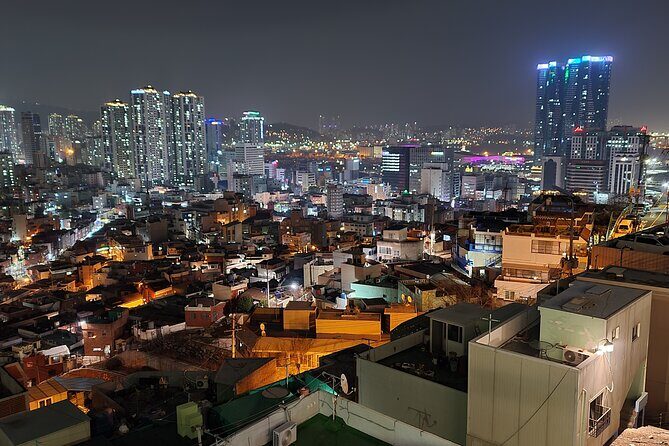
Your route begins at BIFF Square. This is a good opening point because it’s energetic and easy to orient around. You start with city lights and street energy, then the tour slowly transitions into the more “locals-on-the-ridge” feel.
BIFF Square also acts like a cultural gear shift. Instead of beginning in pure viewpoint mode, you get street-level atmosphere first, which makes the later observatory stops feel like a payoff rather than your first and only goal.
From this starting point, you’ll move toward the mountain side with multiple planned photo moments. You don’t just walk in a straight line; you bounce between street scenes and elevated viewpoints, which keeps the night interesting.
Webtoon Bagu-gil: street art as a night navigation aid
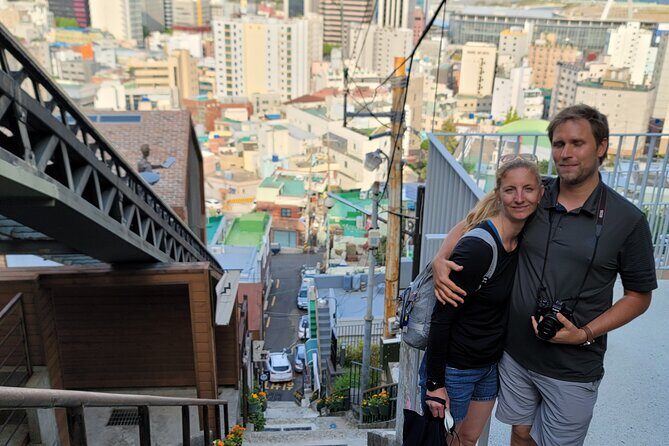
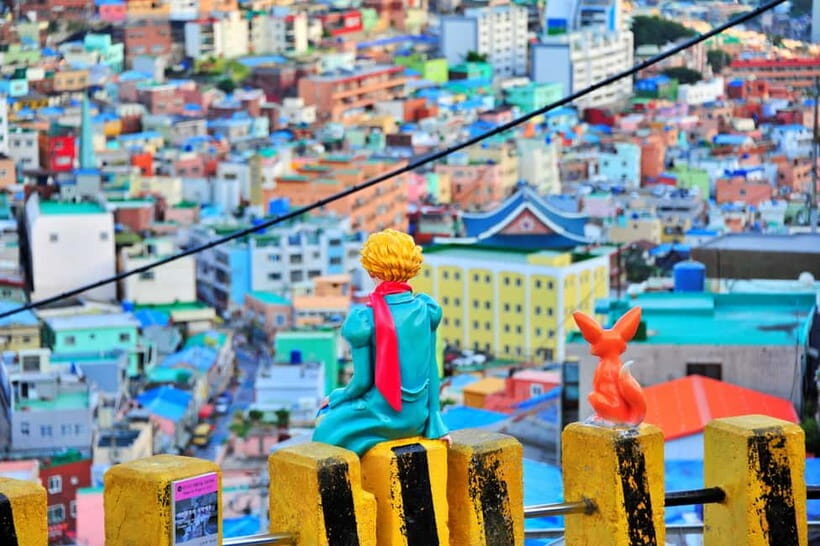
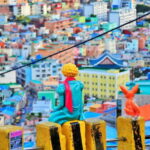
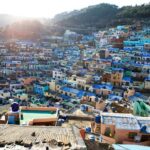
One of the standout stops is Webtoon Bagu-gil. Think of it as street storytelling you can follow as you walk. At night, the illuminated panels and busy textures help break up the visual monotony that sometimes happens during long dark walks.
This is more than decoration. Webtoon streets turn the “where am I going?” feeling into something lighter. You can look around, read the mood in the area, and still keep moving toward the next viewpoint.
It’s also a nice contrast to the more formal look of observatories and temples. After a while in the hills, having a street that feels like a living gallery is a mental reset.
Yu Chi-hwan Postbox Observatory and the photo moment you’ll care about
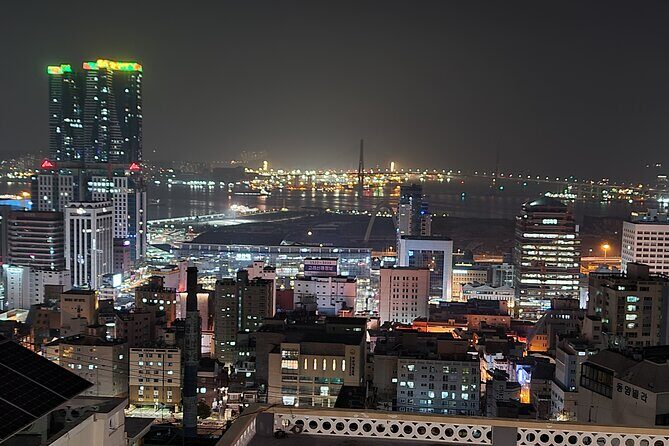
The tour includes Yu Chi-hwan Postbox Observatory, which is the kind of stop designed for night photos. Postbox-theme viewpoints are usually built to frame a wide city view, and this one fits that role.
What I like here is the timing. Night photos work best when you’re settled and ready, not when you’re still walking hard uphill. This stop gives you a moment where you can slow down, frame your shot, and actually get something usable.
This tour also prepares professional lighting for night photography. That matters because phone cameras often struggle when the background is bright and the foreground is dark. With extra light, your images tend to look clearer instead of washed out or overly noisy.

Sky eyes Observatory: looking down at Busan’s night layers
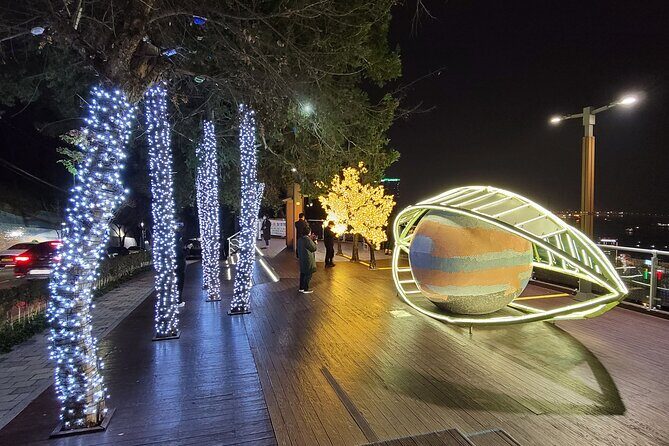
Next up is Sky eyes Observatory, one of the planned places for panoramic views. Observatories like this are where the city’s lighting starts to feel organized—harbor lights in one direction, city grid glow in another, and the mountain edges acting like a dark frame around it all.
What you’ll notice on a ridge viewpoint is that night isn’t just one look. If you catch the transition from just-after-sunset to fully dark, the city changes. Lights intensify, shadows sharpen, and the overall contrast improves.
This is also where the tour’s photo approach makes sense. When you reach an observatory, you don’t want to guess at settings or wait for the “best angle” to magically appear. The lighting support is meant to help you get the shot you came for.
If you like photographing city lights, this part is the payoff zone.
Geumsusa Temple: a calmer pause on the mountain city edge
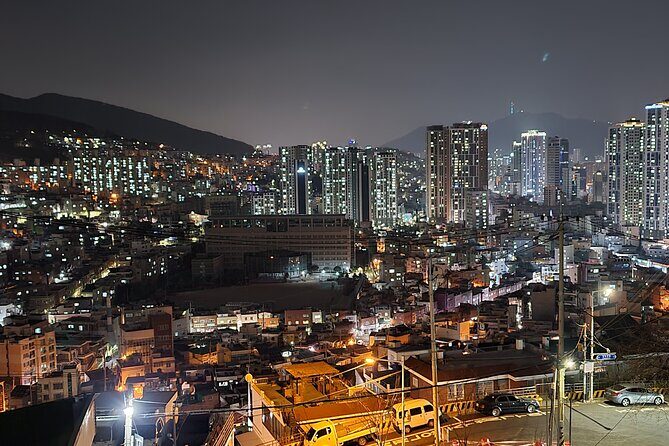
The tour includes Geumsusa temple, which adds a quieter, more reflective stop to the night route. Temples at night usually feel different from temples in the daytime—less tourist energy, more soft lighting, and more of a “pause and breathe” vibe.
This stop also breaks the visual intensity. After observatories and bright street art, a temple moment helps reset your eyes before the next set of viewpoint climbs.
Even if you’re not there for a deep temple visit, the value is in the way it changes the rhythm of your walk. Night city tours can start to blur. This one avoids that by placing a calm anchor in the middle.
Kim Minbu Observatory: another angle, another kind of night photo
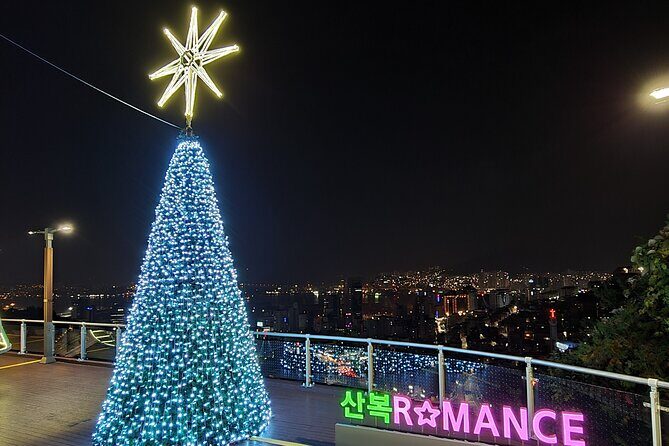
Another viewpoint stop is Kim Minbu Observatory. With multiple observatories on one route, you’re not repeating the same photo from the same angle—you’re collecting different slices of the city.
I like this approach because it respects how night photography works. One viewpoint might give you the cleanest city grid view. Another might frame lights along the coast direction better. When you rotate through several places, you’re more likely to leave with at least one photo that really feels “Busan.”
Just like at Sky eyes, the tour’s photo support and lighting preparation help you capture something without scrambling. If you’ve ever taken a night shot that looked fine to your eye but terrible on your phone after, you’ll appreciate the extra effort.
168 Stairs: the only part that truly asks for your legs
Yes, you’ll hit 168 Stairs. This is the one moment that feels like actual work, not just walking.
Here’s the practical take: it’s short enough to be doable for many people, but it’s still stairs at night. That means:
- Take it slow.
- Keep your footing.
- Plan to breathe and then enjoy the view.
Interestingly, the overall route is often described as not overly strenuous compared to what people expect from a mountain-city night walk. The stairs are a highlight stop, not a death march. Still, if you’re sensitive to steps, it’s worth considering.
Why the professional lighting makes this tour feel different
A lot of night tours promise views. This one adds something more useful: lighting for photos.
Night photography is usually about controlling what your camera captures. With lighting support, you can better separate the subject (you, your group) from the city background. It also helps if your phone struggles with night focus or if the ground is dark enough that you can’t see your own framing.
The results can look noticeably better than the classic tourist “big city lights behind a blurry silhouette” problem.
Also, the vibe from the guide is meant to keep you comfortable. One group noted the service was attentive and that the journey felt relaxing even with the walking. That matches the structure: small group, planned stops, and time to settle at viewpoints.
Walking after dark: coffee shops and small stops along the way
This kind of ridge walk isn’t only about checkpoints. You’ll pass through sections with small stores and coffee shops, and the night lighting decorations add atmosphere as you go.
That matters because you’re spending 3.5 hours outside. If the walk were only stair climbs and dark corners, it would feel longer and more tiring. Instead, you get those small “breathers” where the street feels human, not just scenic.
It also makes it easier to stay in the mood for photos without feeling like you’re rushing through a checklist.
Value check: is $55 worth it for a 3.5-hour night view walk?
At $55 per person for about 3 hours 30 minutes, this is priced like an organized small-group night experience rather than a DIY option. You’re paying for:
- Expert routing through the mountain-area night-view spots.
- Multiple scheduled photo stops, including observatories and a postbox observatory.
- Professional lighting support for night pictures.
- Practical inclusions like bottled water and reflective straps.
The tour doesn’t include dinner, so you’ll want to eat either before you start or after you finish. The upside is that you’re ending near Jagalchi Fish Market subway station, which makes it easy to pivot to food plans.
One more value clue: this is booked far in advance on average. That suggests people like the combination of walk + views + photo planning, not just one viewpoint.
If you want a night walk that feels structured, small-group paced, and photo-aware, this price can make sense.
Who should book this night observatory walk?
You’ll like this tour if you:
- Want night views without doing a full-day hike.
- Care about photos and appreciate lighting help.
- Enjoy walking city streets where people actually live, not just empty viewpoints.
You might think twice if you:
- Have trouble with stairs at night (because 168 Stairs is part of the route).
- Don’t feel comfortable walking 6km on uneven, dark streets even with reflective safety gear.
Also, the tour depends on good weather. If skies are cloudy or conditions are bad, you may be offered another date or a full refund. Since night views need visibility, this is not the time to gamble with thick fog.
Should you book Best Busan Night Views: Mountain Observatory Streets?
I think this is a smart pick if you want an organized, small-group night experience that prioritizes real ridge views and better photos. The best part isn’t just the scenery—it’s the way the route blends street culture stops (BIFF Square, Webtoon Bagu-gil) with multiple observatories and a calm temple pause. That variety keeps the 3.5 hours from feeling like one long climb.
Book it if you’re comfortable walking at night and can handle a short stair segment. Skip it if stairs scare you or if you’re only interested in one quick viewpoint. For most people who want a memorable Busan night without doing everything solo, this one is a good match.
FAQ
Where do I meet for the tour?
You meet at Beomnaegol subway station, Exit 5.
How long is the night views walking tour?
The tour runs about 3 hours 30 minutes (approx.).
What’s the walking distance?
The plan is to walk along Mangyangro for about 6km.
Where does the tour end?
The tour ends at Jagalchi fish market subway station.
What’s included in the price?
You get bottled water and reflective straps for safety during the tour, plus the tour prepares professional lighting for night photography.
Is dinner included?
No, dinner is not included.
![[Jeju] Hanbok Private guide tour & photo session in beautiful Yongduam rock, - Yongduam Rock: Dragon-Head Photos with Daniel’s Direction](https://8.koreaadventures.com/wp-content/uploads/jeju-hanbok-private-guide-tour-photo-session-in-beautiful-yongduam-rock.jpg)