REVIEW · JEJU
Jeju Island UNESCO Heritage Bus Tour
Book on Viator →Operated by Jeju Travel Lucas · Bookable on Viator
Jeju turns geography into entertainment, and this route helps you see it fast. I like the simple two-day plan that strings together big-name UNESCO geology with practical time limits, and I also like that admissions are built in for several stops. One caution: if your group is small, you may not get a full professional English guide the way you’d expect, so read the group-size details closely.
The best part is how the day feels designed for real timing. You’ll move between sights without having to figure out bus changes or parking, and the route swaps in alternatives when weather or closures hit. The trade-off is a fixed schedule, so if you’re the type who wants to linger for hours at one spot, you’ll feel a bit rushed.
In This Review
- Key things that make this Jeju UNESCO bus tour work
- Price and logistics: what the $125 really buys
- Day 1: Saryeoni Forest to Seongsan Ilchulbong, with seasonal swaps
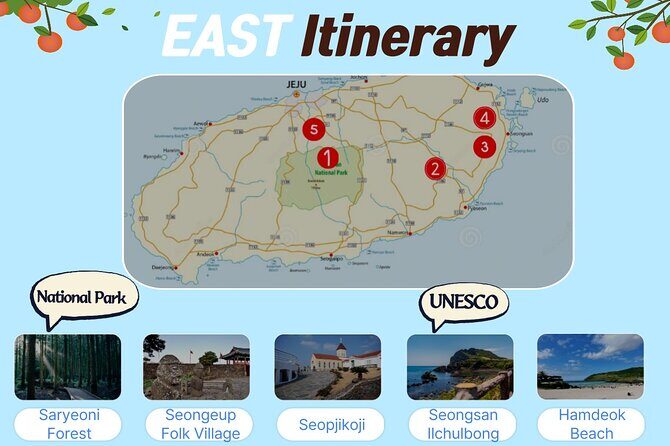
- Stop 1: Saryeoni Forest Path (about 50 minutes, free)
- Stop 2: Seongeup Folk Village (about 50 minutes, free)
- Stop 3: Seopjikoji (about 40 minutes, free)
- Seasonal swap: Sangumburi in October instead of Seopjikoji
- Stop 4: Seongsan Ilchulbong (about 1 hr 20 min, admission included)
- Stop 5: Jongdal-ri and the northeastern coastline pass (about 40 minutes, free)
- Stop 6: Hamdeok Beach (about 1 hr, free) or Haenyeo Museum on rainy days
- Manjang Cave UNESCO note: closure and substitutions
- Autumn timing reminder
- Day 2: Hallasan Oreum, Osulloc tea, and the south-coast UNESCO cliffs
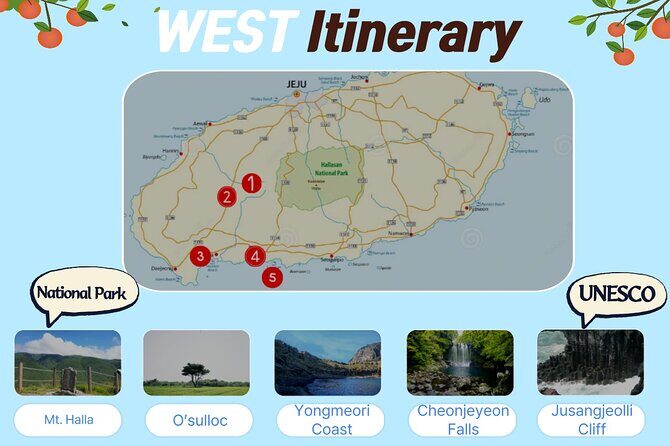
- Stop 1: Hallasan National Park, Eoseungsaengak (about 1 hour, admission included)
- Stop 2: O’sulloc Tea Museum (about 1 hour, free)
- Stop 3: Sanbangsan Mountain and Sanbanggulsa Temple (about 30 minutes, admission included)
- Stop 4: Yongmeori Coast (about 1 hour, admission included)
- Stop 5: Cheonjeyeon Falls (about 40 minutes, admission included)
- Stop 6: Daepo Haean Jusangjeolli Cliff (about 50 minutes, admission included)
- Stop 7: Jeju Art Circus (Circus World performance) (about 1 hour, free)
- What the guide setup really means for your day
- A practical packing list for Jeju’s two-day route
- Should you book this Jeju UNESCO Heritage Bus Tour?
- FAQ
- What’s the duration of the Jeju Island UNESCO Heritage Bus Tour?
- Does the tour offer hotel pickup and drop-off?
- What’s included in the price?
- Is it really only UNESCO sites?
- What happens if Manjang Cave or related lava-tube access is closed?
- What if it rains during the tour?
- How many people are needed for the tour to run?
Key things that make this Jeju UNESCO bus tour work
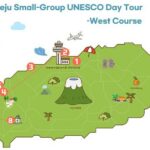
- Two-day route across East and South Jeju so you don’t burn half your trip on logistics
- English support that scales with group size, from advanced-English taxi drivers to English-speaking guides
- UNESCO geology focus: tuff cones, lava tubes, and columnar-joint cliffs, plus nearby cultural stops
- Weather and closure substitutions built into the plan (like Hamdeok Beach or Circus World)
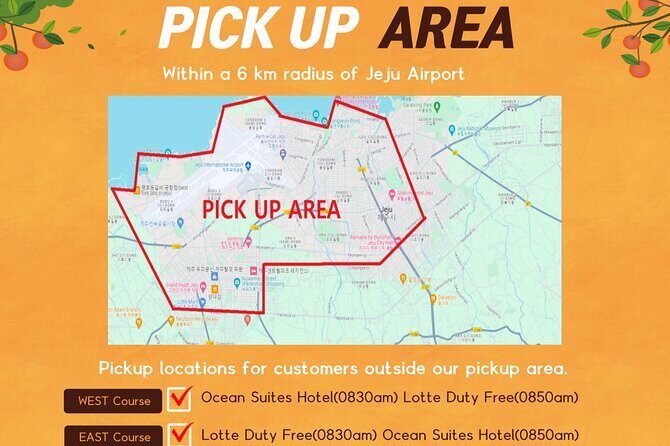
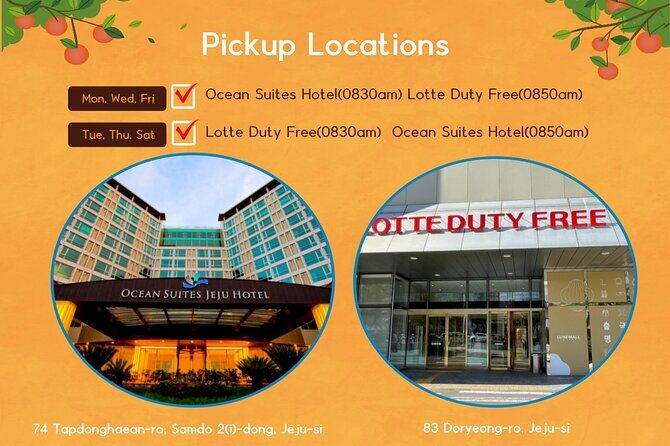
- Hotel pickup inside Jeju City downtown to start your days without stress
Price and logistics: what the $125 really buys
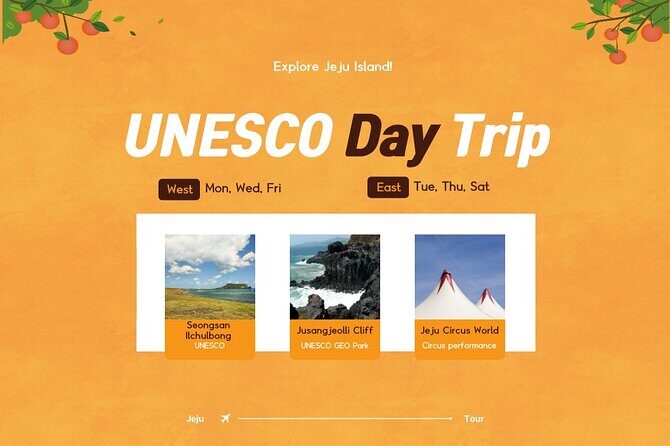
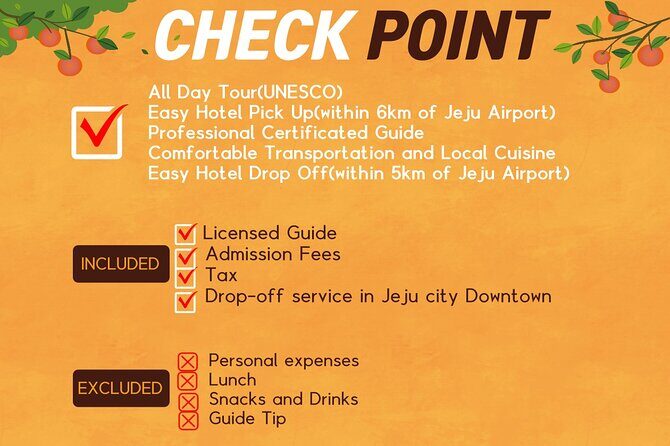
At $125 per person for about two days, the value comes from packing a lot into one paid “day plan.” You’re not just paying for the bus—you’re paying for someone to handle routing, timing, and (when your group size qualifies) English interpretation.
Here’s what you should expect for the money:
- Pickup and drop-off are included only within Jeju City downtown area. If you’re outside that zone, there’s an 80,000 KRW one-way extra charge.
- Transportation is handled in a 15-seater van / minibus / bus depending on group size.
- Several stops include admissions, while others are free. Even if you skip one or two free sights, the included-ticket portions still help offset the cost.
Two practical notes before you book:
- The tour requires a minimum of 13 travelers to proceed as a bus tour. If the minimum isn’t met, you’ll be offered alternatives or a full refund.
- Group size affects the “guide experience.” Up to 4 people can join at the same price with a regular taxi driver who has advanced English skills. For groups of 5–10, you’re meant to have a professional English-speaking guide; for 10+ you’ll get the best efforts to arrange a pro guide with a larger vehicle.
That last point is the only real “watch this closely” item in the information you have.
You can also read our reviews of more historical tours in Jeju
Day 1: Saryeoni Forest to Seongsan Ilchulbong, with seasonal swaps
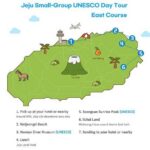
Day 1 is the Jeju “geology + culture” opener, built around the eastern side. Expect walking, viewpoints, and a few places where you’ll want decent shoes and a rain layer.
Stop 1: Saryeoni Forest Path (about 50 minutes, free)
This is a protected forest trail and one of Jeju’s top “hidden attraction” picks. The big benefit here is pacing: it’s a natural start that gets you used to the island’s outdoors before the volcanic highlights.
Practical tip: go into it with a light hiking mindset. Even if you don’t consider yourself a hiker, this kind of path is still more comfortable with closed-toe shoes.
Stop 2: Seongeup Folk Village (about 50 minutes, free)
This traditional village is preserved with stone-stacking methods designed to protect rooftops from wind. The buildings are tied to historical defenses from the Joseon Dynasty era.
What I like about this stop is that it gives you context for why Jeju feels different. It’s not just “pretty scenery”—it’s how people adapted to local forces.
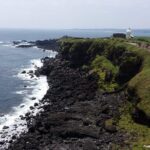
Stop 3: Seopjikoji (about 40 minutes, free)
Seopjikoji sits at the end of the eastern shore. The information specifically calls out April for yellow canola flowers. There’s also a nice local-language detail: “Koji” refers to a sudden bump on land.
If you’re traveling outside April, you still get a coastal viewpoint and open-air airiness, but the flower moment is the seasonal payoff.
Seasonal swap: Sangumburi in October instead of Seopjikoji
The plan notes a swap: only October uses Sangumburi instead of Seopjikoji, and the best time windows are October to December. You’ll get that “gold by waves of silvergrass” look on the crater ridges, plus notes about cedar forests and Eulalia grass colonies.
If you’re there in autumn, this is the type of stop where the timing matters more than the photo angle.
Stop 4: Seongsan Ilchulbong (about 1 hr 20 min, admission included)
This is the centerpiece. You’ll visit Seongsan Ilchulbong, also called Sunrise Peak, and it’s described as a tuff cone formed by hydrovolcanic eruptions long ago. It’s 182 meters high with a bowl-like crater.
The plan also mentions a women diver show as part of the UNESCO-focused visit, which helps turn a pure geology stop into something cultural.
If you like understanding what you’re looking at, this is one of the better places in the route to pay attention—there are features shaped by water and volcanic activity, not just random rock.
Stop 5: Jongdal-ri and the northeastern coastline pass (about 40 minutes, free)
You’ll get views while the bus travels along the North-Eastern coast, including passing Hado Beach and Saehwa beach on the way toward Manjang cave. Jongdal-ri Shore Road is described for hydrangeas in summer.
Even if you don’t stop at the beaches themselves, the drive-through sections help keep the day varied, not just “one stop after another.”
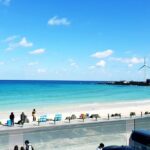
Stop 6: Hamdeok Beach (about 1 hr, free) or Haenyeo Museum on rainy days
On rainy days, Hamdeok Beach is replaced by the Haenyeo Museum, which focuses on haenyeo culture—social, economic, and historical contributions. The museum is meant to record, preserve, and educate, with exhibits about environment, fishing villages, and fisheries industry.
Why this matters: if you’re unlucky with rain, you’re not losing the day—you’re shifting from outdoor coast time to indoor cultural learning.
Manjang Cave UNESCO note: closure and substitutions
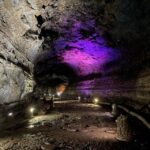
Manjang cave is UNESCO World Heritage in the plan, but it’s currently closed due to anti-falling construction, scheduled to reopen in August 2025. During construction, the route substitutes Hamdeok Beach.
Also, the plan says Manjanggul Lava Tube has a recurring closure pattern: it’s closed on the first Wednesday of every month, and in that case the Haenyeo Museum becomes the alternative course.
So if Manjang/underground lava tube is a must for you, double-check the timing against the closure notes.
Autumn timing reminder
The itinerary’s autumn emphasis shows up again with Sangumburi’s best window (October to December). If you’re aiming for that look, your travel month matters more than usual.
Day 2: Hallasan Oreum, Osulloc tea, and the south-coast UNESCO cliffs
Day 2 shifts toward the island’s interior and south coast. This is where you’ll see tea culture, waterfall steps, and ocean-driven rock formations.
Stop 1: Hallasan National Park, Eoseungsaengak (about 1 hour, admission included)
Hallasan’s natural features are the main reason this day feels special. The plan mentions Eoseungsaengak, described as a baby volcano called an Oreum of Halla Mountain.
On rainy days, Hallasan is replaced by Circus World. That tells you how the operator protects the day’s flow when weather makes mountain time less pleasant.
Stop 2: O’sulloc Tea Museum (about 1 hour, free)
Osulloc is Korea’s first tea museum, opened in 2001. The plan also mentions Osulloc Tea Stone built in 2013 beside the museum, with tea experience and cultural activity programs.
What you can do with this stop: it’s a calm break between outdoor geology. If you’re spending two days packed with volcanic sights, a tea stop helps reset your brain.
Stop 3: Sanbangsan Mountain and Sanbanggulsa Temple (about 30 minutes, admission included)
Sanbangsan is described as a dome-shaped, craterless volcano rising to 395 meters. The name ties to a stone cave in the middle of the mountain, with Sanbanggulsa Temple inside and a Buddha statue.
There’s also a legend included: water drops from the cave ceiling are said to be tears of love shed by the goddess protecting the mountain walls.
This is a shorter stop, but it gives you a mix of religion, rock, and local storytelling—useful if you want more than photos.
Stop 4: Yongmeori Coast (about 1 hour, admission included)
Yongmeori is a volcanic beach made of ash from violent explosions when hot magma met cold seawater. The plan includes a practical warning: access can be blocked by rising tides or bad weather.
If Yongmeori closes, the alternative is Mt. Songaksan.
If you want to keep your expectations realistic, don’t plan this stop as a guaranteed “must-see.” Plan to treat it as weather-dependent.
Stop 5: Cheonjeyeon Falls (about 40 minutes, admission included)
These falls are described as three sections, with the name meaning Pond of God. You’ll hear about a cave with cold water feeding the first waterfall, then pools leading to the second and third, finally flowing into the sea.
This stop works well after Yongmeori because it switches from volcanic beach textures to freshwater movement.
Stop 6: Daepo Haean Jusangjeolli Cliff (about 50 minutes, admission included)
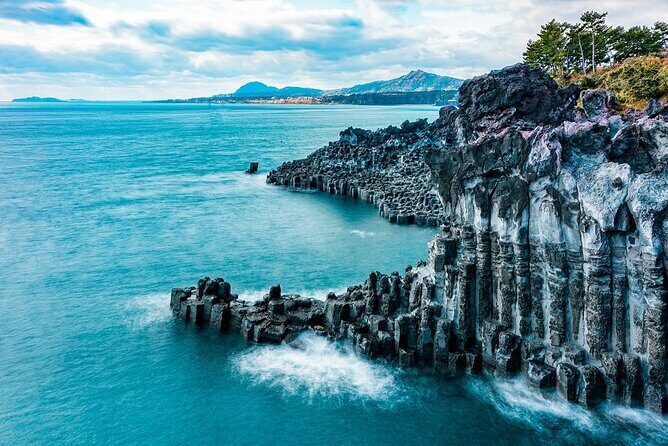
This is a UNESCO Geo Park highlight. The plan describes columnar joints in the Jungmun Tourism Complex area, designated Natural Monument #433. The columns are shaped like a large folding screen with hexagonal stone pillars.
Ocean waves crashing against the pillars are part of the effect, so if it’s rough seas day, this stop might be extra dramatic.
Stop 7: Jeju Art Circus (Circus World performance) (about 1 hour, free)
This is the weather-plan insurance. The info says Hallasan is replaced by Circus World on rainy days.
The performance focus includes:
- Chinese-technique circus elements
- Arirang combined into the show
- A motorcycle performance segment
- Mentions of awards and approval in China
Even if circus isn’t your thing, it’s one of the easiest ways to keep Day 2 from turning into a chain of disappointments on bad-weather days.
What the guide setup really means for your day
One reason this tour earns high marks is that it’s designed to keep you from getting stuck. In practice, you’ll have a driver and, depending on group size, English help.
From the information and real-world feedback patterns tied to this operator, English support may come in different forms:
- For smaller groups, you might travel with a driver who speaks advanced English rather than a full guide.
- For groups of 5–10, a professional English-speaking guide is part of the plan.
- For larger groups, the operator says they’ll make best efforts to arrange a professional English-speaking guide, with vehicles sized up to 15/22/35 passengers.
In previous outings, names like Andy, Terry, Mr. Kim, and Mr. Lee have been praised for being attentive and patient. That matters because it’s not just translation—it’s context. At places like Seongsan Ilchulbong, Sanbanggulsa Temple, and Jusangjeolli, you’ll get more out of your time if someone can connect what you’re seeing to why it exists.
A practical packing list for Jeju’s two-day route
You don’t need special gear, but you do need to be prepared for real Jeju weather swings. Bring:
- Comfortable walking shoes for forest paths and crater/rock areas
- A rain layer or compact umbrella (rain triggers multiple substitutions)
- A light wind layer for exposed coastal moments
- Water and snacks if you hate waiting between stops (meals and drinks are not included)
- Cash for personal expenses and tips if you choose to tip (gratuities are recommended but not compulsory)
Also, keep your phone charged. A mobile ticket is included, and you’ll feel calmer if you can show it quickly.
Should you book this Jeju UNESCO Heritage Bus Tour?
Book it if:
- You want a two-day Jeju hit list that covers East-side volcanic icons and South-side coastal UNESCO sites without complicated routing.
- You like learning on the move—especially at Seongsan Ilchulbong and the UNESCO Geo Park cliff.
- You’re okay with some walking and a schedule that keeps you moving.
Skip or switch if:
- Your group is likely too small, and you specifically need a professional English guide for every stop. In that case, the taxi-driver setup could feel less like a guided tour.
- You’re traveling with the mindset that you want to linger for long stretches in one place. This tour prioritizes “see a lot,” not “stay forever.”
If you’re short on time and want the island’s major geology and culture without the stress, this is a strong way to do it.
FAQ
What’s the duration of the Jeju Island UNESCO Heritage Bus Tour?
It runs for 2 days (approx.).
Does the tour offer hotel pickup and drop-off?
Yes, pickup and drop-off are included within Jeju city downtown area only.
What’s included in the price?
The price includes hotel pickup/drop-off (downtown Jeju City), transportation (van/minibus/bus), and a driver/professional English tour guide. Admissions vary by stop, and some are included.
Is it really only UNESCO sites?
It’s UNESCO-focused, but it also includes cultural stops and indoor backups like the Haenyeo Museum and Circus World, depending on the day and weather.
What happens if Manjang Cave or related lava-tube access is closed?
Manjang cave is listed as closed due to anti-falling construction and is scheduled to reopen in August 2025. During construction, the plan substitutes Hamdeok Beach. Also, the Manjanggul Lava Tube has closures on the first Wednesday of every month, and the Haenyeo Museum may be used as the alternative.
What if it rains during the tour?
Rain can trigger substitutions. For example, Hallasan National Park may be replaced by Circus World, and Hamdeok Beach may be replaced by the Haenyeo Museum.
How many people are needed for the tour to run?
The tour has a minimum of 13 travelers. The operator will try to avoid cancellation, but if the minimum isn’t met, alternatives or a full refund may be offered.