REVIEW · JEJU
Jeju Day Tour – World Heritage & UNESCO
Book on Viator →Operated by Jeju Tour Namyang Travel · Bookable on Viator
Volcano sightseeing, minus the hassle. This private Jeju UNESCO day tour strings together some of the island’s most famous natural sites—Seongsan Ilchulbong and Manjanggul—without you driving, navigating, or paying for a car. You also get real convenience with pickup and drop-off, so your day starts where you’re staying in Jeju or Seogwipo.
I liked how the route feels planned but not rigid: you get big-world-heritage views, then breathing room at beaches and a cultural stop. One thing to consider is that not every stop is included in your ticket price—some entrance fees are extra—and Manjanggul Cave can be closed for safety/inspection, so you’ll need to be flexible if your date hits a closure.
In This Review
- Key things that make this tour worth your time
- Two Route Styles: Seogwipo vs Jeju City Stops in One Day
- Oedolgae and Cheonjiyeon Falls: Volcanic Rocks Meet Local Legend
- Jeongbang Waterfall and Seongsan Ilchulbong: The UNESCO Two-Step
- Manjanggul Lava Tube: UNESCO Cave Temps and the Closure Reality
- Beaches That Earn Their Place: Woljeong-ri and Hamdeok’s Emerald Water
- Seopjikoji vs Seongeup: Two Ways to Use Your Bonus Choice
- Seopjikoji: cliff views and Ando-designed architecture
- Seongeup Folk Village: a living village, not a staged set
- Osulloc Tea Museum: A Calm Cultural Reset in the Middle of Volcanos
- Price and Value: What $320 Covers (and What You Still Pay)
- Driver Quality and Timing Changes Matter More Than You Think
- How to Pack for a Day of Caves, Cliffs, and Waterfalls
- Who Should Book This Tour
- Should You Book This Jeju UNESCO Day Tour?
- FAQ
- How long is the Jeju World Heritage & UNESCO day tour?
- How much does the tour cost?
- Is pickup and drop-off included?
- What languages does the driver speak?
- Is the tour private?
- Are entrance fees included in the price?
- What happens if Manjanggul Cave is closed?
- Which stops are included on the Seogwipo departure route?
- Which stops are included on the Jeju City departure route?
- Is lunch included?
- Can I cancel and get a full refund?
Key things that make this tour worth your time
- Private group, not a cattle-call bus: only your group goes together.
- Two departure options (Seogwipo or Jeju City): your stop order shifts, and your bonus choice changes.
- UNESCO geology you can actually walk around: Seongsan’s tuff cone and the lava tube.
- Real waterfall drama: Jeongbang is the one in Korea where water drops straight into the sea.
- Driver communication that matters: simple English or Japanese or Chinese, plus helpful support if timing changes.
- Back-up plan for Manjanggul: if the cave is closed, an alternative is offered.
Two Route Styles: Seogwipo vs Jeju City Stops in One Day
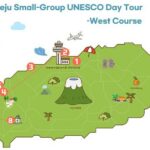
This is an 8–9 hour day tour designed for groups up to four (more people use a bigger vehicle). The biggest practical difference is where you start, because the route changes depending on whether you’re departing from Seogwipo or Jeju City.
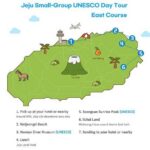
From Seogwipo, you’ll start with coastal geology (Oedolgae), add major waterfalls (Cheonjiyeon Falls and Jeongbang Falls), then go to Seongsan Ilchulbong. After that, you choose one: either Manjanggul Cave or Osulloc Tea Museum.
From Jeju City, your day begins with beaches (Hamdeok and Woljeong-ri), then heads to Manjanggul Cave, then Seongsan Ilchulbong again. Your choice is different here: Seopjikoji or Seongeup Folk Village.
If you’re trying to match this to where you’re staying, I’d pick the departure that keeps your first stop close to your hotel. It’s the simplest way to avoid a “sit in traffic all morning” feeling.
You can also read our reviews of more historical tours in Jeju
Oedolgae and Cheonjiyeon Falls: Volcanic Rocks Meet Local Legend
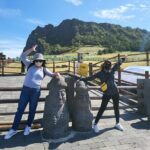
If your tour starts in Seogwipo, Oedolgae is your first big wow. This 20m sea pillar rises from the ocean and is tied to Jeju Olle Trail Course 7. It’s also known by other names like Grandma Rock, and there’s a local legend involving General Choi Yeong and conflict with the Yuan Dynasty.
What I like about this stop is that it doesn’t feel like a random photo spot. You’re looking at a structure that’s linked to how Jeju’s volcanic forces built the coast, and you get a sense of how much storytelling locals attach to the sea and waiting-for-fish life.
Next comes Cheonjiyeon Falls. It’s 22m high and 12m wide, and it’s named for the idea of sky connected with land. The falls are surrounded by plant life that includes items designated as natural monuments, and there’s even a reference to giant mottled eels living nearby (and being nocturnal), which makes the area feel bigger than just the water.
Practical note: you’re walking around outdoors, so bring shoes with grip. The waterfall areas can be slick after mist and splash.
Jeongbang Waterfall and Seongsan Ilchulbong: The UNESCO Two-Step
This tour hits Jeongbang Falls next (on the Seogwipo route). Jeongbang is famous because it’s the only waterfall in Korea where the water drops directly into the sea. At 23m high, with two streams falling down a dark cliff, it’s dramatic in a very physical way—you hear it before you really see the full view.
I also like that Jeongbang comes with cultural texture. There’s a legend about someone named Seobul searching for an elixir plant, and there are references to writing engraved on the cliff. Even if you don’t read Korean fluently, it adds meaning beyond scenery.
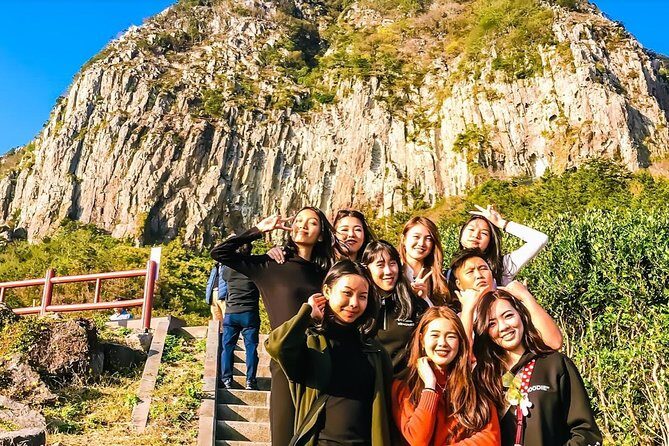
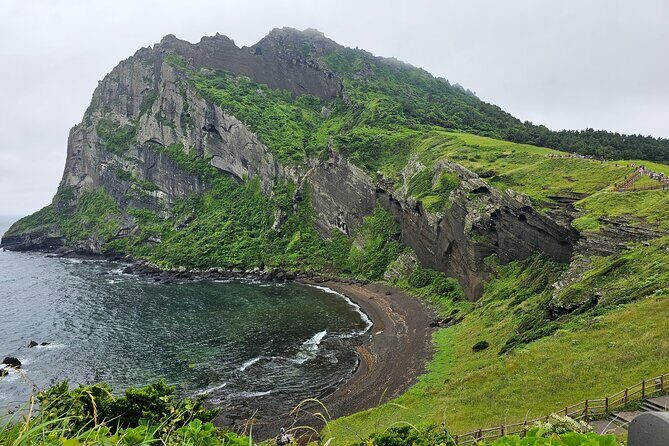
Then you get Seongsan Ilchulbong. This tuff cone was formed about 5,000 years ago through ocean-floor magma eruption. It’s best known as a sunrise viewing spot and also a top Jeju attraction, but you don’t need sunrise timing to enjoy it—you’ll still get a crater-and-ocean view that feels huge once you’re up there.
Here’s the smart part: Seongsan is built for walking. There are trails like the Seongsan-Ojo Trail and the Jijil Trail that connect viewpoints and villages, and you can get different angles on the crater and the ocean around it. If you’re choosing how much energy to spend, I’d do the route segments that let you see both the crater interior and the outer coast—those are usually the money views.
Manjanggul Lava Tube: UNESCO Cave Temps and the Closure Reality
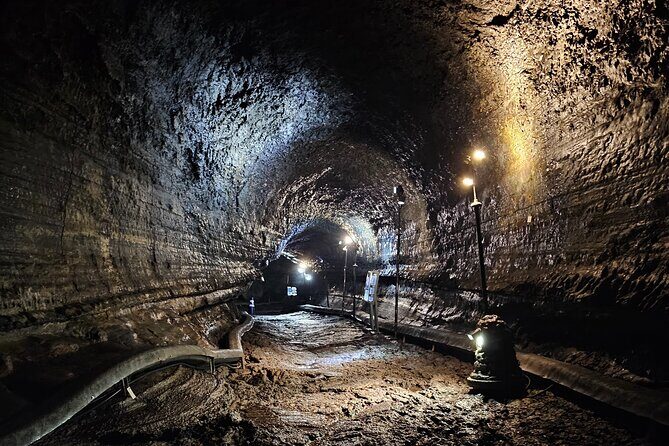
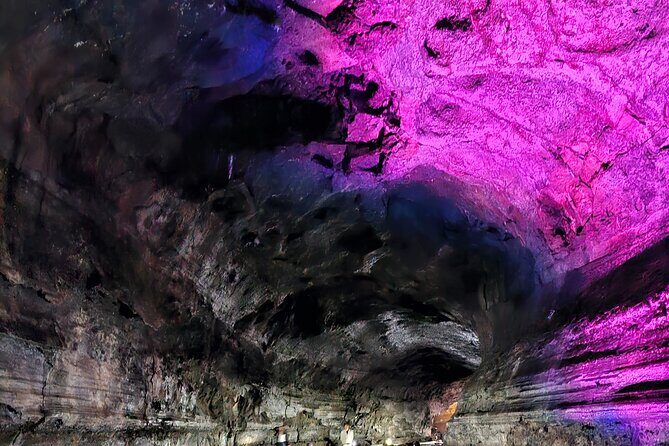
When your route includes it, Manjanggul Cave is the UNESCO stop that usually gets the biggest reaction. This lava tube is part of Geomunoreum, described as a parasitic cone that’s recognized as a World Natural Heritage site. The oreum has more than 20 caves, but Manjanggul is the one open to the public.
What makes it special is the experience of walking into something built by ancient lava. The formations are lava rocks arranged into a tunnel system, and it’s described as having an underworld feeling—cold rock, low-light shadows, and geometry you can’t recreate in your head.
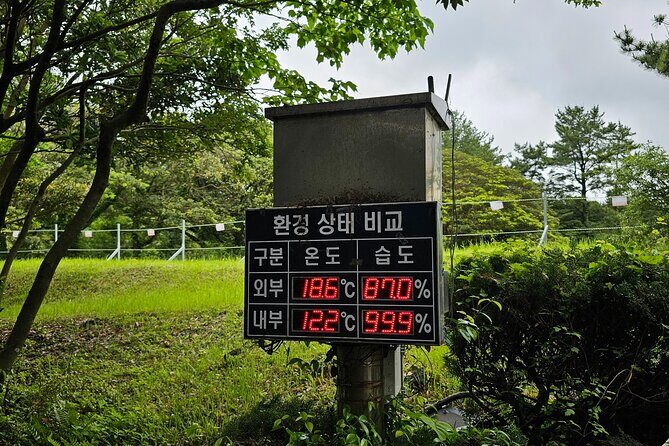
Practical comfort detail: the cave temperature stays between 11–21°C year-round. That means you’ll likely want a light layer even in summer, especially if you’re heat-happy outside before you go in.
Now, the important consideration: Manjanggul can be closed for safety inspection and internal construction. The tour data says closures can be tied to the first Wednesday of every month, with an alternative offered, and it also lists a suspension period (2023.12.29 to 2025.08.31) that implies replacement arrangements. Translation: build in flexibility and don’t bet your whole day on a single entrance time.
Beaches That Earn Their Place: Woljeong-ri and Hamdeok’s Emerald Water
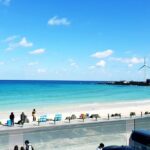
On the Jeju City route, the day slows down in a good way at the beaches. Woljeong-ri Beach is known for white sand and emerald water, plus a row of tea houses and coffee shops nearby. It’s a short stop, but it gives you something different from the volcanic theme—space to sit, breathe, and reset your camera battery.
Then you’ll hit Hamdeok Beach, which is sometimes described like it’s a different country after you arrive. It’s known for palm trees at the entrance, white sand, clear water, and white waves that make the water feel extra bright. It’s also associated with an oreum right next to it, called Seoubong Peak, which helps explain why the views look layered even though it’s a beach.
Timing note: because these are relatively quick stops, you’ll get the best out of them if you treat them as photo + short walk stops, not long-lounge stops. If you want a full beach day, you’d add it separately. This tour keeps you moving on purpose.
Seopjikoji vs Seongeup: Two Ways to Use Your Bonus Choice
Your final choice depends on whether you started in Jeju City.
Seopjikoji: cliff views and Ando-designed architecture
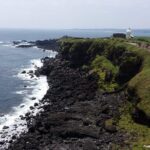
Seopjikoji is a cape famous for its cliff formation that protrudes into the ocean, and the name connects to a local dialect meaning Cape of Small Land. The view is the main event: hill and ocean in one frame, with chances to spot Jeju ponies grazing nearby.
If you walk along the cliff, you’ll reach Bulgeunoreum Parasitic Cone, where you can see a white lighthouse against a dark blue sea. Two additional stops here are designed by world-renowned architect Ando Tadao: a glasshouse and the Yumin Art Gallery. Even if you’re not an architecture nerd, it helps break up the geology with something designed for light and shape.
Seongeup Folk Village: a living village, not a staged set
If you choose Seongeup Folk Village, you’re trading coastal views for everyday Jeju life. This village preserves a traditional living site and is designated as an Important Folklore Cultural Heritage. People still live there, and residents act as volunteer guides, which is a huge difference from visiting a museum village where everyone’s working from scripts.
In the village center, you’ll find specific trees worth noticing: a Saw-leaf zelkova and a Japanese hackberry. It’s a quick stop, but the living-guide part makes it feel more human and less like a checklist.
Osulloc Tea Museum: A Calm Cultural Reset in the Middle of Volcanos
If you start in Seogwipo, your “choose one” after Seongsan is between Manjanggul Cave or Osulloc Tea Museum. This stop is adjacent to a Seogwang tea field, and it’s described as the first tea museum in Korea opened in 2001 by AMOREPACIFIC. It’s meant to show Korean tea culture and how tradition connects with modern life.
I like this option because it gives your brain a break. After waterfalls, caves, and crater walking, tea culture is a softer landing. The site includes a tea museum, a nature-friendly rest area, and a café space where you can order menus using tea (not included in the tour price, but the idea is simple—slow down and taste what you can).
If you’re the type who prefers cultural stops over more walking, Osulloc is often the better choice.
Price and Value: What $320 Covers (and What You Still Pay)
This costs $320 per group (up to 4 people). For a day tour with a private vehicle, pickup/drop-off, and a driver who speaks simple English/Japanese/Chinese, it can represent good value—especially if you don’t want the hassle (and stress) of renting and parking.
Here’s what’s clearly included:
- Pick-up and drop-off services from Jeju island
- Fuel and parking fees
- Driver with simple English/Japanese/Chinese
- Insurance included
- Private-group service (your group only)
- Mobile ticket
Here’s what’s not included:
- Lunch and personal expenses
- Food and drinks
- Entrance fees for stops like Jeongbang Falls, Jusanjeolli, Seongsan Ilchulbong, and Manjanggul Cave
So you should budget on top of the tour price for entrances where applicable and for meals. The good news is that some stops are listed as free (like Oedolgae, Woljeong-ri, and others on the route), so it’s not an all-fee kind of day.
One more practical value point: your vehicle choice changes with group size. Up to 4 use a regular taxi; larger groups use jumbo taxis, minivans, or mini-bus. That matters if you’re traveling with friends and want everyone to ride together without splitting up.
Driver Quality and Timing Changes Matter More Than You Think
One detail that jumps out from the best experiences with this tour style is the people driving it. In at least one standout case, the manager—Hong-min Lee from Jeju Namyang Travel—handled a request to move pickup earlier to 7:30am. The driver, Mr Hyun-woo Lee, was also praised for going above and beyond, and his English was described as not bad.
You can’t always count on perfect timing when you’re visiting multiple sites in one day, so having a driver who’s flexible and communicates clearly is real value. It can mean the difference between seeing the views you want and feeling rushed.
How to Pack for a Day of Caves, Cliffs, and Waterfalls
This tour mixes rough outdoor walking with at least one cave. Pack smart:
- Wear shoes with grip. Waterfall areas and cave entrances can be slippery.
- Bring a light layer for Manjanggul, since the cave stays between 11–21°C.
- Bring a small umbrella or rain jacket if the weather looks changeable. Water and mist come with waterfalls.
- Have some cash/card ready for entrance fees where they’re not included.
Also, accept that this is a “see a lot” day. If you try to maximize every single minute, you’ll miss the best part: slowing down at the stops that actually suit you.
Who Should Book This Tour
This tour is a strong fit if:
- You want UNESCO geology without arranging logistics yourself
- You like the idea of combining big sights (crater, lava tube) with softer stops (beaches, tea, or a village)
- You’re traveling as a small group and want privacy rather than a crowded bus
It may not be ideal if:
- You want a very slow, beach-only day
- You’re strict about only one specific cave entrance and don’t like contingency plans (because closures can happen)
Should You Book This Jeju UNESCO Day Tour?
Yes, if you want a practical day that hits Jeju’s top natural icons with minimal stress. The private-group setup, included pickup/drop-off, and driver support make it feel like a guided plan that still lets you enjoy the places on your own pace.
I’d book it especially if you’re excited about Seongsan Ilchulbong and at least one of the “big geological experiences” (Manjanggul, Oedolgae, or the waterfall sequence). Just budget for entrances you’ll pay separately, and keep your schedule flexible in case Manjanggul Cave is closed on your date.
FAQ
How long is the Jeju World Heritage & UNESCO day tour?
It runs about 8 to 9 hours.
How much does the tour cost?
The price is $320 per group, up to 4 people.
Is pickup and drop-off included?
Yes. Pickup and drop-off services are offered from Jeju island.
What languages does the driver speak?
The driver provides simple English, or Japanese, or Chinese.
Is the tour private?
Yes. It’s described as a private tour/activity, and only your group participates.
Are entrance fees included in the price?
Some are not. Entrance fees are listed as not included for Jeongbang Waterfall, Jusanjeolli (jusanjeoli cliff), Seongsan Ilchulbong, and Manjanggul Cave. Some other stops are listed as free.
What happens if Manjanggul Cave is closed?
If Manjanggul Cave is closed (the first Wednesday of every month), an alternative tour is offered: Jeju Haenyeo Museum. The tour data also notes a suspension period for Manjanggul Cave, with replacement arrangements.
Which stops are included on the Seogwipo departure route?
From Seogwipo, you’ll go to Seongsan Ilchulbong, Oedolgae, Jeongbang Waterfall, Jusanjeolli cliff, and then choose either Manjanggul Cave or Osulloc Tea Museum.
Which stops are included on the Jeju City departure route?
From Jeju City, you’ll go to Hamdeok Beach, Manjanggul Cave, Woljeongri Beach, Seongsan Ilchulbong, and then choose either Seopjikoji or Seongeup Folk Village.
Is lunch included?
No. Lunch, personal expenses, and food/drinks are not included.
Can I cancel and get a full refund?
Yes. You can cancel up to 24 hours in advance for a full refund. Cancellation within 24 hours isn’t refunded.

![[ Half Day ] Sightseeing, Top 3 spots of Seoul !! - Bukchon Hanok Village: Joseon-era streets in 50 minutes](https://8.koreaadventures.com/wp-content/uploads/half-day-sightseeing-top-3-spots-of-seoul.jpg)