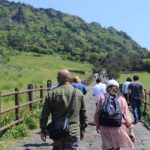
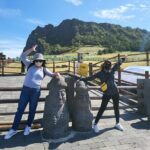
Jeju without the hassle of driving. This private taxi day tour strings together some of the island’s best-known sights—Seongsan Ilchulbong Peak, crater country, and a coastal promenade—without making you plan. I like the punctual pickup and the comfortable air-conditioned ride, especially if you’re traveling with family or want a smoother day than piecing together buses.
One thing to watch: Monday closures affect two key stops (the Haenyeo Museum and Jeju Stone Culture Park), so if your dates land on a Monday, the experience may feel a bit different than the standard route.
In This Review
- Key highlights at a glance
- Private Taxi Day Trips That Feel Like Your Schedule
- How the 8–9 Hour Plan Actually Works
- Seongsan Ilchulbong, Sangumburi Crater, and the Volcanic Jeju Core
- Stone, Coast, and Quiet Stops at Seopjikoji and Woljeongri
- Haenyeo Museum and the Real Rhythm of Jeju Life
- Dongmun Market: Food, Snacks, and Everyday Jeju Energy
- Price and Value: When $320 Per Group Feels Fair
- Timing, Vehicles, and What to Expect From the Driver
- The One Change You Might Run Into: Manjanggul Cave Closure
- Who This Jeju Private Taxi Tour Suits Best
- Should You Book This Jeju Private Taxi Tour?
- FAQ
- FAQ
- How long is the Jeju private day tour?
- What’s included in the price?
- Is pickup and drop-off available from hotels and the airport?
- What vehicle types are used for the tour?
- What about lunch?
- Are any stops free?
- What’s not included?
- Is Manjanggul Cave included?
- Are there closures on certain days?
Key highlights at a glance
- Door-to-door pickup and drop-off: airport pickup and hotel drop-off are included.
- UNESCO-level scenery focus: Seongsan Ilchulbong Peak is built into the day.
- Easy structure for a long day: set stops with admission included where noted.
- Human-side Jeju: Haenyeo Museum fits the cultural angle, not just photo stops.
- Coastal walking time: Seopjikoji and Woljeongri Beach give you fresh air and viewpoints.
- Finish with local life: Dongmun Market puts food and everyday Jeju energy at the end.
Private Taxi Day Trips That Feel Like Your Schedule
This is the kind of Jeju tour that works when you want control without the stress. You’re not fighting transfers, rechecking bus routes, or trying to understand parking and tolls. Instead, you get a driver, an air-conditioned vehicle, and a route that’s built around famous natural sights plus a market stop.
What makes it especially practical is the flexibility on logistics. You can start from Jeju airport and end back at your hotel (no extra charge). That matters because Jeju days can be tiring, and shaving off even one transfer can keep your energy for the views.
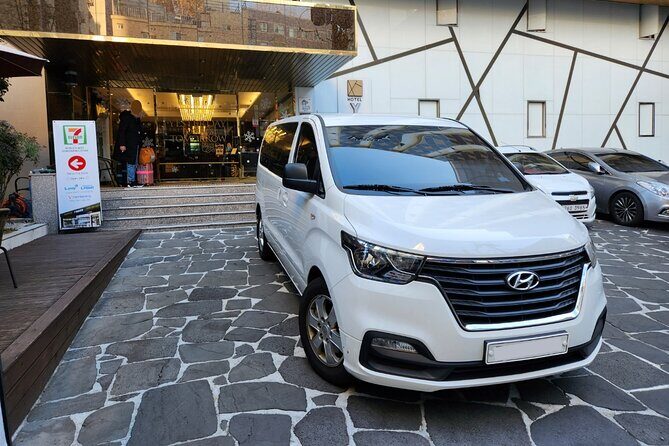
The other big plus is comfort. The tour can run with a sedan, jumbo minibus, and taxi, depending on your group, including options for families and groups as large as up to 12 people. Even if you’re in a smaller group, the day stays relaxed because you’re not doing the driving.
You can also read our reviews of more private tours in Jeju
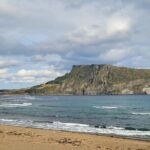
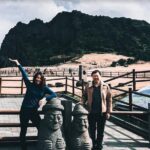
How the 8–9 Hour Plan Actually Works
This runs about 8 to 9 hours, with set time blocks for each stop. You’ll get a clear rhythm: cultural or volcanic sights in the middle of the day, coastal walking where it feels good, then a local market closer to the end.
You’ll also get a mobile ticket, which helps on days when you just want to show up and go. And your driver comes with foreign tour experience and speaks simple English, which is usually enough for quick route talk, timing, and practical advice.
Because lunch isn’t included, the tour does something smart: it includes time to discuss lunch with you and help you choose a restaurant. They aim to keep lunch within 1 km of Seongsan Ilchulbong Peak, which helps you avoid a detour while you’re already in that area.
Seongsan Ilchulbong, Sangumburi Crater, and the Volcanic Jeju Core
The heart of this day is Jeju’s volcanic story, and it’s handled in a way that’s more enjoyable than a checklist. Your mid-day includes Seongsan Ilchulbong Peak, one of the island’s top scenic spots, and a crater stop that gives you a different kind of volcanic shape.
Jeju Stone Culture Park (1 hour, admission included)
This one is less about views and more about context. You walk through a museum and ecological park that explains Jeju’s stone culture—how the island’s “stone land” became a way of living, building, and interpreting nature. If you like learning what you’re looking at, this stop gives the day a backbone before you head into the bigger outdoor scenery.
Sangumburi Crater (1 hour, admission included)
Sangumburi is a parasitic volcanic crater on Hallasan Mountain, and it’s described as the only submerged volcano on Jeju Island. That wording matters because it sets expectations: this isn’t just a crater for pictures; it’s also a chance to understand how Jeju’s volcanic geography can look different from one location to another.
Seongsan Ilchulbong Peak (about 2 hours, admission included)
This is the big one, a World Natural Heritage site east of sunrise territory. It’s described as a huge rock that rose from the sea, and it’s widely considered the most beautiful view on Jeju. You’ll have time to go up and back (plan for about an hour for the walk each way in many cases, plus viewing time), so it’s not a rushed drop-in.
Practical tip: wear shoes you trust on uneven ground. This is the part of Jeju where your feet do the work, and the reward is wide open sea views.
Stone, Coast, and Quiet Stops at Seopjikoji and Woljeongri
After the volcanic core, the route switches to coastline and breathing room. This is where the day starts feeling less like sightseeing and more like a scenic walk you can actually enjoy.
Seopjikoji (about 1 hour, free entry)
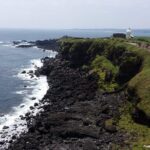
Seopjikoji is a popular drama filming location and a coastal promenade. Along the way, you can see the Seondolbawi Lighthouse, plus beach and lighthouse views. The best use of your time here is simple: slow down, take photos while walking, and let the ocean air reset your pace.
Woljeongri Beach (about 1 hour, free entry)
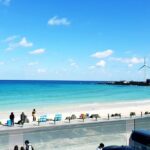
Woljeong-ri means the moon stays, and the water is described as an emerald-colored spread. The point of this stop is not to do a long beach day—it’s a photo-and-stroll window. If you’re traveling with kids, it’s also a good moment to stretch legs without a steep climb.
If you’re the type who likes scenic breaks that don’t feel like a chore, this pair of stops is a strong reason to choose this particular route.
Haenyeo Museum and the Real Rhythm of Jeju Life
Jeju isn’t only about rock formations. The island’s identity shows up in its seafood culture, and this tour works that in through the Haenyeo Museum.
Jeju Haenyeo Museum (about 1 hour, admission included)
The museum focuses on ocean life, fishing villages, folklore, and fishing—centered on Jeju’s haenyeo (female divers who harvest from the sea). You’ll get a structured view of daily life tied to the water, not just an isolated performance moment.
One practical note: the Haenyeo Museum is closed every Monday. If your trip includes a Monday, you might want to plan a Plan B so you’re not disappointed when that time slot doesn’t lead where you expected.
This is also a stop that tends to be meaningful even if you’re not a museum person. It connects the coastline you’ve seen to the people who built livelihoods there.

Dongmun Market: Food, Snacks, and Everyday Jeju Energy
You end with one of Jeju’s most practical experiences: the market. It’s a great way to close the loop on your day because you’ve already spent hours seeing how the island works. Now you see how people eat and shop.
Dongmun Market (about 1 hour, free entry)
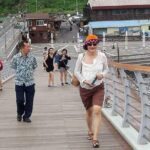
The market is packed with food options and the kind of lively everyday life that you can’t capture from a viewpoint. This is a good time to try small bites, grab a snack for later, or pick up something simple to bring back.
The tour plan makes sense here: you get back to your accommodation afterward via the final transfer, keeping the market as the last lively stop instead of squeezing it into the hardest part of the day.
Price and Value: When $320 Per Group Feels Fair
The price is $320 per group (up to 4), and it’s a private experience. That matters because you’re effectively paying for convenience and time savings. If you’re splitting the cost with up to four people, the per-person value often lands in a more reasonable zone than car rental plus parking hassles plus finding the right drivers.
The value case is strongest if:
- you want door-to-door pickup from airport or hotel
- you care about comfort for an 8–9 hour stretch
- you want multiple paid attractions handled for you
- you’d rather not spend your energy figuring out transport between distant coastal and crater sites
A small detail that can help with peace of mind: the tour states it uses taxis registered in South Korea, and transportation insurance is included. Also, parking fee and fuel are included, so you’re not doing surprise budgeting mid-day.
What’s not included is food and drinks and gratuities, plus personal expenses. Lunch is not bundled, but you’ll get help selecting it, usually near Seongsan Ilchulbong.
Timing, Vehicles, and What to Expect From the Driver
This tour is private, meaning only your group rides along. That’s the main reason it works so well for families and small groups: you’re not negotiating with strangers for meeting points or watching the day get pulled by someone else’s pace.
Vehicles can vary by party size, and the tour supports sedan, jumbo minibus, and taxi options. If you’re traveling as a larger group (up to 12 people), you’re likely to get the vehicle arrangement that fits you best.
The driver speaks simple English, so plan on a mostly practical conversation. Think: timing, where to stand, which entry points matter, and quick guidance. If you want deeper explanations about geology or history, your best bet is to ask targeted questions during transit and at stops.
One more logistic point: the tour is described as having mobile ticketing and being near public transportation. In practice, that generally means it’s easier to align with your day even if you’re using local transit elsewhere.
The One Change You Might Run Into: Manjanggul Cave Closure
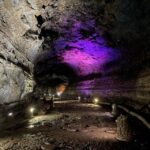
There’s also an important heads-up about a cave stop. Entry to Manjanggul Cave is not possible due to falling rocks, with a note that it’s scheduled to open in July 2025. Even though it’s not listed as part of the standard stop list here, you should treat this as a potential swap or absence if the route in your date window was planning to include it.
If caves are a must-do for your Jeju trip, double-check your final itinerary details once you book, so you can align expectations.
Who This Jeju Private Taxi Tour Suits Best
This fits best when you want a guided day but not a rigid, lecture-heavy one.
It’s ideal for:
- families who want simple logistics and comfort
- couples who want the key Jeju sights without renting a car
- small groups who can split the cost and keep the day smooth
- travelers who like a mix of nature, culture, and a market finish
It may not be your best match if you love very independent travel with lots of spontaneity. The tour’s strength is that it gives you a plan with the major stops handled. If you want a totally open-ended day, you might prefer a car rental or a looser public-transport route.
Should You Book This Jeju Private Taxi Tour?
If your goal is a high-impact Jeju day—Seongsan Ilchulbong, volcanic stops, coastal walking, Haenyeo culture, and Dongmun Market—this is a strong pick. The private taxi format gives you comfort and time efficiency, and the route is designed to keep you moving without feeling rushed all the time.
Book it if you value:
- door-to-door pickup/drop-off
- a comfortable, insured ride
- admission tickets included for the major paid sites
- a logical mix of nature plus local life at Dongmun Market
I’d think twice only if your dates fall on a Monday, since the Haenyeo Museum and Jeju Stone Culture Park are closed. If you can shift by a day, you’ll protect those stops.
FAQ
FAQ
How long is the Jeju private day tour?
It runs about 8 to 9 hours.
What’s included in the price?
Admission to the listed national and public attractions is included, along with air-conditioned vehicle use, parking fees, fuel, and the transportation insurance that comes with the taxis. Airport pickup and hotel drop-off are also included.
Is pickup and drop-off available from hotels and the airport?
Yes. You can start with airport pickup, and you can be dropped off at your hotel.
What vehicle types are used for the tour?
The tour can be done using a sedan, jumbo minibus, or taxi, based on your group.
What about lunch?
You’ll discuss lunch with the driver, and the plan usually places lunch within 1 km of Seongsan Ilchulbong Peak. Lunch itself is not included.
Are any stops free?
Yes. Seopjikoji and Woljeongri Beach are listed as free, and Dongmun Market is also listed as free. The final return/drop-off period is also free.
What’s not included?
Food and drinks, gratuities, drivers lunch, and personal expenses are not included.
Is Manjanggul Cave included?
Entry to Manjanggul Cave is not possible due to falling rocks, with a note that it is scheduled to open in July 2025.
Are there closures on certain days?
Yes. The Haenyeo Museum and Jeju Stone Culture Park are closed every Monday.