REVIEW · JEJU ISLAND
2025 Cherry Blossom East Day Tour in Jeju with UNESCO
Book on Viator →Operated by 러브코리아(LOVE KOREA) · Bookable on Viator
Spring on Jeju has a way of grabbing you fast. This 9-hour East Coast tour strings together king cherry blossoms with Jeju’s famous flower streets and a UNESCO site at Seongsan Ilchulbong, all with a guide and hotel pickup. I especially love the mix of big-petal cherry blossoms plus the long flower-road walks, and I like that there’s no shopping pressure. One thing to consider: two sites have paid entry, so you’ll want to budget for those, and the day still depends on decent weather.
You start at 9:00 am, ride in an air-conditioned vehicle, and end back at the meeting point. It’s designed for real sightseeing time (not just stop, snap, sprint), with about 1 hour 30 minutes at each main stop. The group size can reach up to 100, so if you hate crowds, I suggest you plan to arrive early at photo hotspots inside each time slot.
In This Review
- Key highlights worth penciling in
- East Jeju cherry blossoms and UNESCO in one long day
- Price and logistics: what $82.05 gets you (and what it doesn’t)
- Where you start and how the day runs
- Stop 1: Jeon Nong-ro Cherry Blossom Street (Jeju Jeonnonglo Beojkkochgeoli)
- Stop 2: Noksan-ro Canola Flower Road and the Gasilri stretch
- Stop 3: Seongeup Folk Village with real residents inside the fortress
- Stop 4: Ilchul Land and Micheon Cave (paid entry)
- Stop 5: Seopjikoji coast, red volcanic rocks, and tidal formations
- Stop 6: Seongsan Ilchulbong UNESCO crater (paid entry)
- Lunch planning: don’t let hunger steal your photos
- Guide and group energy: what to expect from the human side
- What kind of person should book this Jeju East day tour
- Should you book it or DIY?
- FAQ
- What time does the tour start?
- How long is the tour?
- Is hotel pickup included?
- If my hotel is outside Jeju City, will I pay extra?
- Is lunch included?
- Are entrance fees included?
- What language is the guide?
- How big are the groups?
- What if the weather is bad?
Key highlights worth penciling in
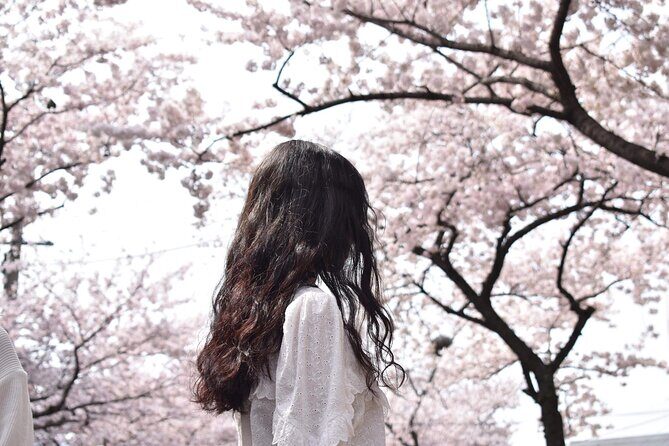
- King cherry blossoms on Jeju: Larger petals and an early-season feel compared with much of Korea.
- Flower-road combo day: Cherry blossom streets plus canola (rapeseed) fields for nonstop color.
- UNESCO crater at Seongsan Ilchulbong: A major volcanic viewpoint on a guided day schedule.
- Seongeup Folk Village with residents: You’re not just looking at sets.
- Red volcanic coast of Seopjikoji: Tidal rock scenes and classic Jeju scenery.
- Hotel pickup inside Jeju City: Less hassle, more time outdoors.
East Jeju cherry blossoms and UNESCO in one long day
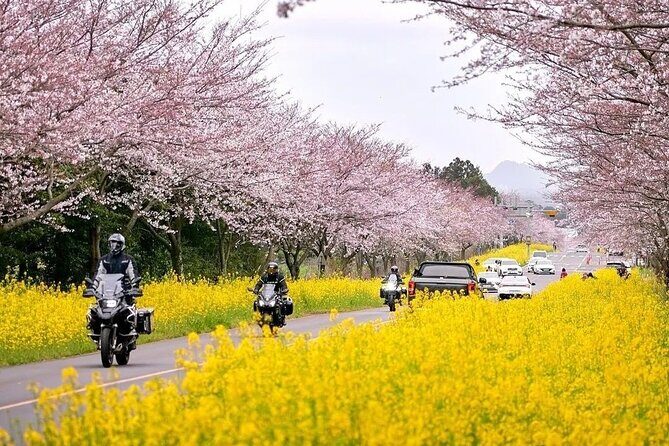
This tour is built for one simple goal: see the standout spring sights on Jeju’s east side without coordinating buses and transfers on your own. The cherry blossom angle matters because Jeju’s season often arrives early, and these king cherry blossoms have bigger petals than the typical cherry type you may know from Tokyo or Seoul.
The UNESCO payoff is also real. You’re not just doing a botanical walk and a coastal photo stop. You also get a scheduled visit to Seongsan Ilchulbong, the famous sunrise peak crater that holds UNESCO World Heritage status. Even if you’re not there at sunrise time, the crater views and volcanic terrain are still the whole point of the place.
The pacing is ambitious but not frantic. Each stop gets around 1 hour 30 minutes, which is enough time to walk a section, find a good angle, and still have room to reset before the next ride.
You can also read our reviews of more tours and experiences in Jeju Island.


Price and logistics: what $82.05 gets you (and what it doesn’t)
At about $82.05 per person for a roughly 9-hour day, the value is mainly in the parts that are hard to DIY. You get an air-conditioned vehicle, pickup from Jeju City hotels, a Chinese/English-speaking professional guide, and the toll and parking costs are covered.
There’s also a big quality-of-life detail: there’s no shopping. On some “sightseeing” tours, you spend time browsing products you don’t want. Here, the day stays focused on the actual sights.
What’s not included matters for your budget:
- Lunch is not included.
- Entrance fees are not included for two stops:
- Seongsan Ilchulbong: 5,000 won
- Ilchul Land: 12,000 won
- Personal travel insurance isn’t included.
If you want to keep the day smooth, treat the entrance fees as a small add-on cost you should pay at the sites. The rest of the scheduled stops have free admission tickets.
Where you start and how the day runs
The tour starts at 9:00 am and ends back at the meeting point. You’ll use a mobile ticket, and it includes hotel pickup if your hotel is within Jeju City.
If your hotel is outside Jeju City, expect an additional 70,000 won pickup fee. That detail can change the math of value fast, especially if you’re comparing DIY versus group tour.
One more practical point: the tour “requires good weather.” If conditions are poor, you’ll be offered a different date or a full refund. Since it’s spring and the sights are outdoors, it’s worth dressing for wind and sudden changes even if the forecast looks fine.
Finally, confirmation happens after booking, and the tour runs with a maximum of 100 people. That’s not a tiny group, but it’s usually manageable if you use the time slot wisely: pick one or two “must photograph” moments per stop, then enjoy the rest without hovering for perfection.
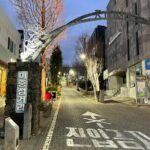
Stop 1: Jeon Nong-ro Cherry Blossom Street (Jeju Jeonnonglo Beojkkochgeoli)
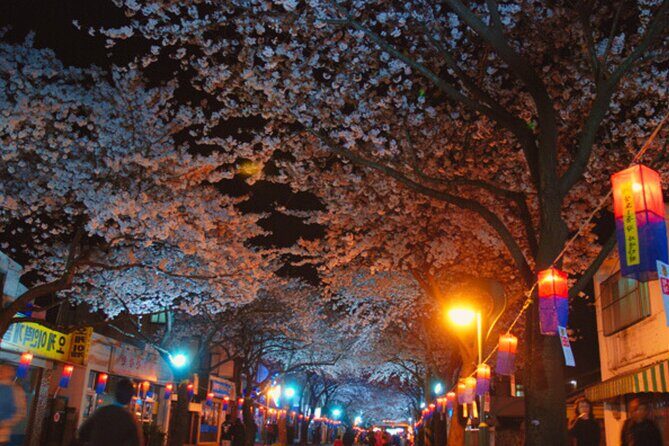
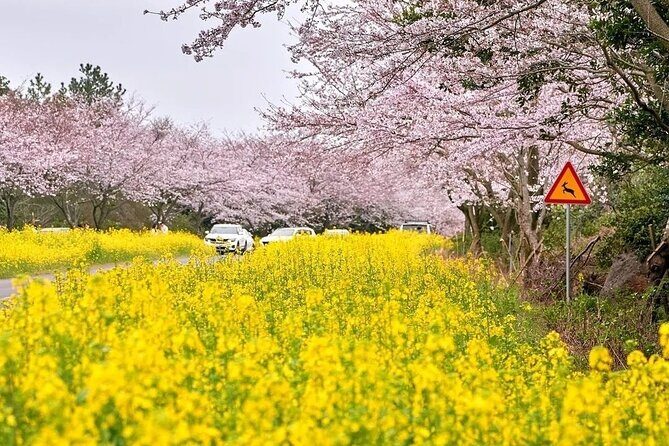
Your first stop is Jeju Jeonnonglo Beojkkochgeoli, centered on Jeon Nong-ro Cherry Blossom Street. This is the kind of place where you can feel the season: the street layout and photo angles are set up for quick walking loops, and the cherry blossom atmosphere can extend beyond daylight.
What I like here is the combination of easy entry (admission ticket is free) and the festival vibe. The description also points out that the area has festivals even at night, which is why the tour adds a helpful option later.
You’ll have about 1 hour 30 minutes. Use it early to beat the crush of people who arrive later in the day. Even if you don’t care about night festivals, going first helps you lock in the best blossoms before the rest of the route pulls everyone east.
A small drawback: if you’re sensitive to crowds, the charm is also what creates density. This is a top-name cherry blossom street, so plan to move with the flow and accept some shared space.
Stop 2: Noksan-ro Canola Flower Road and the Gasilri stretch
Next up is Noksan-ro Canola Flower Road, with the Gasilri (Noksaro) stretch highlighted as a long ribbon of color over 10 km. You’re not walking all 10 km in 90 minutes, but you will get access to the best feeling of it: that long, seasonal view where cherry blossoms and rapeseed flowers mix.
This stop is also free admission and gives you another 1 hour 30 minutes. This is a great time to slow down and do more than photos. Look for spots where the paths open up so you can get depth in your pictures, not just close-up petals.
Practical tip: wear shoes with grip. Even if the ground looks dry, flower roads can have uneven patches and occasional slippery spots from runoff. If you’re traveling solo, this is one of the stops that works well because you can walk at your own pace and still rejoin the group easily when your time slot ends.
The main consideration here is simple: if it’s windy, flower stances can flip fast and petals move around, which makes it harder to catch a perfect moment. Bring patience and aim for “good enough” framing.

Stop 3: Seongeup Folk Village with real residents inside the fortress
Seongeup Folk Village is where the tour slows a touch into culture. Unlike many folk villages that feel like a museum set, this one has actual residents living within the village.
The reason this stop feels meaningful is specific. The site traces back to the Jeonguihyeon administrative office. It was relocated from Goseong-ri, Seongsan-eup during the reign of King Taejong and then maintained its administrative role for centuries, with reference points in the early Joseon dynasty. The information also notes about 110 households inside Jeonguihyeon, plus houses outside the fortress.
You get about 1 hour 30 minutes, and admission is free. I like this timing because it gives you a mid-day break from pure outdoor walking while still letting you see something you can’t replicate anywhere else on Korea’s tourist circuit.
Possible drawback: if you’re expecting everything to be hands-on or interactive, you might find it more observational than participatory. It’s still worth it for the “people live here” feel, which changes the tone from staged to real.
Stop 4: Ilchul Land and Micheon Cave (paid entry)
Ilchul Land is described as a contemplative, abstract botanical garden tied to tourism development for eastern Jeju. The standout theme here is Micheon Cave, which preserves the underground mystery that gives the attraction its character.
This is one of the stops with a paywall: Ilchul Land admission is 12,000 won. If you’re keeping your budget tight, this is the main extra cost besides Seongsan Ilchulbong. The good news is you still get 1.5 hours, which should be enough time to take in the garden areas and spend a chunk on the cave-related attraction.
I also like this stop for a weather-reality reason. Even though it’s still a visitor experience, a cave component can make the day feel different from the pure sun-and-wind exterior sightseeing. If the day is hot or gusty, this helps break up the outdoor load.
Consideration: since this part of the day includes paid entry, it’s smart to bring the money or confirm how payment is handled at the gate.
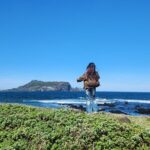
Stop 5: Seopjikoji coast, red volcanic rocks, and tidal formations
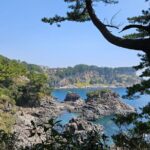
Seopjikoji is your classic eastern Jeju coast moment, with a dramatic setting that looks like a natural exhibition hall. The tour framing is specific: red volcanic rocks, rock formations revealed and submerged by the tides, and a coastline view that includes Sinnyang sandy beach near the base.
You’ll also see references to Jeju horses grazing, coastal cliffs surrounded by rocks, and Senbawi Rock standing tall. On top of that, there are rape flower fields spread across a plateau at the headland. If the morning’s cherry blossoms focused your eyes high, Seopjikoji gives you a longer horizontal view to reset your brain.
Admission here is free, and you get 1 hour 30 minutes. That’s a fair amount of time for a headland walk and photos from a few key angles. Still, tides matter. If the tide is in a less dramatic phase, you might see fewer of the submerged-to-exposed rock details at their peak. That’s not a dealbreaker; the volcanic geology and cliff shapes remain impressive at most times.
Practical note: bring a wind layer. Coastal wind can hit harder than you expect, even on a calm-looking day.
Stop 6: Seongsan Ilchulbong UNESCO crater (paid entry)
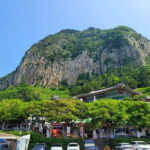
The big capstone is Seongsan Ilchulbong, the UNESCO World Heritage sunrise peak crater. The tour focuses on the volcanic landscapes and the crater setting itself, which is the main reason this site is world-famous.
This stop has paid entry: 5,000 won. Since it’s the UNESCO anchor of the day, I treat that fee as part of the “pay for the best view” bargain. You’re going to spend your time here in the most iconic way—walking the crater area, taking in viewpoint angles, and understanding the volcanic structure.
Even though the name is sunrise peak, you’re on a day tour that starts in the morning. So you should come ready for daytime crater views, not a guaranteed sunrise moment. The crater is the attraction either way.
The best way to enjoy this stop is to slow your photo pace. People rush, climb a few points, and then regret skipping the quieter viewpoint lower down. Use your 1.5 hours to do one full circuit for context, then return to your favorite angle for a second look.
Lunch planning: don’t let hunger steal your photos
Lunch is not included, so plan for food before the tour day or bring snacks that you can eat on the go between stops. If you rely on finding something quickly at every site, spring crowds can make that harder than it sounds.
I’ve found that the best strategy is simple:
- Eat a real breakfast before you leave.
- Keep a small backup snack (nuts, biscuits, anything you can grab fast).
- If the guide suggests a food option during the day, take it early rather than waiting for the last minute.
Also, because part of this tour includes outdoor walking and crater time, you’ll get more enjoyment if you don’t start the final stop with low energy.
Guide and group energy: what to expect from the human side
A strong guide matters on a route like this, where you have multiple zones of scenery. This tour includes a Chinese/English-speaking professional guide, and one detail that stands out is the quality of English communication when the guide is Peter—clear pacing, good explanations, and the sense that he knows how to keep the day moving without cutting your time too short.
The best guides do two jobs at once: tell you what you’re looking at and help you avoid wasting time. You’ll benefit from that, especially at Seongsan Ilchulbong, where volcanic terrain can make orientation tricky if you don’t have someone pointing out the key viewpoint flow.
Group size up to 100 can feel larger during photo surges. Your advantage is that each stop includes a time window, so you can work with the crowd instead of fighting it. Arrive at the start of your window for photos, then step back when you’re done.
What kind of person should book this Jeju East day tour
This tour is a good fit if you:
- Want to see king cherry blossoms and rapeseed flower roads in one day
- Prefer guided access to a UNESCO site instead of planning routes from scratch
- Like a structured itinerary where you still get time to walk and take photos
- Are traveling solo and want a day that doesn’t depend on finding a partner
It might feel too full if you prefer slow travel, long meals, and lots of unscheduled downtime. This is more of a “many highlights, same day” approach.
Should you book it or DIY?
Book this tour if you want your day to run smoothly with minimal logistics. The pickup from Jeju City, the English/Chinese guide, and the vehicle handling tolls and parking make it a practical choice during peak spring dates. It’s also been booked about 44 days in advance on average, which hints that popular bloom periods fill calendars quickly.
DIY can make sense if you love planning and want full control over exact timing and food stops. But if your goal is to hit the best east-side icons—flower streets, Seongeup Folk Village, Seopjikoji, and UNESCO Seongsan Ilchulbong—this organized route removes a lot of friction.
My final nudge: if you book, don’t wait for the last minute. And do one thing that matters most—plan for paid entry at Ilchul Land and Seongsan Ilchulbong, and don’t skip comfortable shoes.
FAQ
What time does the tour start?
The tour starts at 9:00 am.
How long is the tour?
The duration is about 9 hours.
Is hotel pickup included?
Yes, pickup is offered for hotels inside Jeju City.
If my hotel is outside Jeju City, will I pay extra?
Yes. If your hotel is not located within Jeju City, an additional pickup fee of 70,000 won applies.
Is lunch included?
No. Lunch is not included.
Are entrance fees included?
Not all of them. Seongsan Ilchulbong costs 5,000 won, and Ilchul Land costs 12,000 won. Other listed stops have free admission tickets.
What language is the guide?
The guide is listed as Chinese / English-speaking.
How big are the groups?
The maximum group size is 100 travelers.
What if the weather is bad?
The tour requires good weather. If it is canceled due to poor weather, you’ll be offered a different date or a full refund.