REVIEW · JEJU
Jeju Taxi Tour KJ with Flexible scheduling
Book on Viator →Operated by 제주 택시 투어 KJ · Bookable on Viator
Three days, one driver, no map panic. This private Jeju Taxi Tour KJ lets you shape your days around what you actually want to see, from famous UNESCO sites to beaches and temples, all at a pace that suits kids, older legs, and photo breaks. You can also request changes up until departure, which matters a lot on Jeju where weather and closures can shift plans.
I especially like the pickup and drop-off from downtown Jeju City. It turns the first and last miles into an easy win, and it keeps you from burning time figuring out buses or lining up multiple taxis. Another big plus: the driver can handle practical stuff, including basic English support and helping you get tickets, plus local guidance on where to eat and what to prioritize.
The main drawback to weigh is cost creep: the taxi price covers the ride, fuel, and parking, but most attraction admission fees and some port surcharges are not included, and there are extra charges if you start outside downtown Jeju City or travel long distances.
In This Review
- Key things that make this Jeju taxi tour work
- Why a private taxi tour works so well in Jeju
- Price, vehicle size, and what’s really included
- Building a flexible 3-day plan from downtown Jeju City
- Day 1: Seongsan Ilchulbong, Hamdeok Beach, and the Gotjawal forest
- Day 2: Hyeopjae Beach, Hallim Park tulips, and the volcanic coast
- Day 3: Jeongbang Falls, Seogwipo market time, cliffs, and Yakcheonsa Temple
- How the driver support changes your day (and why names matter)
- Timing tips: tides, closures, and weather-flexible planning
- Should you book the Jeju Taxi Tour KJ?
- FAQ
- What’s the price for the Jeju Taxi Tour KJ?
- How long is the tour?
- Does the tour include hotel pickup and drop-off?
- What vehicles are used for transportation?
- Is admission included for attractions?
- Are there any extra charges besides the base price?
- Can I change my itinerary?
- What’s the cancellation policy?
- Is this tour private?
Key things that make this Jeju taxi tour work
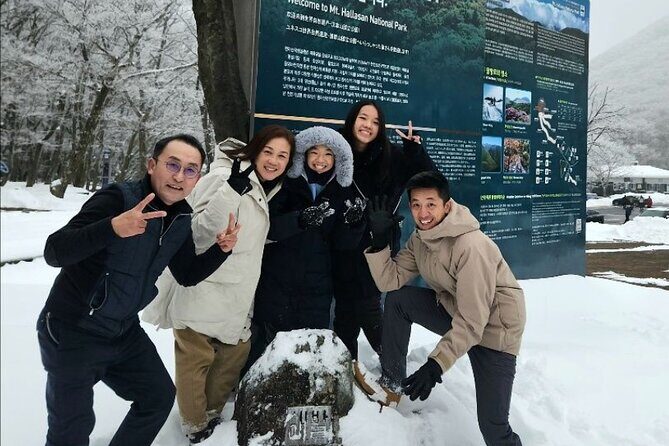
- Create your own itinerary and adjust it until departure, so the schedule fits your trip style
- Private taxi for up to 4 (with the option to upgrade to a minivan/jumbo depending on group size)
- Downtown Jeju City pickup and drop-off saves time and stress on arrival and departure
- Driver support with tickets and local food ideas, with English-speaking help on the road
- Flexible substitutions when a site is closed or tides/weather block access
Why a private taxi tour works so well in Jeju
Jeju is famous for sweeping coast views, volcanic features, and roadside “just one more stop” moments. The problem is that many of those stops are spread out, and timing can be picky. With a private taxi, you’re not glued to a bus route, and you can bounce between beaches, waterfalls, and viewpoints without turning your day into a logistics puzzle.
For me, the best part is how this format protects your energy. You spend less time waiting, walking long distances between transfers, and trying to decode what’s open today. Instead, you get a day that feels like you’re moving with a plan, not chasing one.
Also, it helps families and anyone with mobility limitations. Jeju’s top sights are often worth it, but you don’t always want long drives plus a lot of stairs plus a tight timeline. A private vehicle gives you the option to keep the day comfortable and still see major highlights.
You can also read our reviews of more tours and experiences in Jeju.
Price, vehicle size, and what’s really included
The price is $250 per group for up to 4 people (private, not shared). At this size, the value comes from not splitting into multiple taxis and not spending your day transferring. The booking is commonly made about a month in advance, which suggests people are planning early to lock in convenient routes.
What you get for the taxi price:
- Private regular/jumbo/minivan taxi transport
- Fuel and parking fees included
- Pickup/drop-off from downtown Jeju City
- Simple/basic English speaking driver support
What you should budget for (because it’s not included):
- Personal expenses and food/drinks
- Most attraction admission tickets (listed as not included for several key stops)
- Extra charges if pickup/drop-off is outside downtown Jeju City (40,000 KRW)
- Possible distance surcharges over 140 km (depends on vehicle type)
- Port surcharges if you’re starting/ending near Jeju City Port or Seogwipo City Port (paid in cash on the day)
One more cost reality check: even when a stop is free, time still matters. If you stack multiple ticketed sites on the same day, your total admissions can rise fast. The fix is easy: build your day around a couple of paid highlights, and fill the gaps with free nature spots and market time.
Building a flexible 3-day plan from downtown Jeju City
This is a private tour, so your group goes together and you set the rhythm. Before departure, you can change your itinerary after booking. Once the tour starts, changes aren’t permitted, so I recommend finalizing your must-sees before the first pickup time.
You’ll also get a short introduction at each attraction, and once the driver learns your interests, you can ask for alternatives if something is weather-affected or closed. That’s not just convenience. It’s how you keep the day from feeling like a checklist.
A practical way to plan:
- Pick one “big ticket” highlight per day (UNESCO peak, cave area, major temple, waterfall complex)
- Add two or three lower-stress stops nearby (beach, viewpoint, market, coast rock)
- Leave space for breaks. Jeju is better when you’re not sprinting.
If you’re traveling as a family of 3–4, this format can be a sweet spot. One spacious vehicle means fewer “who’s sitting where” debates and more time actually enjoying the sights.
Day 1: Seongsan Ilchulbong, Hamdeok Beach, and the Gotjawal forest
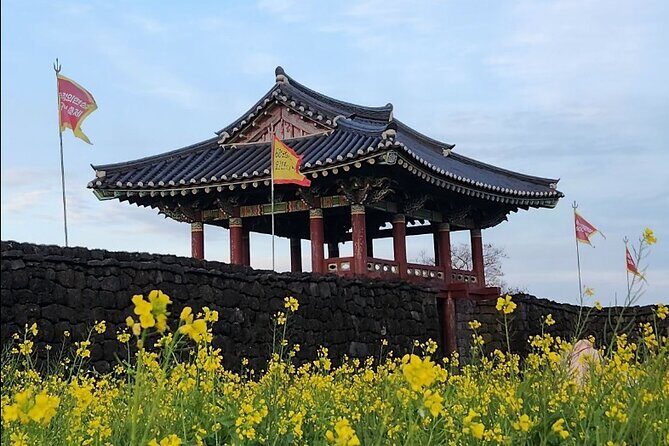
Day 1 leans into eastern Jeju: dramatic geology, iconic views, and beaches that are easy to enjoy without rushing.
Seongeup Folk Village (optional)
This is a preserved village showing how Jeju homes were built long ago, including stacked stone structures used to protect roofs from wind. The buildings remain from the Joseon Dynasty era, and the stonework style is the star here. If you’d rather, you can choose a folk village museum option instead.
Consideration: it’s scenic, but it’s not for everyone if you’d rather spend time outdoors on cliffs and coast trails.
Seopjikoji
This headland is all about open views along the eastern shore. The scenery is especially famous in April when canola flowers are in full bloom. If you’re traveling in October to December, Seopjikoji can be replaced with Sangumburi, which keeps the day flexible by season.
Tip: come prepared for sun and wind. The views are worth it, but the coast can be brisk.
Seongsan Ilchulbong (UNESCO)
Also called Sunrise Peak, it’s a tuff cone formed by hydrovolcanic eruptions about 5,000 years ago. The crater shape and geological layers are the point, and you’ll get that “how did nature do this” feeling that makes Jeju famous. Entry is not included, so factor that into your admission budget.
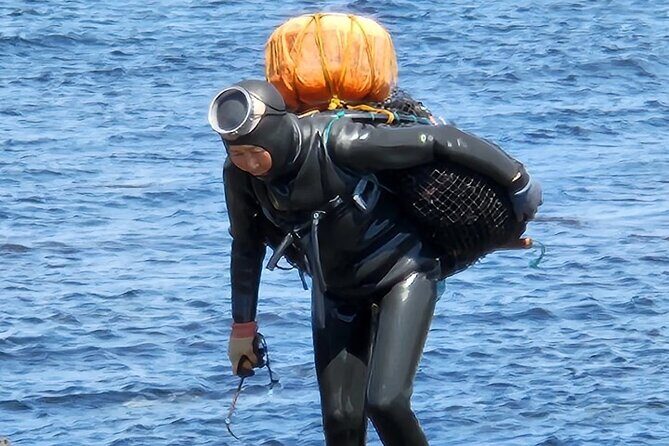
Also, there’s a note of a Women Diver show included with UNESCO heritage context. If a show schedule matters to you, ask the driver to confirm on the day.
Hamdeok Beach
This is one of Jeju’s top three beaches and it’s easy to turn into a relaxing hour. You’ll find a coastal walking trail, a grassy area good for picnics, and a bridge at the western end that goes over the water. Many people come in summer evenings for night sea vibes. Nearby is Seoubong volcanic cone, which is beautiful in spring with canola blossoms. Climbing up gives big views on clear days, including Hallasan from afar.
Consideration: if your weather is cloudy or rainy, you may want to shift your energy toward areas with better shelter and keep the walking time light.
Eco Land Theme Park
This stop is a change of pace. Eco Land focuses on the Gotjawal forest ecosystem, a protected area where underground water and heat conservation are part of the story. There’s also a handcrafted English-style Lincoln locomotive theme detail, modeled after the 1800s steam locomotive Baldwin.
The ticket isn’t included, so treat it as an optional add-on if you want something hands-on beyond beaches and viewpoints.
Manjanggul Lava Tube (UNESCO) and closure substitutions
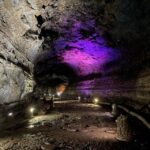
You may also go to the Manjanggul Lava Tube area, which is the world’s largest known lava tube and has a UNESCO designation. You’ll walk through a landscape that feels underground and dramatic, including a popular Stone Turtle-shaped feature.
Do note the real-world timing issues: Manjanggul can be closed on the first Wednesday of every month, and there’s construction noted with a reopening target in August 2025. During closure, substitutions can include alternatives like a Jeju Haenyeo Museum option or swapping to areas such as Jeju Stone Park or Eco Land Theme Park.
My advice: if lava tubes are a must, ask the driver early where the plan lands for the day you’re going. That one question can save you disappointment.
Day 2: Hyeopjae Beach, Hallim Park tulips, and the volcanic coast
Day 2 keeps it scenic but adds more variety—beaches, flowers, and another round of volcanic coastline drama.
Hyeopjae Beach
This beach sits in pine forest scenery and flows into Geumneung Beach. The sand is smooth and white, and the water is shallow with a gentle slope, which makes it more family-friendly than rougher beaches. You’ll also get emerald sea views and a distant Biyangdo Island, plus sunsets can be stunning.
Camping is available at Songlim nearby if you’re doing more than a day trip, but for a taxi tour, it’s mainly about the views and a relaxed stop.
Hallim Park
Hallim Park is well known and often has flower-related events. Spring tulip season is the star, with a festival featuring multiple tulip varieties, and there’s even a local food angle: you can taste bibimbap decorated with colourful tulips. Tickets aren’t included, so this is another “optional ticket” depending on what season you’re traveling in.
If you’re more into coastal scenery than gardens, you can also treat it as a shorter stop to preserve your day.
Yongmeori Coast
This is volcanic beach terrain made of ash from explosive activity when hot magma met cold seawater. The walk down to the shore narrows, and you’ll see sandstone cliffs too. The name refers to dragon’s head shape. The key detail: access may not be allowed during rising tides or bad weather.
If it’s blocked, Mt. Songaksan is mentioned as an alternative course. That’s exactly why a private taxi style matters—your day can flex instead of stalling.
Cheonjeyeon Falls
The Pond of God is made of three sections. The area has plant life like rare solimnan reeds, and you can see a cave where water drops from the ceiling into the first fall, then flows into a pool and drops again twice before reaching the sea. Admission isn’t included, so again: plan on optional tickets.
The Ma Park (horse-themed)
This is a horse-focused park and it’s different from typical Jeju stops. It features a permanent horse-riding performance called Empire of Thousand Years. Oh! Goguryeo Dynasty, based on the life of Jumong, founder of the Goguryeo Dynasty. There are riding facilities for different levels, too.
Tickets aren’t included. Still, if you’re traveling with kids—or you want something active and not only scenic—this can be a very memorable slot.

Day 3: Jeongbang Falls, Seogwipo market time, cliffs, and Yakcheonsa Temple
Day 3 takes you toward Seogwipo and the southern coast feel: ocean waterfalls, markets, sea stacks, and temple atmosphere.
Jeongbang Falls
Jeongbang Falls is the only waterfall in Asia that flows directly into the ocean, which is why it has that major draw. There’s also an inscription on the rock wall that says Seobulgwacha. Tickets aren’t included here.
Practical tip: if the weather is rough, the ocean spray can make the experience messy. If you’re sensitive to wet conditions, ask the driver how the viewing areas look on your day.
Seogwipo Maeil Olle Market
This is the largest market in Seogwipo, stretched over roughly 620 meters. It’s a long-running traditional market formed in the early 1960s, with shopping space expansion since 2001.
What I like is that it’s not just a shopping stop: the market design helps navigation, and it even offers free delivery service. There are cultural programs and outdoor performances too, depending on timing.
Oedolgae
Oedolgae is a sea stack about 20 meters high, and it’s one of the first things you see looking toward the Namju’s Haegeumgang River and Seogwipo Chilshipri Coast. It formed around 150,000 years ago after a volcanic eruption shaped the island. Pine trees regrow at the peak, adding a softer layer to the rock drama.
This one tends to be quick and photo-friendly.
Daepo Haean Jusangjeolli Cliff (UNESCO Geo Park)
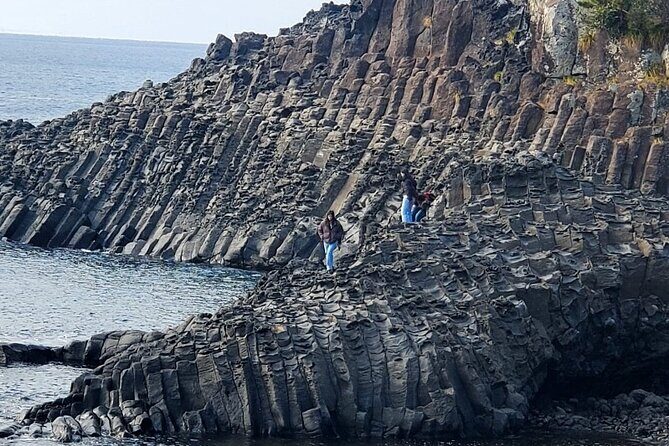
These are columnar joints in the Jungmun Tourism Complex designated as Natural Monument #433. Look for the black hexagonal stone pillars that can resemble a folding screen, while waves crash in the background. Admission isn’t included.
This is a stop where timing matters. When the ocean is lively, the views feel more alive.
Yakcheonsa Temple
Yakcheonsa is described as the largest temple in Asia. It was originally a hermitage called Yaksuam, then renamed because of a mineral spring nearby called Yaksu. The temple enshrines tombstones of royal couples from the Joseon Dynasty: King Munjong and his consort, and King Yeongchin and his consort. It also offers temple stays for both Koreans and foreigners.
Admission is free. If you’re looking for a break from coastline crowds and ticket lines, this is a calm closing note.
How the driver support changes your day (and why names matter)
One reason this tour gets such strong satisfaction is the driver’s practical role. You’re not just buying a car ride; you’re getting someone who can make the day easier: translating basic needs, helping with tickets, and steering you toward food and sight priorities.
In the experiences I looked at, drivers like Mr. Dongsik Lee and Raymond were praised for being helpful, handling tickets and conversations, and even helping with photography. Other names that show up include Mr. Lim, Mr. Ko Su Hong, and Mr. Jang—all noted for flexibility, smooth pacing, and keeping plans moving even when weather shifted. I’m not counting on any single person, but the pattern is clear: the best days happen when you work with the driver rather than demanding a fixed script.
What you can do to get more from the ride:
- At the start, list what you care about most: beaches, geology, flowers, food, temples, kid-friendly stops
- Ask where to go first if you want fewer crowds or better light
- If rain hits, ask for a swap that keeps walking minimal
English support is described as simple/basic, so it helps to have your must-see list ready in writing. But even with basic language, the driver can still manage the hard parts like ticket offices and basic direction.
Timing tips: tides, closures, and weather-flexible planning
Jeju can change fast. A coast stop can be perfect one hour and blocked the next due to tides or weather.
From the plan, these are the big “watch the conditions” areas:
- Yongmeori Coast: access may be restricted with rising tides or bad weather
- Manjanggul Lava Tube: can be closed on the first Wednesday monthly, and there’s also construction-related closure with substitution options
- Season swaps: Seopjikoji can be replaced by Sangumburi in Oct–Dec, depending on the schedule
That’s where flexible itinerary planning shines. You’re not stuck. You can shift to alternatives or swap your order of stops. And because the taxi is private, your driver can steer your route without waiting for a bus to come back around.
If you’re the type who hates uncertainty, use that to your advantage: build your day around reliable natural sites, and keep one “conditional” stop as the flex item.
Should you book the Jeju Taxi Tour KJ?
Book it if you want Jeju with low friction. This is a strong fit for families, mixed-age groups, and anyone who’d rather spend energy enjoying beaches and viewpoints than coordinating transport. The combination of private vehicle, downtown pickup, flexible scheduling until departure, and driver help with practical tasks is what makes this work.
Don’t book it if your trip is budget-only and you’re planning to skip most admission stops. Because admissions and some surcharges are extra, you’ll want at least a few ticketed highlights on your must-see list to make the total feel worthwhile.
If you do book it, I’d plan like this: pick two or three paid “anchors” across the three days, fill the rest with free nature and market time, and treat Manjanggul and tide-dependent beaches as conditional. That approach keeps the tour fun even when Jeju throws a curveball.
FAQ
What’s the price for the Jeju Taxi Tour KJ?
It’s $250 per group, for up to 4 people.
How long is the tour?
The tour is 3 days (about 3 days).
Does the tour include hotel pickup and drop-off?
Yes. Pickup and drop-off are offered from your hotel in downtown Jeju City. Pickup/drop-off outside downtown costs an additional 40,000 KRW.
What vehicles are used for transportation?
The tour uses a private regular/jumbo/minivan taxi. Depending on your group size, you may upgrade to a minivan.
Is admission included for attractions?
Admission tickets are listed as not included for several attractions. Some stops are marked as free, but many are not. Budget for attraction admission.
Are there any extra charges besides the base price?
Yes. There can be distance surcharges for trips over 140 kilometers, and there are port surcharges if your route involves Jeju City Port or Seogwipo City Port (paid in cash on the day).
Can I change my itinerary?
Yes. You can create your own itinerary, and you can change it up to the time of departure. Once the tour has started, itinerary changes aren’t permitted.
What’s the cancellation policy?
You can cancel for a full refund if you cancel at least 24 hours in advance of the experience’s start time. If you cancel less than 24 hours before, the amount paid is not refunded.
Is this tour private?
Yes. It’s a private tour, and only your group participates.