REVIEW · JEJU
Jeju Private Tour Package-South of Jeju(Mt.Hallasan & Waterfalls)
Book on Viator →Operated by Jeju Taxi Tour Namyang Travel · Bookable on Viator
South Jeju feels like a greatest-hits reel of nature, and this private taxi tour keeps it moving without the hassle of transfers. You get an easy rhythm: volcanic viewpoints, famous waterfalls, and a dramatic coastline route that’s built for scenery.
I especially like the mix of Hallasan-area geology (the Eoseungsaengak volcanic cone) with water sights that are some of Jeju’s best-known stops. The second big win is practical service: pickup and drop-off across Jeju Island, a driver who can manage simple English, Japanese, or Chinese, and lunch (Korean BBQ or local food) built into an ~8-hour plan.
One drawback to consider: this route is weather-sensitive and stair-heavy in spots. For example, the first section of Cheonjeyeon Falls only runs after rain, and the waterfall circuit plus coastal walks can feel like more effort than you expect for an 8-hour day.
In This Review
- Key highlights worth planning around
- South Jeju by private taxi: less waiting, more seeing
- Stop 1: Dokkaebi Road (Mysterious Road) and the fun logic of gravity
- Stop 2: Eoseungsaengak trail on Hallasan’s volcanic cone
- Stop 3: Cheonjeyeon Falls—where rain changes what you see
- Stop 4: Daepo Haean Jusangjeolli Cliff and the spectacle of stone columns
- Yongmeori Coast: dragon-head coastline at walking level
- Stop 5: Jeongbang Falls—water drops straight into the sea
- Stop 6: Oedolgae and the 20-meter stone pillar at sea edge
- Final stop: Cheonjiyeon Falls for the sky-meets-land story
- Lunch and driver support: the underrated part of a good day
- Price and logistics: what you’re really paying for
- Who should book this south Jeju day
- Should you book this?
- FAQ
- How long is the Jeju South private taxi tour?
- Is this tour private or shared?
- Does the price include pickup and drop-off?
- What languages does the driver speak?
- What’s included with lunch?
- Are admission fees included?
- What kind of vehicle might be used?
- What if I need to cancel?
Key highlights worth planning around
- Private taxi flexibility: regular taxi, jumbo taxi, minivan, or mini-bus, with fuel and parking handled
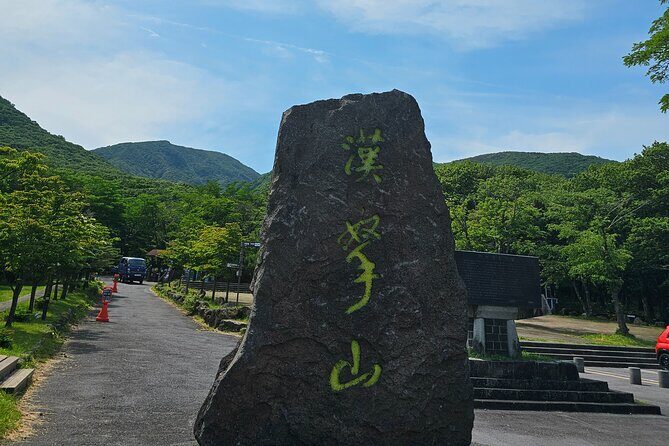
- Hallasan’s Eoseungsaengak: climb a parasitic volcanic cone tied to Hallasan’s landscape
- Rain-dependent waterfall drama at Cheonjeyeon Falls
- Jeongbang Falls goes straight to the sea: one of Korea’s famous sea-drop waterfalls
- Yongmeori Coast at sea-level: a coastline shaped like a dragon’s head
- Driver support: simple language help, plus the kind of extra care you’ll remember from Mr. Hong-min Lee (Jeju Namyang Travel)
South Jeju by private taxi: less waiting, more seeing
This is a true private day—only your group rides together—so you’re not stuck timing your plans to bus schedules. The “8 hours approx.” format matters because it creates a focused route: you’ll hit multiple major sights, but you won’t spend the whole day in transit.
For me, the value is in what’s already bundled. Fuel and parking fees are included, so you’re not wondering what the driver will charge extra for. Entry/admission fees and insurance are included too, which makes the day feel smoother and more predictable. And because lunch is part of the package (Korean BBQ or local food), you’re not left searching for food between stops.
The big practical bonus: you’ll have a driver who speaks simple English or Japanese or Chinese. That sounds minor until you’re in a situation where signs are confusing and the bus option is gone. If you’re the kind of traveler who likes to ask questions and keep moving, this setup works well.
You can also read our reviews of more private tours in Jeju
Stop 1: Dokkaebi Road (Mysterious Road) and the fun logic of gravity
Your first stop is Dokkaebi Road (도깨비도로), also known as the Jeju Mysterious Road. The classic party trick is why it’s famous: if you park a car on this steep road, it doesn’t roll down the way you’d expect—it goes up.
It’s short and simple, so it works as a warm-up before the more demanding sights later. Also, this stop is free, which is nice early on because you haven’t burned your energy budget yet.
Practical tip: treat this as a quick stop for photos and curiosity, not a long hangout. The value is the weirdness and the change of pace, which helps when your afternoon includes climbs and multiple waterfall viewing points.
Stop 2: Eoseungsaengak trail on Hallasan’s volcanic cone
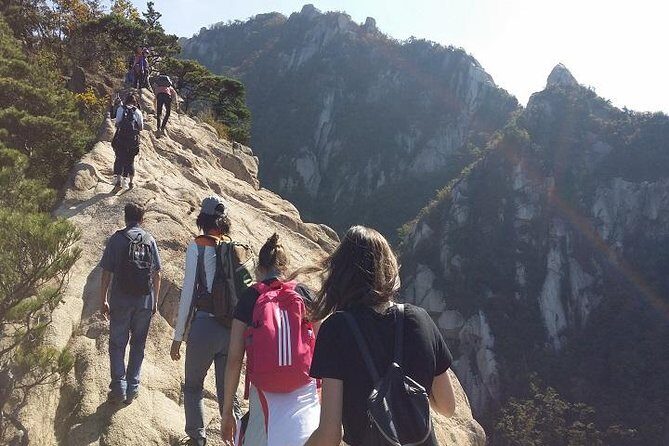
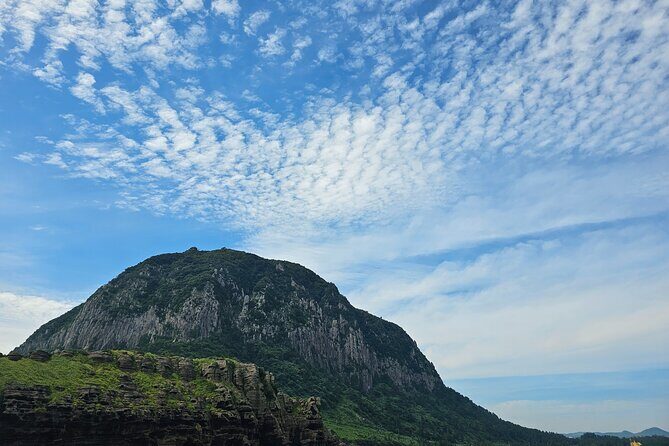
Next up is Eoseungsaengak (Eoseungsaeng Volcanic Cone), described as a parasitic volcano of Hallasan Mountain. Even if you don’t know much geology, the story is easy to enjoy: Hallasan’s volcanic system created more than just one mountain shape, and this cone is part of that bigger picture.
The route is tied to Hallasan Mountain National Park, and the climb can start from the Eorimok District. You’ll also see references to the trail connection from Cheonwangsa Temple, with an access approach that includes a “1100” step section.
What I like about this stop is that it breaks your day into “move through scenery” instead of only “watch from one viewpoint.” You’ll get closer to how Jeju’s landforms actually feel underfoot. Even better, the trail option is set up so it’s doable for most people (the tour notes that most travelers can participate), which keeps it from becoming a hardcore hike day.
Possible consideration: volcanic terrain can mean uneven footing and some stairs. Wear real walking shoes. Also, build in a bit of slow time so you’re not sprinting between stops—this is one of the best places to pause and look back toward the shapes of the island.
Stop 3: Cheonjeyeon Falls—where rain changes what you see
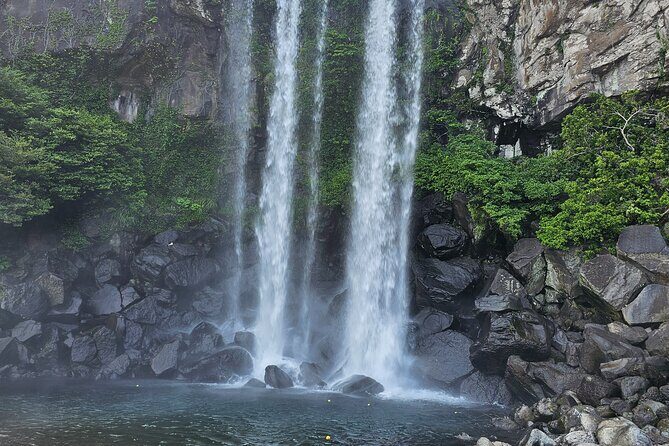
Cheonjeyeon Falls (Cheonjeyeonpokpo) is a three-tier waterfall in Seogwipo, and the “three-tier” detail is important. The first section is only active after rain, while the second and third sections run all year round.
So you’re not gambling your whole visit on weather, but your experience might look different depending on recent conditions. I like that the tour sets you up for that reality: even in less dramatic weather, you still get meaningful waterfall viewing.
The sound is part of the experience. When you’re standing near a multi-level waterfall system, you don’t just see water—you sense it in the air. This stop also works well as a “reset” halfway through the day because it gives your eyes a moving focal point after a climb.
Stop 4: Daepo Haean Jusangjeolli Cliff and the spectacle of stone columns
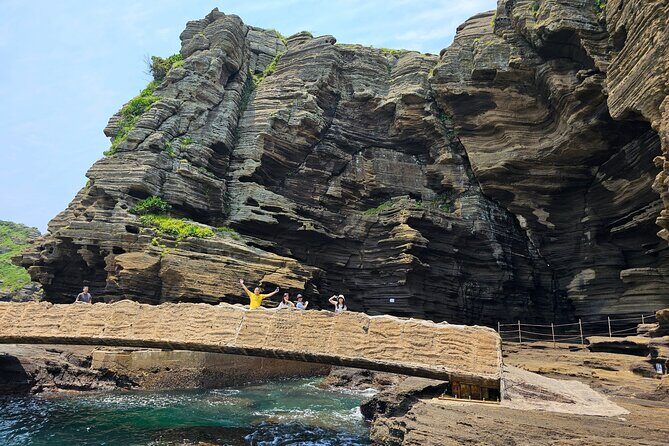
Next, you head toward Daepo Haean Jusangjeolli Cliff (often paired with the Jungmun Resort area). Jusangjeolli is famous for column-like rock formations—almost like frozen waves.
This is one of those stops where the best photos come when you slow down. Don’t just shoot from one spot. Walk to where you can see the columns from a slightly different angle. You’ll notice how the rock shapes create patterns that feel engineered even though they’re natural.
Admission is included here, and the time on site is about 50 minutes. That’s enough time to see the main view and take a few angles, without turning it into an all-day detour.

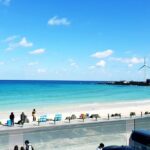
Yongmeori Coast: dragon-head coastline at walking level
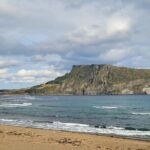
Then comes Yongmeori Coast (용머리해안), and yes, the name helps you understand what you’re seeing. It’s named because the shoreline looks like a dragon jumping into the ocean, with the dragon’s head raised—yong means dragon, meori means head.
I like this stop because it changes the theme from rocks and waterfalls to coastline scale. Instead of focusing on one object, you’re reading the whole scene: sea, cliff edges, and the curve of the land.
This also tends to be a great “photos and fresh air” portion of the day. If you’re traveling with someone who doesn’t want only stairs and viewpoints, Yongmeori is a good balance because it feels like an outdoor stroll shaped by dramatic geology.
Practical tip: wear shoes with grip. Coastline paths can be slippery depending on wind and spray, and you’ll want stable footing so you can enjoy the views without stress.
Stop 5: Jeongbang Falls—water drops straight into the sea
Jeongbang Falls (정방폭포) is one of Jeju’s top falls, along with Cheonjiyeon and Cheonjeyeon. The standout fact is why it earns frequent mentions: Jeongbang Falls is the only waterfall in Korea where the water drops directly into the sea.
This changes the experience in a big way. Watching a fall from a distance is one thing. Seeing how the water meets the ocean makes it feel more immediate—like the whole coast is part of the waterfall system.
You’ll get about an hour here, and admission is included. That time length is useful because you want space to find the best viewing points and to watch how the water’s flow changes with wind.
Possible consideration: because the fall is tied to sea conditions, the viewing experience can vary. If it’s windy or rainy, expect more sound and more mist. That can be great for atmosphere, just bring the right clothing for getting a little damp.
Stop 6: Oedolgae and the 20-meter stone pillar at sea edge
Oedolgae (외돌개) is a standout for a reason that’s easy to picture. It’s a stone pillar about 20 meters high, rising out of the sea like a marker in the water.
The tour notes it’s also called General Stone, and it’s the starting point of Jeju Olle Trail Course 7. That means this isn’t only a quick photo spot. If you ever want to slow down on Jeju and walk longer routes, Oedolgae is where those long trails begin.
This stop is free, and it’s scheduled for around 50 minutes. That’s a good length for standing back and taking in the pillar’s scale without rushing through.
Practical tip: sea-edge sights are best when you watch the light shift. If you can, pause for a minute before taking your main photo—sometimes one angle looks flat until you notice the shadows and texture.
Final stop: Cheonjiyeon Falls for the sky-meets-land story
End your circuit at Cheonjiyeon Falls (천지연폭포). It’s a strong finish because the setting feels powerful: white water flowing down a rock cliff and a sound that matches the width and drop.
The tour describes the symbolism behind the name: Cheonjiyeon can be interpreted as sky connected with land. And the scale is memorable—about 22 meters high and 12 meters wide.
Admission is included, and it’s another good place to slow down after coast and sea views. By the time you arrive, your eyes have been trained by waterfall edges and coastline lines, so the final scene lands with more impact.
Possible consideration: if you’re someone who prefers quiet, keep an eye on crowding. Even without having details on exact visitation times, waterfall sites often attract people when weather is good.
Lunch and driver support: the underrated part of a good day
This tour includes lunch—Korean BBQ or local food. That matters because it protects your schedule. On Jeju, a “quick food stop” can become a time trap if you’re trying to pick a restaurant on the fly between major sights. With lunch included, the plan stays intact.
The other underrated factor is driver support. The tour specifically includes a driver who can speak simple English, Japanese, or Chinese, which helps with more than just directions. You can ask what to prioritize, get help with timing, and avoid awkward pauses where you’re trying to translate while the driver waits.
One of the strongest signals from the experience is the kind of service you can get from the company’s manager, Hong-min Lee of Jeju Namyang Travel. The theme is clear: when there’s a language barrier, extra kindness and problem-solving turn the day from stressful into easy. If you’re worried about communicating in Korea, this is exactly the kind of reassurance you want built into your itinerary.
Price and logistics: what you’re really paying for
The price is $220 per person, for an 8-hour private tour. That’s not “cheap,” but it’s easier to justify when you look at what’s inside the bundle.
You’re paying for:
- Private transportation (regular taxi through minibus options)
- Fuel and parking included
- Lunch included (Korean BBQ or local food)
- Entry/admission fees included
- Insurance included
- Pickup and drop-off around Jeju Island
- A driver with simple English/Japanese/Chinese
So the money you spend isn’t just moving you around—it’s buying less friction. If you’re traveling as a couple or family, private taxi days can start to look like good value because you’re not separately paying for every admission and scramble to plan transport.
One consideration: if you’re traveling solo, the per-person cost can feel steep compared to group bus tours. But if your priority is a smooth day, language ease, and a plan that hits the main south Jeju highlights without stress, that premium can make sense.
Also, the tour notes it’s commonly booked around 11 days in advance. If you have a specific day in mind, give yourself enough time so you’re not negotiating schedule changes.
Who should book this south Jeju day
This tour fits you if you want:
- A private day with pickup/drop-off and minimal logistics
- The mix of Hallasan-area climbing plus famous waterfalls and sea cliffs
- A driver who can handle simple communication in English, Japanese, or Chinese
- Lunch and admissions handled so you can focus on the scenery
It may not be your best choice if you:
- Want a slow, long hike day with lots of unplanned breaks
- Are extremely sensitive to weather changes (especially for waterfalls with rain-dependent sections)
- Prefer to explore by yourself without a set sequence of stops
Should you book this?
I’d book this south Jeju private taxi tour if you want one strong day that checks multiple “must-see” natural sites, without turning your trip into a transportation puzzle. The included lunch, admissions, and insurance make the price feel less like a guess and more like a plan you can trust. And if language barriers are a concern, the driver support, including the extra-care service associated with Hong-min Lee, is a major plus.
If you want, I can also suggest a smart “day-of” game plan—what to wear and how to pace yourself across the volcanic cone, waterfall stops, and sea coastline paths.
FAQ
How long is the Jeju South private taxi tour?
The tour runs for about 8 hours.
Is this tour private or shared?
It’s private. Only your group participates.
Does the price include pickup and drop-off?
Yes. Pickup and drop-off are offered from locations across Jeju Island.
What languages does the driver speak?
The driver speaks simple English or Japanese or Chinese.
What’s included with lunch?
Lunch is included, either Korean BBQ or local food.
Are admission fees included?
Yes. Entry/admission fees are included in the price (with some stops listed as free).
What kind of vehicle might be used?
Depending on your group, it can be a regular taxi, jumbo taxi, minivan, or mini-bus.
What if I need to cancel?
You can cancel for free up to 24 hours in advance of the experience for a full refund. If you cancel less than 24 hours before the start time, the amount paid is not refunded.