REVIEW · JEJU
Jeju Island Taxi Join Tour
Book on Viator →Operated by Jeju Travel Lucas · Bookable on Viator
Jeju hits different when you only have one day. This small-group taxi tour bundles the island’s top sights into a single 8.5-hour route, with a guide who fills the gaps on what you’re actually seeing. I especially like the hotel pickup in Jeju City and the way the day is paced so you’re not stuck sprinting between stops.
The main thing to watch is that you choose an east, west, or south style route, and some popular combo options aren’t available on the same day. I also recommend planning your expectations around paid add-ons: a few sites have optional or extra-pay entries, and lunch isn’t included.
In This Review
- Key takeaways before you ride
- How this taxi join tour works like a private day (mostly)
- Price and value: what $108 buys you on Jeju
- Pickup, timing, and where the day begins
- Manjanggul Cave: the underground lava-tube wow factor
- Seongsan Ilchulbong: Sunrise Peak and crater views
- Seongeup Folk Village and the stone-roof defense idea
- Beaches that feel like a breather: Woljeongri
- Bijarim Forest: world’s largest single-species forest
- Maze Land and Miro Park: stones, wind, and women (in a fun way)
- Haenyeo Museum when Manjanggul is closed
- O’sulloc Tea Museum: Jeju’s first tea museum
- Sanbangsan Mountain and the Sanbanggulsa Temple cave
- Yongmeori Coast and Oedolgae: ocean made by volcanic force
- Waterfalls and cliffs: Jeongbang, Cheonjiyeon, and columnar basalt
- Yakchunsa Temple and the view down toward the sea
- Tea, stone, flowers, and “little Jeju” parks
- Seasonal swaps: when the plan adjusts for closures and timing
- The one thing you should budget: lunch and the cash tip
- Should you book this Jeju taxi join tour?
- FAQ
- FAQ
- What time does the Jeju Island Taxi Join Tour start?
- Where is pickup and drop-off available?
- How many people are in the group?
- Are attraction admission tickets included?
- Is lunch included?
- Do I need to pay a gratuity?
- Can I combine different routes in one tour?
- What happens if a main site is closed?
- What if the minimum number of travelers isn’t met?
Key takeaways before you ride
- Max 13 people keeps the experience friendly and picture-friendly
- Downtown Jeju City pickup and drop-off saves you from complicated transfers
- Admission fees for compulsory stops are included, so your budget is easier
- Seasonal route swaps happen when certain sites close or weather changes
- English-speaking guides can make the day feel less like sightseeing and more like learning
- You’ll get time to explore, not just a drive-by photo line
How this taxi join tour works like a private day (mostly)

This isn’t a bus tour where everyone disappears the second the doors open. The setup is simple: a small group in an air-conditioned vehicle, a start time of 9:00 am, and a day built around classic Jeju highlights—volcano geology, ocean scenery, waterfalls, and cultural stops.
What makes it feel better than DIY is the flow. You don’t have to figure out which road to take, where parking is, or how long each transfer will take. Your guide helps keep the rhythm moving while still letting you stop long enough to actually enjoy the place.
I also like that the tour uses a mobile ticket, so you’re not juggling printed paperwork while you’re scanning views and grabbing photos. It’s a straightforward system aimed at one thing: getting you to the right spots without turning your day into logistics homework.
You can also read our reviews of more tours and experiences in Jeju.
Price and value: what $108 buys you on Jeju
At $108 per person for about 8 hours 30 minutes, the price is worth looking at in two pieces: transportation and admissions.
On the “transport” side, you’re getting round-trip pickup and drop-off in Jeju City Downtown, plus an air-conditioned car. On an island where distances can feel longer than you expect, that convenience matters. It also helps solo travelers, since you avoid the cost of booking a full private taxi for the day.
On the “admissions” side, the tour includes compulsory attraction entry fees, which removes a common surprise cost from Jeju days. Some stops are marked as not included, so you may see optional tickets depending on which sights are on your specific route. The good news: the ticket mix is clearly part of the plan, so you can budget calmly.
One more value point: the day is capped at 13 travelers, and that usually translates into more guide attention. The guides (including English-capable drivers such as Lucas Koh / Mr. Koh, and other team members listed for the service) are set up for interaction, not just narration.
Pickup, timing, and where the day begins
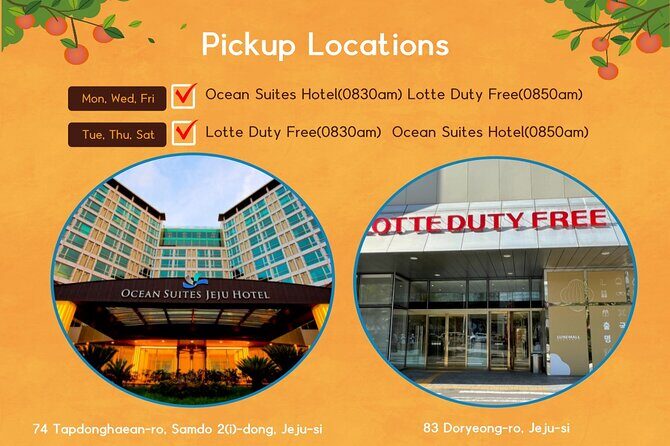
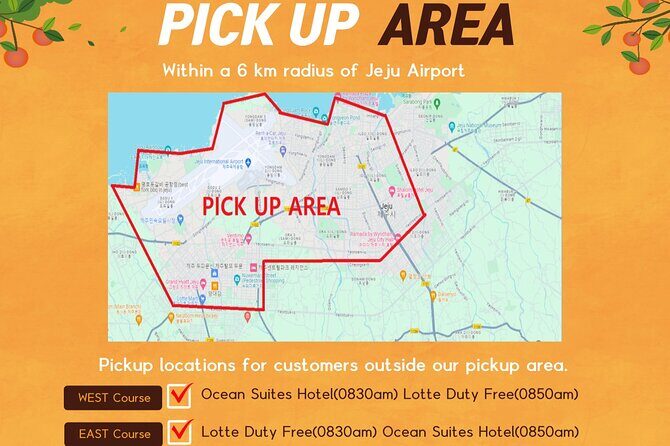
Your day starts with pickup within Jeju City Downtown and ends with drop-off back there. If your hotel is outside that area, pickup isn’t available, so double-check your map before you book. Start time is 9:00 am, so plan a calm morning.
Because this is a join tour, it operates when there are two groups or more joined together, with a condition that the combined total is more than 4 people. In practice, that means you’re not guaranteed to run every day like a fixed schedule—but you should receive confirmation at booking.
The car capacity and small-group structure matter here. You’ll have enough room to get comfortable, and the guide can actually keep track of everyone. That’s a big deal at crowded photo stops like the basalt cliffs, where patience gets tested fast.
Manjanggul Cave: the underground lava-tube wow factor
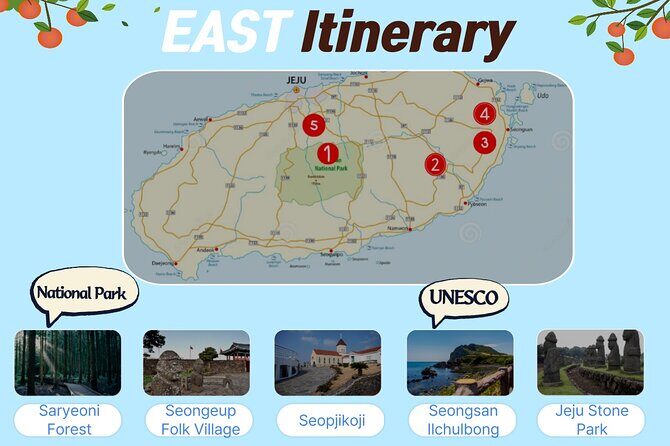
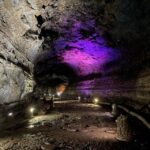
If you pick the east-oriented course, one of the first big-ticket sights is Manjanggul Cave. This is known as the world’s largest known lava tube, formed by volcanic activity. The big feeling here is scale: it’s like walking inside Jeju’s volcanic engine, with stone formations that make you look up and pause more than once.
A highlight people focus on is the Stone Turtle formation. It’s one of those features that makes the whole cave feel like it has a personality.
Practical heads-up: Manjanggul can close on a schedule. If it’s closed on the first Wednesday of every month, the day swaps in the Jeju Haenyeo Museum as an alternative course. That substitution is helpful because it keeps the morning strong instead of turning the day into a patchwork.
Seongsan Ilchulbong: Sunrise Peak and crater views
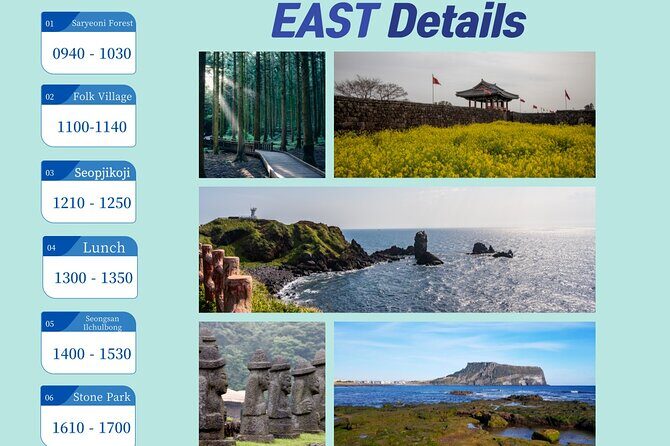
Next is Seongsan Ilchulbong, also called Sunrise Peak. This is one of Jeju’s iconic volcanic shapes: a tuff cone made by hydrovolcanic eruptions on a shallow seabed thousands of years ago. Even if you don’t catch sunrise, the crater bowl and the layered internal structures give you that unmistakable Jeju “how did nature do this?” feeling.
The route typically includes a Women Diver show with the stop. The show can add context to Jeju’s human side, not just its geology.
How long you’ll spend is usually around 1 hour 30 minutes, which is enough to take in views without feeling rushed. Still, wear shoes you can walk in comfortably; the terrain can be uneven depending on how crowded it is.

Seongeup Folk Village and the stone-roof defense idea
Seongeup Folk Village is where the day shifts from volcanoes to everyday survival architecture. The stone piles around buildings were designed to protect roofs from wind, and the village is preserved in a way that helps you picture how people lived long ago.
One useful option: the folk village part can be optional. If you want, you can select the Jeju folk village museum instead, with a short time commitment (about 30 minutes) and no admission fee listed for this optional museum slot.
The benefit of including this stop is balance. Jeju isn’t only scenery—it’s also history you can see in how homes were built. The only drawback is time: if you’re trying to maximize nature stops, you may find folk village less urgent than cliffs or beaches.
Beaches that feel like a breather: Woljeongri
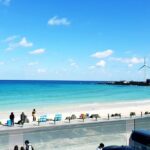
Woljeongri Beach is one of those stops where the pace slows down. You get a quick window (about 30 minutes) for white sand and calm ocean views, plus the area nearby has cozy cafes—so it’s an easy place to grab a drink and reset.
This stop is also listed as free admission, which helps keep your budget controlled. If the weather is good, it’s one of the more relaxing parts of the day.
If the weather is rough, this is still worth a quick look, but your best bet is to treat it as a short photo-and-walk stop rather than a long beach day.
Bijarim Forest: world’s largest single-species forest
Bijarim Forest is one of the most unusual nature stops on the plan. It’s described as the world’s largest single-species forest of Torreyas, with about 2,800 trees that are said to be 500 to 800 years old. That age range changes how you see the canopy—your eyes keep trying to find the sky through branches.
The key visual: these old trees can block your view of the sky, creating a shaded, still feeling even when it’s bright outside. Admission isn’t included for this stop, so if you want to go in, plan around that cost.
Spending about 1 hour here gives you time to walk slowly, not just photograph and exit. If you want a break from volcanic spectacle, this is your breather with meaning.
Maze Land and Miro Park: stones, wind, and women (in a fun way)
Maze Land (also called Miro Park) is a surprising stop—in a good way. It uses basalt stone surroundings and the scent of the forest to create a scene that feels distinctly Jeju.
The theme connects to the idea that Jeju is known for stones, wind, and women. You’ll find puzzle-style attractions, a maze gallery, and even a 3D video about the history of mazes.
The trade-off: this stop is listed as not included for admission fees, so you may pay extra depending on what you choose to do. If you’re the type who enjoys interactive places, you’ll likely have fun with it. If you prefer nature and views, treat it like a short add-on rather than a main mission.
Haenyeo Museum when Manjanggul is closed
The tour includes the Jeju Haenyeo Museum (and it can also appear as an alternative when Manjanggul Cave closes). This is where the day turns from geology to people.
The haenyeo were described as the main breadwinners through diving and farming, and the museum exists to re-evaluate haenyeo culture and record and preserve their contributions—socially, economically, and historically. It’s also a reminder that Jeju’s identity isn’t only volcanic rock; it’s also strong community knowledge passed through generations.
Plan time around 40 minutes. Admission isn’t included for this stop, so again, this is one of those “you decide how much you want to pay” moments.
O’sulloc Tea Museum: Jeju’s first tea museum
Jeju’s tea side shows up at the O’sulloc Tea Museum, described as Korea’s first tea museum (opened in 2001). There’s also the Osulloc Tea Stone built beside it with tea experience and cultural programs.
This stop is listed as free admission, and it runs about 1 hour. Even if you’re not a tea obsessive, it helps the day feel less like a highlight reel and more like a tour of how Jeju people live and value local products.
Sanbangsan Mountain and the Sanbanggulsa Temple cave
Sanbangsan is a dome-shaped volcano, and the stop is tied to Sanbanggulsa Temple inside a cave. The name Sanbang is linked to a natural stone cave in the middle of the mountain, and the cave has a Buddha statue. There’s also a legend about water droplets from the ceiling being tears of love shed by a goddess who protects the mountain’s stone walls.
The tour time here is about 30 minutes, and this stop lists admission included. The value is that you get a compact version of spiritual Jeju with a dramatic natural setting.
Yongmeori Coast and Oedolgae: ocean made by volcanic force
On the south-coast style side, you may hit Yongmeori Coast, a volcanic beach made of ash ejected during explosions when hot magma met cold seawater. The name means dragon’s head, from its shape, and entrance may be restricted during rising tides or bad weather.
If Yongmeori Coast can’t be entered (rising tides or bad weather), the tour notes Mt. Songaksan as an alternative.
Another sea-stack viewpoint is Oedolgae, a sea stack formed by wave erosion from a volcanic eruption area. It’s about 20 meters high, and pine trees can regenerate at the peak.
These coastal stops are the kind that make you stop moving and just stare. They’re not long, but they hit hard visually—especially when the sky cooperates.
Waterfalls and cliffs: Jeongbang, Cheonjiyeon, and columnar basalt
Jeju is famous for dramatic water meeting ocean, and the tour includes several of those moments.
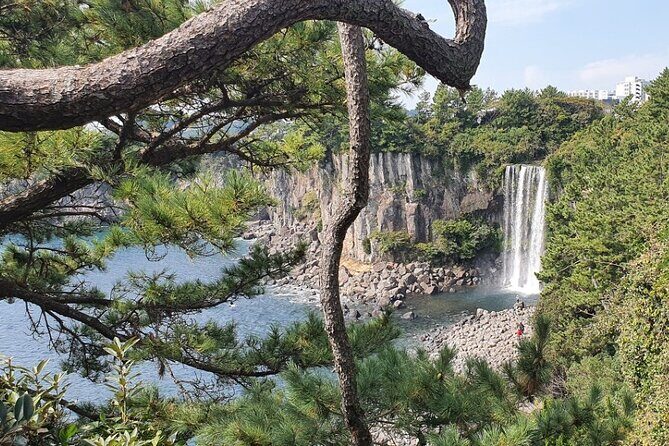
Jeongbang Waterfall is a standout: it’s described as the only waterfall in Asia that falls directly into the ocean. Expect about 40 minutes, with admission included.
Cheonjiyeon Falls is another “soundscape” stop: named as sky connected with land, and described as 22 meters high and 12 meters wide. Admission is listed as not included for this stop, and it’s about 1 hour.
For basalt drama, there’s Jusangjeollidae, famous for black cliffs formed when lava erupted into the sea. It looks like columns of charcoal-like black. Expect crowds—especially for photos—since the platform can get packed.
The practical advice: keep your plan flexible at these stops. Your time here is mostly about timing with crowds, not racing a checklist.
Yakchunsa Temple and the view down toward the sea
Yakchunsa Temple is one of the biggest Buddhist temples in Asia on this route, and the stop includes a scenic feel from the climb up to the garden. You can look down toward the coast from higher ground.
This stop is listed as about 40 minutes with free admission. If you like temples but hate spending half a day in museums, this is a nice compromise.
Tea, stone, flowers, and “little Jeju” parks
Depending on your route and the day’s substitutions, you might also see:
- Jeju Stone Park / Jeju Stone Museum, described as a museum and ecological park focused on Jeju stone culture (admission not included; about 1 hour).
- Camellia Hill, a 20-hectare park with around 6,000 camellia trees and 500+ species of plants, listed as not included (about 1 hour).
- Hueree Natural Life Park, described as a local, “little Jeju inside Jeju” type of place with a relaxed walk and a cute performance of black pigs (admission not included; about 1 hour).
These add variety when you want more than just coastline and caves. If you’re after the biggest geology hits only, you might skip the paid sites. But if you enjoy a balanced day—scenery plus culture plus local flavors—these stops can round things out.
Seasonal swaps: when the plan adjusts for closures and timing
Jeju days sometimes change based on weather and opening rules. This tour is set up for that.
Examples from the plan:
- If Manjanggul Lava Tube is closed (first Wednesday of every month), Jeju Haenyeo Museum becomes an alternative.
- Sangumburi Crater may replace Seopjikoji in October and November.
- If Yongmeori Coast is closed due to rising tides or bad weather, Mt. Songaksan is an alternative.
- There are also listed alternatives involving certain closures tied to dates (for instance, a note about a cliff closure leading to Camellia Hill as an alternative course).
This flexibility is a real value. You’re not left staring at a locked gate and hoping you can improvise a new day.
The one thing you should budget: lunch and the cash tip
Two costs aren’t included:
- Lunch and personal expenses
- A compulsory gratuity of 10,000 KRW per person paid by cash
That cash detail matters. Many people plan their day and forget tips until the end—then it becomes a scramble. Have the cash ready so you can keep your day smooth.
If you want to stay in control of spending, treat the paid admission stops (listed as not included) as optional add-ons, and decide on-site based on your energy and interests.
Should you book this Jeju taxi join tour?
Book it if you want a high-efficiency Jeju day without car rental stress. It’s especially good for solo travelers who want enough time to explore, not just a rushed circuit. The small group size (up to 13) and the way guides handle photos and pacing make it feel less chaotic than DIY.
Skip it (or at least think twice) if you’re chasing a very specific combination of routes in one day. The plan is structured around east, west, or south-style courses, and it’s not presented as a fully flexible mix for every pairing. Also, if you hate paying separate admissions, you’ll need to decide how you want to handle the stops labeled as not included.
FAQ
FAQ
What time does the Jeju Island Taxi Join Tour start?
The tour starts at 9:00 am.
Where is pickup and drop-off available?
Pickup and drop-off are available within Jeju City Downtown. Pickup outside downtown Jeju City is not available.
How many people are in the group?
The tour has a maximum of 13 travelers.
Are attraction admission tickets included?
The tour includes compulsory attraction entry admission fees, but some specific stops are marked as not included or optional.
Is lunch included?
No. Lunch is not included, and you’ll need to cover it yourself.
Do I need to pay a gratuity?
Yes. A compulsory gratuity of 10,000 KRW per person is required and is paid by cash.
Can I combine different routes in one tour?
The tour notes that the west tour and south tour course can be mixed, but it does not state that all combinations are available.
What happens if a main site is closed?
The plan includes substitutions. For example, if Manjanggul Lava Tube closes (first Wednesday of every month), the Jeju Haenyeo Museum is used instead. If Yongmeori Coast can’t be accessed due to rising tides or bad weather, Mt. Songaksan is listed as an alternative.
What if the minimum number of travelers isn’t met?
If the tour is canceled because the minimum isn’t met, you’ll be offered a different date/experience or a full refund.