REVIEW · INCHEON
Layover Tour for essential Seoul City & Gourmet tour(Incl. Lunch)
Book on Viator →Operated by Bergen travel · Bookable on Viator
A Seoul day in a tight layover window can feel impossible. This tour takes the stress out with a private guide and an 8-hour plan that bundles the city’s top sights with real food stops. You get from Incheon area gateways into Seoul, hit major landmarks, then head back to the airport or cruise terminal without you playing transport coordinator.
I particularly like the official, English-speaking guide level (you’re not stuck with vague explanations), and I love that lunch is built into the plan with a sit-down Korean meal. The mix of palace + hanok streets + markets gives you a full-spectrum Seoul day, not just a checklist.
One watch-out: if your timing is strict (cruise embarkation or flight deadlines), the day can become fast-paced, with some stops covered quickly and the market-food segment potentially shortened.
In This Review
- Key highlights I’d circle on your itinerary
- Why this layover-friendly Seoul plan works from Incheon
- Private pickup and an official-license guide you can actually ask questions
- Gyeongbokgung Palace: the main stage of Joseon-era Seoul
- Bukchon Hanok Village and Baek In-je’s House: traditional streets with explanation
- National Folk Museum and Jogyesa Temple: two kinds of culture stops
- Insadong and Cheonggyecheon: old-street vibe plus a breathing space
- Jinseng chicken lunch and the market-food finish at Gwangjang
- Price and logistics: what $359 gets you (and what it can cost you)
- Who should book this tour and who should skip it
- Should you book this Essential Seoul & Gourmet Layover Tour?
- FAQ
- How long is the tour?
- Where do pickup and drop-off happen?
- Is lunch included?
- Do vegetarians have options?
- Is admission included?
- Is this a private tour?
- Is free cancellation available?
Key highlights I’d circle on your itinerary
- Gyeongbokgung Palace plus guard-changing viewing timing when your schedule lines up
- Bukchon Hanok Village and traditional streets that actually feel like old Seoul
- National Folk Museum of Korea for day-to-life context beyond photos
- Jogyesa Temple in central Seoul, a calm contrast to the city rush
- Jinseng chicken soup lunch for a Korean “proper meal” instead of snacks
- Gwangjang traditional market street food tasting at the end of the day
Why this layover-friendly Seoul plan works from Incheon
If you’ve got limited hours in Korea, you’re usually stuck choosing between doing too much—or doing too little and spending the day lost in transit. This tour is built around the reality of layovers from Incheon (and it also mentions options involving Gimpo and Incheon seaport) so your time goes to sights and meals, not route-planning.
The biggest strength is the flow. You get driven into Seoul, you see a tight set of iconic places, you eat, then you’re transported back to the airport or port. That kind of “someone else handles the logistics” setup matters when your schedule is already doing parkour.
And it’s not just sightseeing. The day includes Korean food at two points: a lunch built around Korean soup culture, and a market-food tasting at the end. That gives your brain a break from monuments and your stomach a reason to stay patient.
You can also read our reviews of more city tours in Incheon
Private pickup and an official-license guide you can actually ask questions
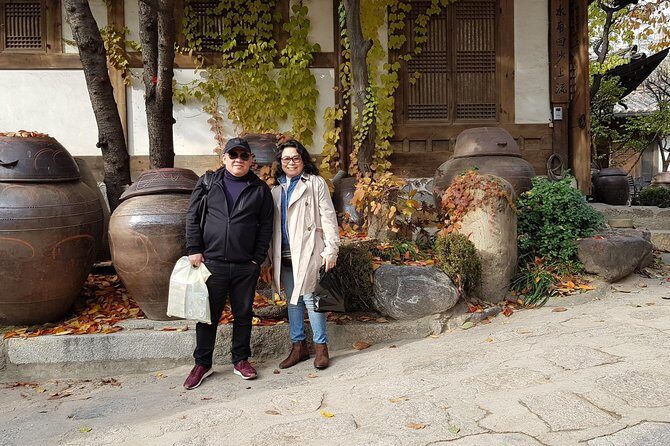
This is a private tour, meaning it’s only your group. That changes the day in a practical way: the guide can adapt to your pace and your interests, instead of you being one more face in a large bus line.
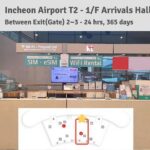
Pickup and drop-off are also key for layover travel. You can start from your hotel or directly from the airport/port, and you’ll be taken back after the tour. In past experiences with this operator, guides have been flexible about meeting points and return locations—like coordinating pickup from an airport and returning to the cruise port when ship schedules required it.
On the guide side, you’re not rolling the dice. The tour specifies a professional English-speaking guide with an official tour guide license. In real layover conditions, that matters because the best time to see something (like the palace guard sequence) depends on timing. A good guide helps you look at the right things in the right order.
Gyeongbokgung Palace: the main stage of Joseon-era Seoul
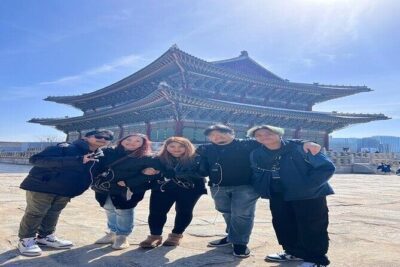
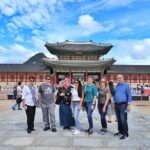
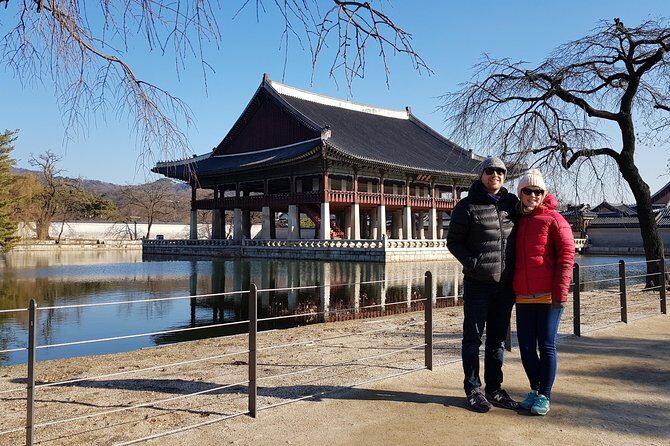
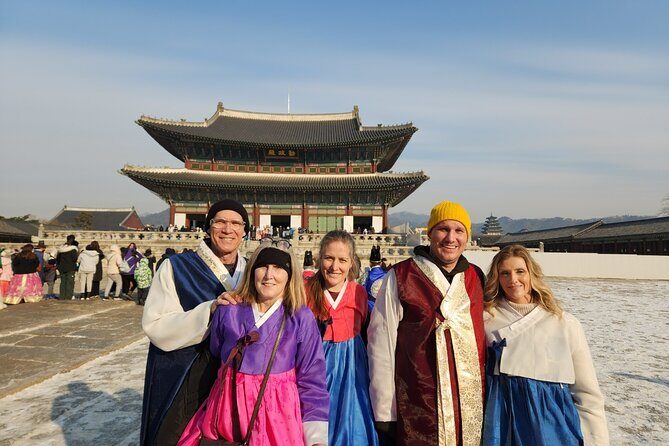
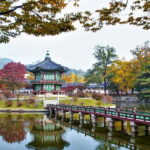
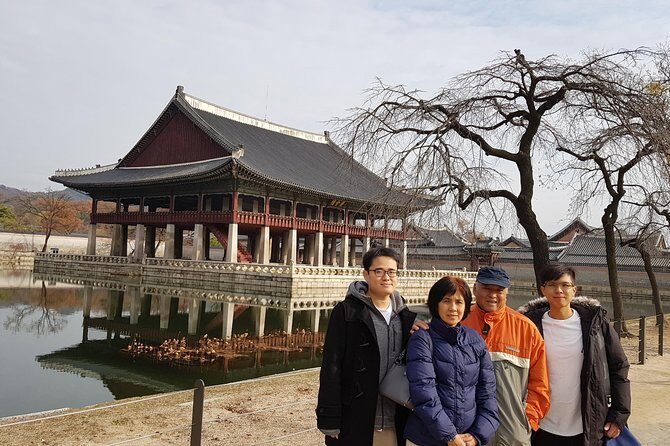
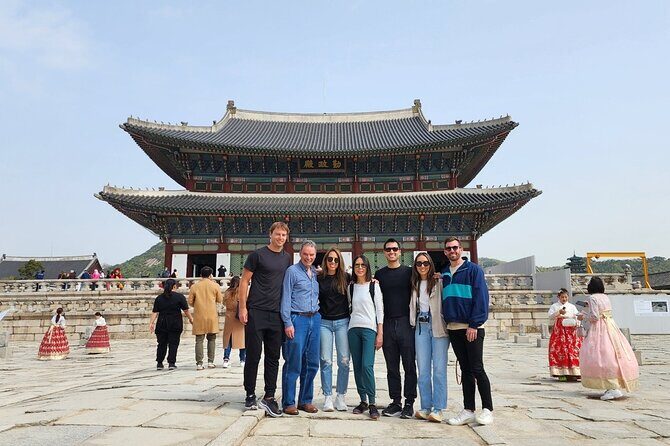
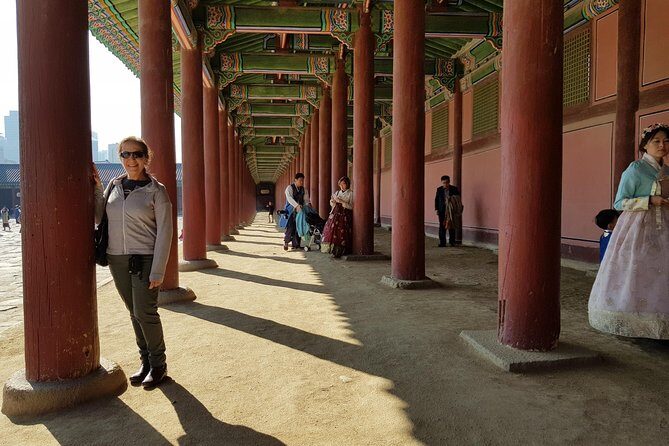
Gyeongbokgung Royal Palace is the big one. It’s described as the first of the five palaces built during the Joseon dynasty (built in 1395), and it uses traditional feng shui principles. Even if you only have about an hour here, it’s enough time to get oriented and appreciate why this palace anchors Seoul’s royal heritage.
Practically, plan to treat this stop as your “see it with context” moment. The tour includes admission, and the guide is there to connect what you’re looking at to how Joseon-era life worked. If the timing lines up, you can also catch the changing ceremony of the Royal Guards—one of the most memorable highlights people mention with this kind of palace visit.
A possible drawback? Palace days can mean walking and standing in lines. With a layover schedule, you may not have hours to wander like a weekend visitor. Still, this is one of the best places to spend your limited time because the palace grounds do the storytelling for you.
Tip: If you’re trying to maximize photo time, ask the guide where to stand before you start drifting through the crowd. It saves minutes that you can’t afford later.
Bukchon Hanok Village and Baek In-je’s House: traditional streets with explanation
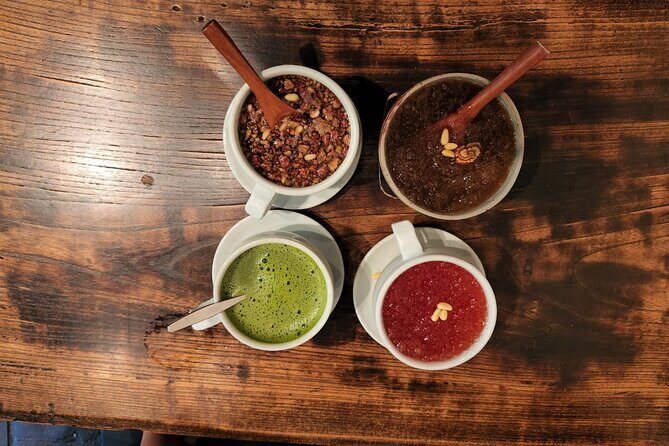
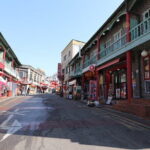
After the palace, you move into Bukchon Hanok Village, a traditional residential area made up of hanok—those tiled-roof houses you see in a lot of Korea ads but rarely understand without context. The tour frames the village with the idea of its location (buk meaning north, chon meaning village) and the reality that modern growth has changed what remains.
You’ll get a shorter visit here—around 30 minutes—so aim for quality over deep wandering. The value is in walking the streets and understanding what makes a hanok different from modern housing. It’s also where the day starts to feel more “alive,” because you’re not only viewing buildings—you’re moving through a neighborhood-like setting.
Then you’ll also visit Baek In-je’s House, described as a museum and cultural heritage site inside the Bukchon area. It’s well preserved, and the tour notes it sits on an elevated plot, which can help you appreciate how terrain and architecture worked together.
Why this matters on a layover: you’re compressing Seoul’s contrast—royal power at Gyeongbokgung, then everyday traditional life in hanok form. If you only do one “old Seoul” zone, I’d choose this combo because it’s visually distinct and culturally explained.
National Folk Museum and Jogyesa Temple: two kinds of culture stops
The tour includes the National Folk Museum of Korea, and this is more than a quick photo op. The description focuses on Korean life from birth to grave, so you get the “how people lived” angle instead of only seeing monuments and costumes. The stop is about 30 minutes, which means it’s likely paced for understanding rather than slow browsing.
One practical note: museum time can be the easiest to feel rushed during a layover. There’s a real possibility you’ll move through sections quickly so you can keep the rest of the day on track. That said, it’s still a useful stop because it helps you connect what you’re seeing outside with how culture actually worked.
Then you’ll go to Jogyesa Temple, a major Buddhist temple in central Seoul and the headquarters for the Jogye Order of Korean Buddhism. It’s a strong contrast to palaces and markets: you get a quieter, more reflective atmosphere right in the middle of the city.
What I’d watch for: temple etiquette and your own pace. Even if the stop is only about 30 minutes, it’s enough to see key areas and reset your head before you head into more street-level scenes.


Insadong and Cheonggyecheon: old-street vibe plus a breathing space
Next comes Insadong, a traditional cultural area known for old Seoul character and a history tied to the Joseon dynasty’s painting office. In practical terms, this is your chance to wander lightly, observe crafts, and feel the “street Seoul” vibe without needing to negotiate a full self-guided route.
Then the tour moves to Cheonggyecheon Stream, a roughly 11 km waterway running through downtown Seoul. The tour explains the stream was natural until the Joseon dynasty, and later the area was rebuilt after the Korean War when refugees lived there. Even with about 30 minutes, it works as a walking reset.
This pairing makes sense in a layover schedule because Insadong gives you traditional street texture, and Cheonggyecheon gives you a calmer, linear route to walk and breathe.
Tiny reality check: both of these stops can involve some walking. If you arrive with tired legs, bring comfortable shoes. Seoul floors are not forgiving when you’re in a time crunch.
Jinseng chicken lunch and the market-food finish at Gwangjang
Let’s talk food, because this tour is trying to solve the layover problem: eating that’s easy, and eating that’s worth your time. Lunch is a Jinseng Chicken soup at a famous quality local restaurant. That’s a big difference from eating random snacks between sights. Soup also helps you handle Seoul weather and stamina—especially if your day starts early.
Importantly, the tour states it provides vegetarian foods for vegetarians. So you’re not stuck with guessing whether you can eat something meaningful at each stop.
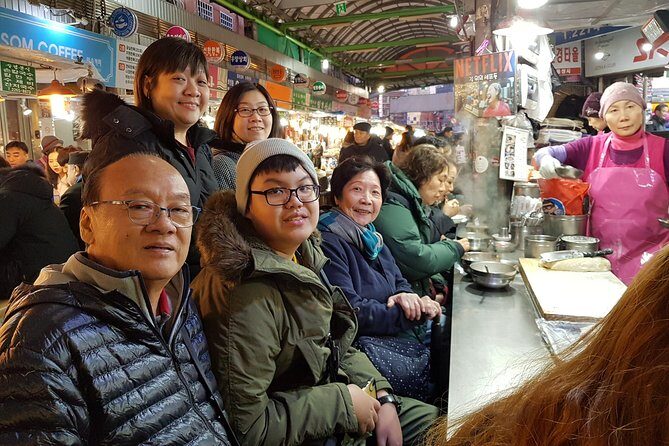
At the end of the tour, you get a chance to taste street food at Gwangjang traditional market, which is described as Korea’s first commercial market (opened in 1905). The stop is about an hour, and the tour frames it as an opportunity to sample various kinds of popular street foods.
Now for the honest part. One review shared that the street-food dinner portion may get shortened depending on timing—especially with cruise schedules. That’s not a reason to skip the tour, but it is a reason to keep your expectations grounded if you’re racing a boarding clock.
My practical advice: If street food is a top priority for you, say it upfront to the guide at pickup. They can often adjust the order of choices within the market time you have.
Price and logistics: what $359 gets you (and what it can cost you)
At $359 per person, you’re paying for a package: private transport with an air-conditioned vehicle, hotel/airport/port pickup and drop-off, a licensed English-speaking guide, admissions, and included meals (lunch and street-food tasting/dinner as described). For a layover day, that can be good value because the alternative is paying for pieces separately while also burning time on planning.
The hidden cost on independent travel is time. Getting from Incheon area gateways into Seoul and back is the part that eats hours. Here, you trade money for a schedule someone else built—and that’s often the right trade when you only have one shot.
The main “cost” you should consider is the pacing. A route that packs Gyeongbokgung, Bukchon, museums, a temple, traditional streets, a stream, and a market into one day is always going to feel brisk. If your body prefers slow travel, this might feel like a sprint.
Also, the day length is listed as about 8 hours, and layovers can be unpredictable. Your exact experience depends on your start point and the timing needed to return to your flight or ship.
Who should book this tour and who should skip it
This is a strong fit if:
- You want the essentials of Seoul without figuring out transit and tickets while stressed about timing.
- You like guided context—what things mean, not just what they look like.
- Korean food is part of the experience for you, and you want lunch plus a market-food tasting.
It’s not the best fit if:
- You dislike walking and standing for short bursts (this itinerary has several compact stops).
- You need lots of unstructured time for browsing or deep museum exploration.
- You’re counting on a long street-food dinner window no matter what. With tight departure times, that portion can be shortened.
If you’re traveling as a family or a small group and want one plan that “just works,” private pickup plus an English guide is the appeal.
Should you book this Essential Seoul & Gourmet Layover Tour?
If you’ve got a layover (or a cruise day) and you want Seoul’s headline sights plus real food, I’d lean yes. The tour’s value comes from bundling the hard parts: transportation, admission, and an English-speaking guide who helps you make timing decisions—especially around palace highlights.
I’d book it if your priority list includes Gyeongbokgung Palace, hanok streets in Bukchon, and at least a taste of Korean market food at Gwangjang. The Jinseng chicken soup lunch is a very “this is why you’re here” kind of inclusion, and the vegetarian note is reassuring.
I’d hesitate if you’re the type who needs slow sightseeing, long museum wandering, or guaranteed market-food time regardless of departures. In those cases, you might prefer a shorter, single-area Seoul plan—so you don’t feel rushed.
FAQ
How long is the tour?
The tour is listed as about 8 hours.
Where do pickup and drop-off happen?
Pickup can be from your hotel or from the airport/port, and the tour ends with drop-off back to the airport or cruise terminal.
Is lunch included?
Yes. Lunch is included and features Jinseng Chicken soup at a local restaurant.
Do vegetarians have options?
Yes. The tour states it provides vegetarian foods for vegetarians.
Is admission included?
Yes. Admission fees are included for the sights listed in the tour details.
Is this a private tour?
Yes. It’s private, and only your group participates.
Is free cancellation available?
Yes. You can cancel for a full refund up to 24 hours before the experience’s start time.