REVIEW · SEOGWIPO
Jeju Unesco Eest course Package Private Van Guided Tour
Book on Viator →Operated by KOREA JOY TOUR · Bookable on Viator
A full Jeju East UNESCO day, handled. You get a private van route that strings together UNESCO nature heritage and Jeju culture in one stretch, with a local guide doing the explaining so you spend less time guessing and more time looking. It’s built as an easy day: picked up, guided between stops, then dropped back near where you started.
Two things I really like: the guide work and the pacing of the sights. Our guide, Mickey, mixed history, humor, and practical tips, and even helped with photos (plus he had that K-pop singing voice that kept the vibe light even when the weather turned). And the itinerary hits the big “Jeju East” moments without feeling like you’re racing across the island.
One thing to consider: the day is fairly packed, and lunch isn’t included. If you’re the type who likes long, slow stays at viewpoints, you may find you’re moving on before you’re ready—especially if rain or fog affects timing.
In This Review
- Key highlights you’ll care about
- A private van that turns Jeju East into an easy plan
- Price and value: $470 per group isn’t just transportation
- Stop 1: Saryeoni Forest Path and the oreum cones
- Stop 2: Seongeup Folk Village (culture preserved from 1410–1914)
- Stop 3: Gwangchigi Beach and the Olle trail viewpoint angles
- Stop 4: Seopjikoji coast—canola season and peak views
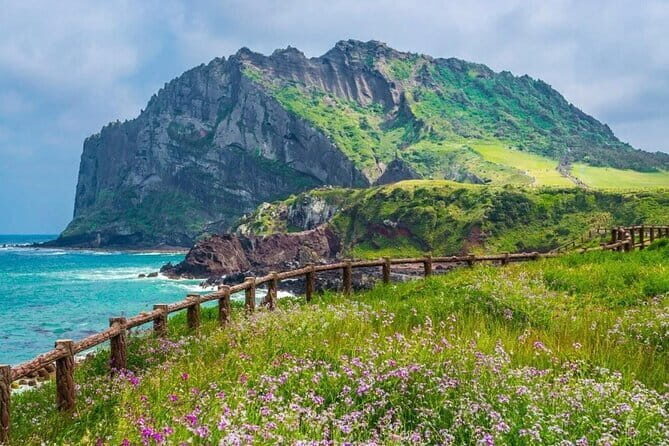
- Stop 5: Seongsan Ilchulbong Peak—the UNESCO highlight you’ll remember
- Stop 6: Haenyeo Museum—culture before the coast fades
- The guide experience: why Mickey made the day feel personal
- Weather, pacing, and comfort: how the route handles real life
- Should you book this Jeju East UNESCO private package?
- FAQ
- How long is the Jeju Unesco East course private van guided tour?
- What is the group size limit for this private tour?
- Where are pickup and drop-off offered?
- Are admission fees included for the attractions on the route?
- What attractions are included in the itinerary?
- Is lunch included?
- What languages are the guides available in?
- Is the tour vehicle air-conditioned and are vehicle costs included?
- Is there an extra fee for guests staying on the west side of Jeju?
- What is the cancellation policy?
Key highlights you’ll care about

- Private group, up to 8 people: you’re not squeezed into a crowd, and stops feel less rushed.
- Mickey-style guiding: you get clear cultural context plus help with photos when the best angles show up.
- UNESCO nature focus in one day: Saryeoni forest walk, Seongsan Ilchulbong, and the East-coast chain of viewpoints.
- Haenyeo Museum is included: you learn about Jeju’s haenyeo culture before you leave the coast behind.
- Admissions covered for listed stops: you pay for less on the spot (just not lunch).
A private van that turns Jeju East into an easy plan
Jeju can be simple and complicated at the same time. It’s big enough that driving on your own can turn into a full-time job, but it’s also the kind of place where the best moments come from small stops—forest paths, seaside angles, and short walks that don’t look like much on a map. This tour solves that by bundling the popular East-side sights into one 8.5-hour guided circuit out of Seogwipo.
I also like that the tour is designed like a package. You’re not left to coordinate transport, tickets, and directions for multiple places in one day. You show up, meet your guide, get in an air-conditioned vehicle, and then the day becomes a series of short, manageable blocks.
The private format matters. With only your group involved, you can ask questions without feeling like you’re talking to the front row of a bus. And if the weather changes, your guide can adjust on the fly—something you’ll really appreciate on Jeju.
You can also read our reviews of more guided tours in Seogwipo
Price and value: $470 per group isn’t just transportation
Let’s talk money in a practical way. The price is $470 per group (up to 8 people). That means the cost per person swings a lot depending on how many of you book.
- If you fill the van with 8 people, it’s roughly $59 per person for a full guided day with admissions included (still excluding lunch and drinks).
- If you book as a smaller group, the value is still there, but you’re paying more per person for the convenience of private pickup and direct transport between stops.
What makes the price feel fair is what’s included. Admission is covered for the stops on the route, and the guide fees and vehicle costs (including fuel and parking) are also included. In other words, you’re paying for the planning and the logistics, not just a seat in a car.
Two cost notes to watch:
- Lunch isn’t included, so you’ll want to budget for it.
- If you’re staying on the west side of the island, there’s an extra charge of ₩50,000 per booking. If you’re not sure which side you’re on, ask before you book—this matters.
If you’re thinking about booking, do it sooner rather than later. This kind of tour is often reserved about 52 days in advance, which tells me the time slots and vehicle availability can get tight.
Stop 1: Saryeoni Forest Path and the oreum cones
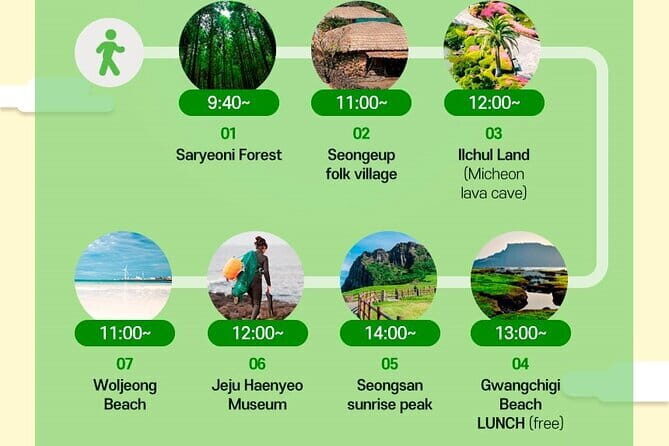
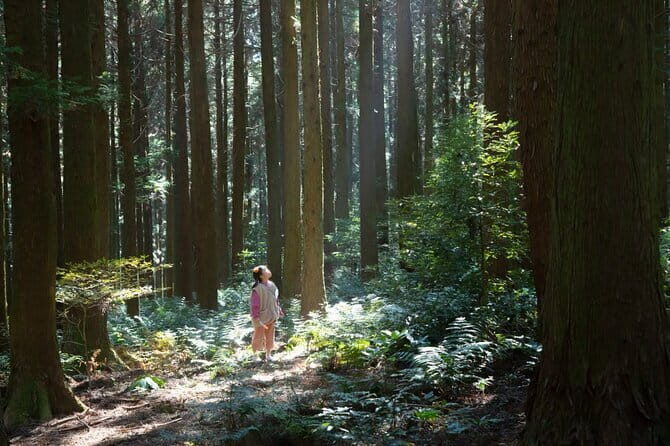
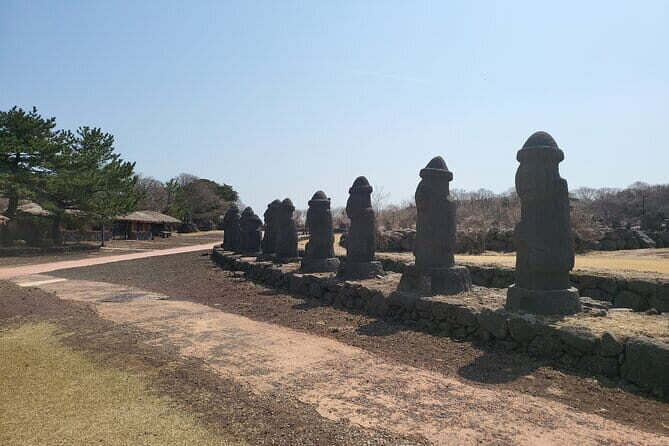
The day opens with Saryeoni Forest Path, a walking trail that starts from Bijarim-ro and goes through Mulchat Oreum and Saryeoni Oreum volcanic cone areas. You’ll get about an hour here, with admission free.
What you’re getting isn’t just a “pretty walk.” The forest path is a good way to understand how Jeju’s volcanic geography shows up in everyday nature. Even if you don’t know the terminology, a good guide can connect the dots between cones, terrain, and why Jeju looks the way it does.
Practical consideration: expect some walking on a trail. The tour notes say moderate physical fitness is recommended, so if you’re prone to fatigue, plan your day so you’re not already exhausted from the previous night. Also, this first stop is often easier when the air is clear—heavy rain can slow the whole route.
If the weather is iffy, I’d treat this as your “get the nature grounding early” stop. Even when conditions aren’t perfect, a forest walk is a calmer start than racing straight to a peak.
Stop 2: Seongeup Folk Village (culture preserved from 1410–1914)
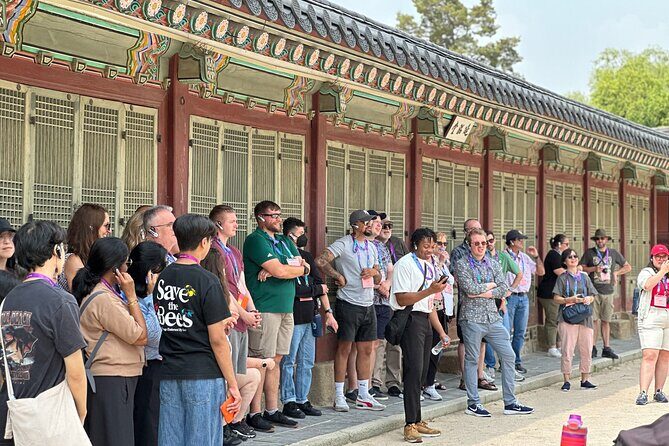
Next comes Seongeup Folk Village, scheduled for about an hour, with admission also free. This place is described as a small town holding cultural properties handed down across a long period, from 1410 to 1914.
Why it works on this tour: it’s a change of pace from nature. After a forest trail, you shift into living heritage. It’s also easy to spend an hour here without feeling like you missed something—your guide can focus your attention on what’s important and explain how this kind of preserved village connects to Jeju’s identity.
What to watch for: if you’re hoping for a lot of hands-on activities or a modern shopping street, this isn’t that kind of stop. It’s about cultural context and atmosphere, so come ready to look and listen.
And here’s where the guide really helps. When you understand what you’re looking at, the village stops being a set of buildings and becomes a story about how people lived, traded, and carried tradition forward.
Stop 3: Gwangchigi Beach and the Olle trail viewpoint angles
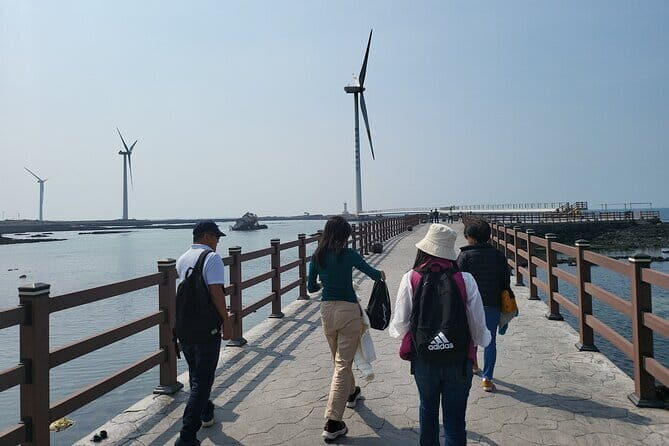
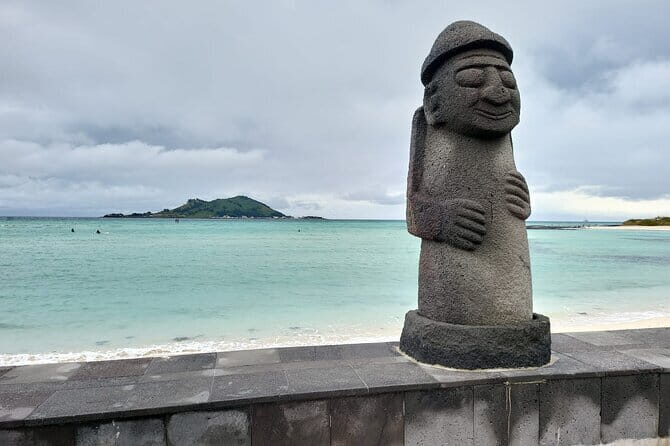
Then you head to Gwangchigi Beach, a shorter stop (about 30 minutes) and one of Jeju’s Olle trail areas. The big draw is the viewpoint: you can see the side view of Seongsan Ilchulpeak from here.
This is a great “camera stop,” because it gives you an angle of the peak that you won’t get from every other viewpoint. The time is short on purpose. You’re not stuck wandering; you’re getting an efficient taste of the coast and then moving on while the light is still usable.
A quick practical note: coastal spots can feel cooler or windier than you expect. If you’re prone to feeling cold, bring something light. If it’s pouring rain, you might not linger much—don’t fight it. Use your time to grab a few photos safely and keep the day moving.
You can also read our reviews of more private tours in Seogwipo

Stop 4: Seopjikoji coast—canola season and peak views
Seopjikoji comes next, around an hour, also free. The coastline here is known for canola flowers in spring, with Seongsan Ilchulbong Peak rising in the background.
Even if you’re not traveling in canola season, the composition still makes sense. Jeju East is about layered views—ocean, cliffs, and volcanic forms aligned across the horizon. Seopjikoji is one of those places where your brain finally goes, Oh right, this is why people talk about Jeju’s coastline like it’s special.
Two things I’d do here:
- Look for how the coastline curves toward the peak. The peak is the anchor.
- Let the guide point out which sightlines matter for photos. A small change in where you stand can make a big difference.
If it’s rainy, this stop can feel like a “safety-first photo check.” Still worth it for the perspective, but keep your expectations flexible. Jeju weather can do what it wants.
Stop 5: Seongsan Ilchulbong Peak—the UNESCO highlight you’ll remember
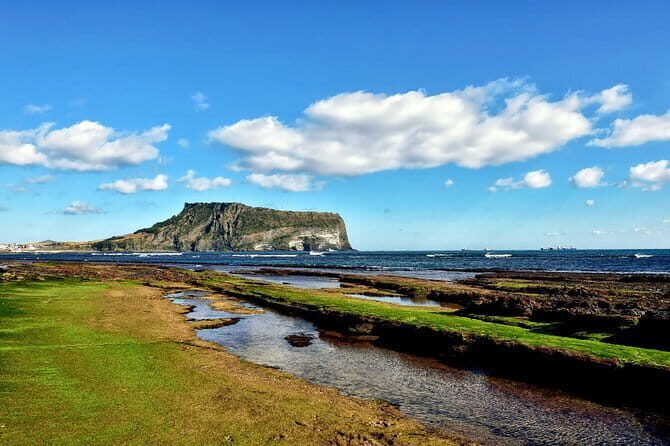
At Seongsan Ilchulbong Peak, the itinerary budgets about an hour, with admission included. This is the centerpiece: the peak is listed as 180 meters above sea level, and it’s described as a rare case where an underwater eruption formed the crater around 5,000 years ago.
This is where the UNESCO nature heritage becomes real in front of your eyes. It’s not just a scenic stop; it’s a geology stop. The shape and origin story help you understand the island as something built by volcanic forces rather than just a place with beaches and waterfalls.
Practical considerations:
- The time is tight enough that you’ll want to move with purpose but not panic. Use the hour to enjoy the views and still have time for photos.
- If the sky is clear, the visibility tends to make everything look sharper. If fog or rain is heavy, the viewpoint can still be worth it, but you may not get the dramatic long-distance views.
In our case, rain came through strongly earlier in the day, then eased up as we headed back. That’s the pattern I often see on Jeju East: the weather can shift, and if your timing is good, you catch the sky opening at least partway.
Stop 6: Haenyeo Museum—culture before the coast fades
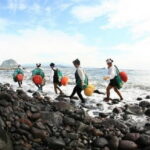
After the peak, the tour includes a visit to the Haenyeo Museum for about an hour, with admission included. The museum introduces the world to haenyeo culture—Jeju’s famous female sea workers.
Why this matters on the same day: you’ve been looking at geology and coastlines all morning. Then the museum gives your brain a human connection. It turns Jeju from scenery into livelihood and tradition.
Also, this stop is good because it’s more sheltered than outdoor viewpoints. If your day has had rain, a museum visit helps you reset. Even when weather changes, you can still keep the day moving without constantly rushing to find cover.
What I’d pay attention to: how the museum frames the culture and the activities of haenyeo. Your guide can connect what you see in the museum to what you’ve been watching outside—the island’s ocean setting is the link.
The guide experience: why Mickey made the day feel personal
A guided day on Jeju can either be informative or flat. What makes this tour shine is that the guide is built into the product, not treated like background noise. The tour includes a Pro English or Chinese-language guide, and the goal is clear: explain Jeju’s nature, historical context, and cultural details.
In our group, Mickey was a standout. He was fun and helpful, he knew his Jeju inside and out, and he also took the time to help with photography so everyone went home with better pictures, not just random shots. His K-pop singing voice didn’t feel forced—it acted like a pressure valve between stops.
You’ll get the best day from this tour if you use your guide’s knowledge actively:
- Ask what to look for at each stop before you get out of the van.
- Tell them what kind of photos you like (wide landscapes, close details, or people-free compositions).
- If the weather is changing, ask what they think the best window will be.
A day like this isn’t just about showing up. It’s about understanding while you’re there.
Weather, pacing, and comfort: how the route handles real life
Jeju weather can turn plans into a scramble. This tour helps because the route is already sequenced, and you’re not relying on public transit or self-driving between far-flung stops.
You’ll be in an air-conditioned vehicle, with parking and fuel handled. Pickup and drop-off are included from your location in Jeju, and you receive a mobile ticket. Those details sound small, but on a rainy day they reduce stress fast.
Still, pacing is real. This isn’t a slow countryside weekend where you linger for hours. It’s a day tour with short blocks—30 minutes to an hour most places. If you’re the type who loves to sit and watch clouds for 45 minutes, plan to treat each stop as a highlight run.
My practical advice:
- Wear shoes you’re comfortable walking in, even on damp ground.
- Bring a light rain layer if your dates are in the wetter months.
- Plan lunch as your main break. Since lunch isn’t included, treat it as your recovery time so the rest of the day stays enjoyable.
Should you book this Jeju East UNESCO private package?
Book it if you want a structured Jeju East day with UNESCO-focused stops, a guide who explains more than facts, and the convenience of private pickup and transport. It’s especially worth it if you’re traveling with family, friends, or anyone who doesn’t want to drive.
Skip it or consider alternatives if you want a very slow pace, long stays at each viewpoint, or a day that includes lunch as part of the package. Also think carefully about where you’re staying if you’re on the west side, since the extra ₩50,000 fee can affect your overall value.
If you want an efficient, comfortable way to see Seongsan Ilchulbong and learn the human side of Jeju right after—this is a solid booking.
FAQ
How long is the Jeju Unesco East course private van guided tour?
The tour lasts about 8 hours 30 minutes.
What is the group size limit for this private tour?
It’s a private tour limited to your group, up to 8 people.
Where are pickup and drop-off offered?
Pickup and drop-off are offered from your pick-up location in Jeju, and you’ll be dropped off near your accommodation after the sightseeing.
Are admission fees included for the attractions on the route?
Yes. Admission to all tourist attractions on the list is included, with lunch excluded.
What attractions are included in the itinerary?
The itinerary includes Saryeoni Forest Path, Seongeup Folk Village, Gwangchigi Beach, Seopjikoji, Seongsan Ilchulbong, and the Haenyeo Museum.
Is lunch included?
No. Food (lunch) and drinks are not included.
What languages are the guides available in?
The tour provides a Pro English or Chinese-language guide.
Is the tour vehicle air-conditioned and are vehicle costs included?
Yes. An air-conditioned vehicle is included, along with parking fee and fuel fee.
Is there an extra fee for guests staying on the west side of Jeju?
Yes. From west side accommodation, there is an extra charge of ₩50,000 per booking.
What is the cancellation policy?
Free cancellation is available up to 24 hours in advance for a full refund.