Gwangjang Market feeds your curiosity fast. This traditional market food tour turns a simple snack run into a guided walk through modern Seoul, with enough food variety to keep you interested from the first bite to the last. I especially liked how the guide connects what you’re eating to daily life in South Korea, not just facts on a page. And I loved the personal angle on the Korean peninsula’s division, shared through the guide’s experience in reserve forces.
The only downside to plan around: you’ll likely eat a lot. The portions are generous, and you’ll get multiple items that are better treated as a meal than a light taste, especially if you arrive hungry but also want to stay light for later.
For 2 hours, you’ll meet at Jongno 5 ga Station (Exit 8) and head straight into the stalls at Gwangjang Market. You should also know the exact menu can shift depending on what’s available that day.
In This Review
- Key things that make this tour worth your time
- Gwangjang Market as a food-and-life classroom
- Meeting at Jongno 5-ga and how the 2-hour pacing feels
- What you’ll actually eat at the market (and why the lineup works)
- Dumplings: the anchor bite
- Meatball: savory and street-food practical
- Korean Hotdog: for texture contrast
- Rice roll: chewy and satisfying
- Spicy rice cake: the heat check
- Fish cake: comfort food in stall form
- Sweet Korean pancake: the finish that resets your palate
- Fish-shaped bun: classic market nostalgia energy
- Water: small inclusion, big practical value
- The stories part: Seoul, everyday life, and the peninsula reality lens
- When the food feels like a meal, not snacks
- Price and value: what $100 buys you for two hours
- Who should book this tour (and who might prefer something else)
- Should you book Hidden Stories & Flavors: Traditional Market Food Tour?
- FAQ
- Where is the meeting point?
- How long is the tour?
- What language is the guide?
- How large is the group?
- What food is included in the tour?
- Is this a historical tour?
- Can the menu change during the tour?
- What are the cancellation and payment options?
Key things that make this tour worth your time
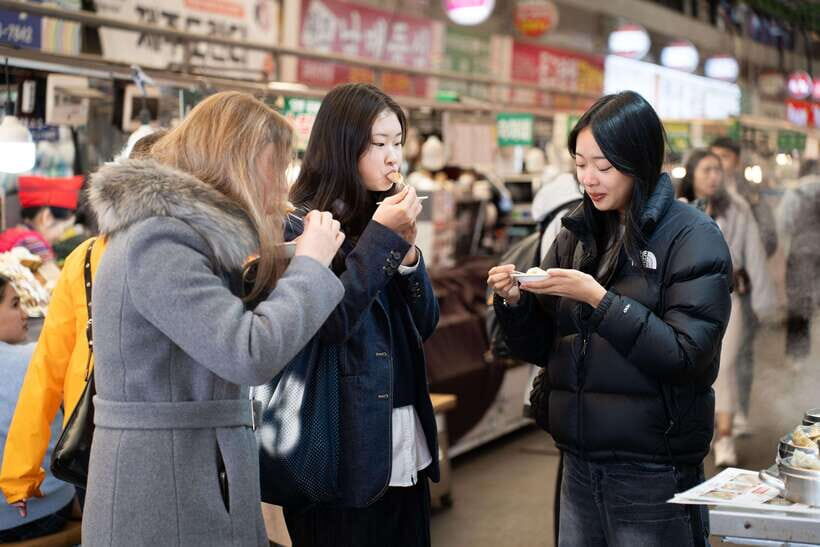
- Gwangjang Market food, guided so you taste more than what you’d randomly grab on your own
- English live guide who explains dishes clearly as you go
- Stories about Seoul and the peninsula including perspectives tied to reserve forces
- A real sampling meal with dumplings, hotdog, rice cake, fish cake, and more
- Small group of up to 10 for easier conversation and pacing
Gwangjang Market as a food-and-life classroom
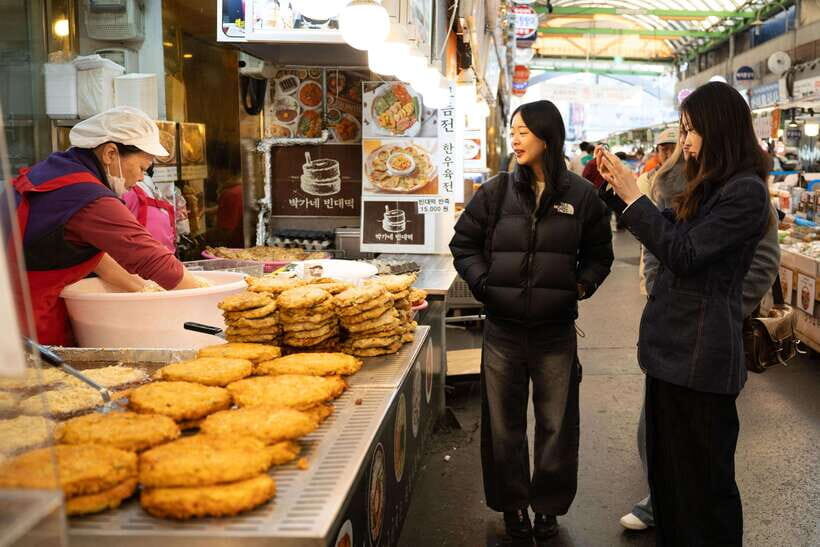
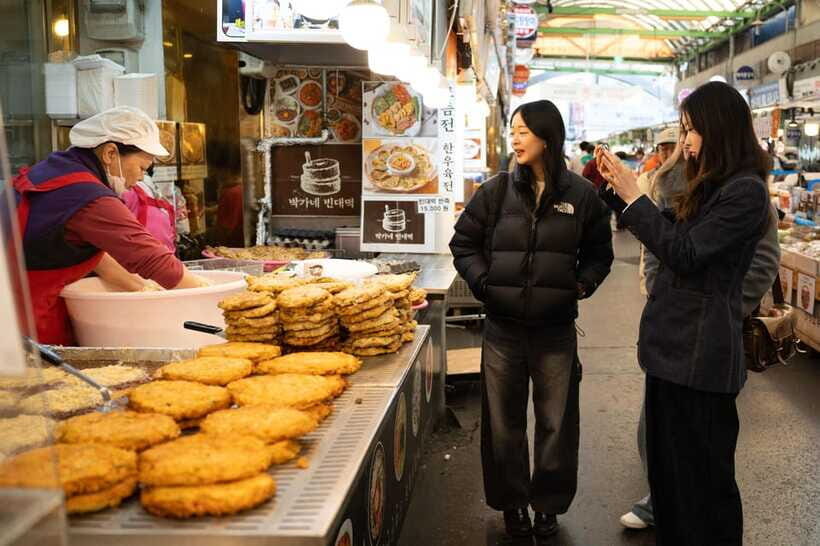
If you’ve ever wandered a Korean market and felt like you were guessing, you’ll get relief here. Gwangjang Market is the kind of place where food is the language. The smells pull you in, but the meaning can be hard to decode without a guide pointing out what’s typical, what’s comforting, and what people actually line up for.
What I like is that this tour doesn’t act like food exists in a vacuum. You’re not just collecting bites for Instagram. You’re also learning how market food fits into modern Seoul rhythms—what locals reach for, what shows up often, and why these stalls matter for everyday life. That makes the whole 2-hour stretch feel purposeful, not rushed.
And then there’s the storytelling layer. The tour aims at the realities of the peninsula’s division and Korea’s military from a perspective the guide can speak to directly as a member of the reserve forces. It’s not a lecture you have to endure. It’s woven into conversation while you eat, which is exactly where it makes sense.
Meeting at Jongno 5-ga and how the 2-hour pacing feels
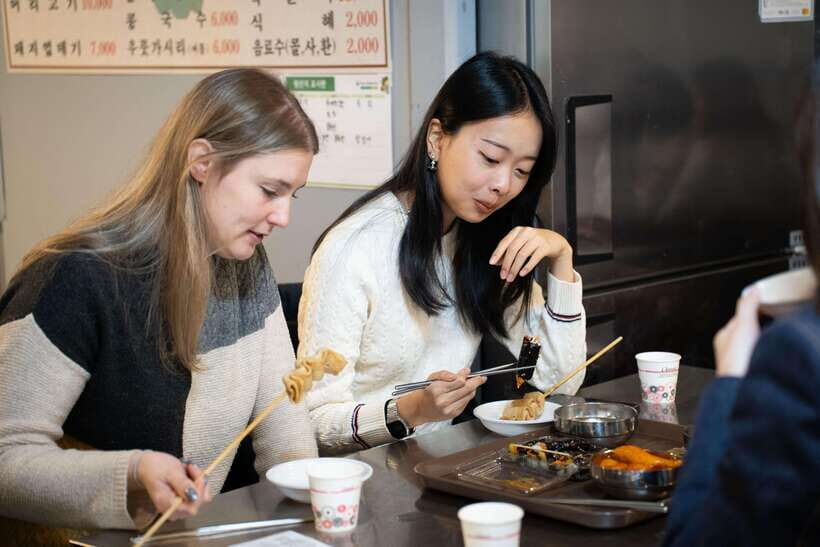
You’ll start at Jongno 5 ga Station Exit 8. That’s a practical setup because you can arrive by subway without stressing about cabs or finding a far-away entrance. Once you’re together, the group stays small—limited to 10 participants—which matters because you’re moving through a market. In a big crowd, walking and listening both get messy fast.
In a 2-hour tour, pacing is everything. You won’t spend long waiting in one place with nothing happening. Instead, you bounce between stalls and food types, so you’re constantly switching textures and flavors. Dumplings to hotdog-style street food to rice cakes to fish cake to pancake and buns keeps your palate awake.
Also, the guide is English-speaking and actively talks through what you’re eating. That means you’re not stuck with a one-way experience where you just nod and eat. If you want to ask follow-ups, a small group gives you breathing room.
One more heads-up: this isn’t billed as a historical tour. You’ll still hear context, but it’s about current realities and perspective, not a step-by-step timeline.
What you’ll actually eat at the market (and why the lineup works)
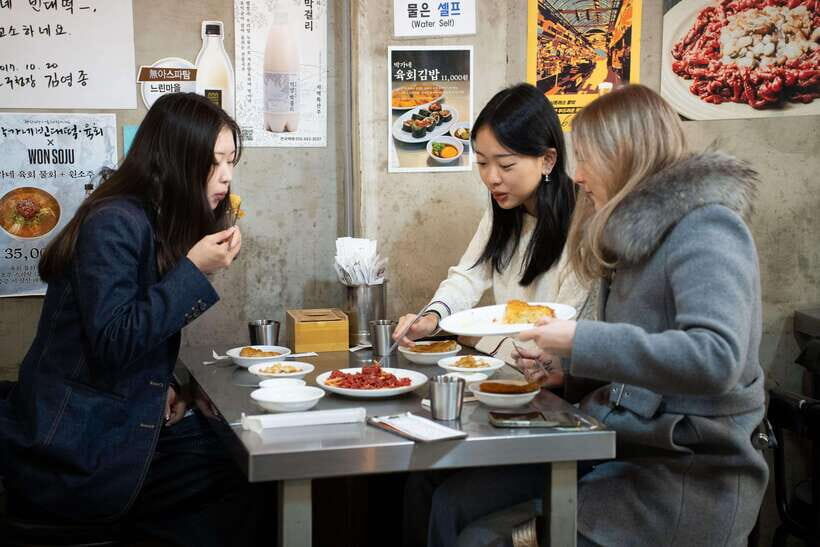
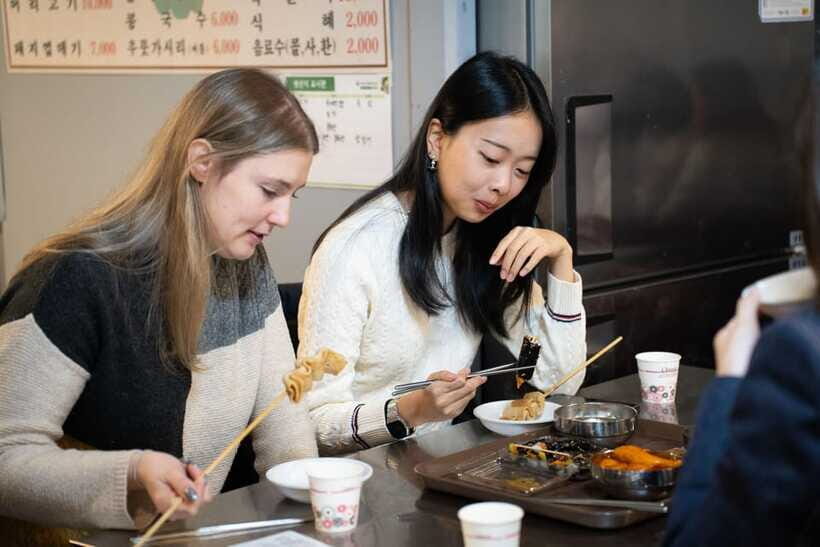
The tasting menu is built like a meal made of smaller decisions. You get enough variety to cover salty, chewy, crispy, and sweet—without the tour turning into one endless snack.
Here’s what’s included during the market run:
- Dumpling
- Meatball
- Korean Hotdog
- Rice Roll
- Spicy Rice Cake
- Fish Cake
- Sweet Korean Pancake
- Fish-shaped Bun
- Water
Dumplings: the anchor bite
Dumplings are a smart first stop because they’re comforting and easy to judge. They also set you up for noticing differences in chew and seasoning. When you taste a dumpling early, you start building a baseline for the rest of the market flavors.
Meatball: savory and street-food practical
Meatballs in markets are usually about simplicity and speed: eatable, shareable, and dependable. This is one of those bites that helps you stay relaxed. You’re not worried about etiquette. You’re just eating while you walk.
Korean Hotdog: for texture contrast
The Korean hotdog is your crunch-and-sauce moment. The point here isn’t just taste. It’s texture contrast. After dumpling and meatball, you get something different—often with a crisp exterior and a sticky, sauce-friendly vibe.
Rice roll: chewy and satisfying
Rice rolls bring that “I could keep eating this” chew. It’s also a nice change from skewered or fried items because it feels lighter than meat-heavy bites while still being filling.
Spicy rice cake: the heat check
This is the stop where you decide if you love spice or just want to enjoy it carefully. Spicy rice cake is often the one that defines the market experience for first-timers. Even if you’re not a heat person, you’ll likely appreciate how it balances with the sweeter or milder items that come later.
Fish cake: comfort food in stall form
Fish cake tends to be a dependable crowd-pleaser. It’s comforting, often warming, and a good bridge between the spicier bites and the sweeter ones. If you want something that feels cozy rather than intense, this is it.
Sweet Korean pancake: the finish that resets your palate
Sweet Korean pancake is the dessert-minded moment in the middle of a “meal.” This matters because markets often keep pushing savory. A sweet pancake gives you a clear break so the final items don’t all blend together.
Fish-shaped bun: classic market nostalgia energy
Fish-shaped buns are fun because they’re portable and visually memorable. The shape makes it feel like a market souvenir you can eat immediately. It’s also a good finale bite because it’s warm, handheld, and easy to enjoy while chatting.
Water: small inclusion, big practical value
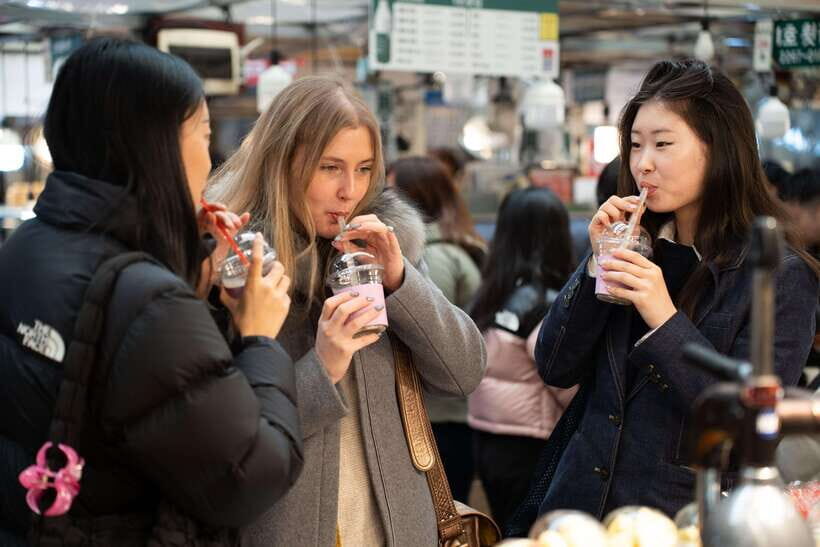
Having water included sounds minor, but in a market setting it’s practical. You’ll taste multiple items with spice and sauce. Water keeps the experience comfortable and helps you pace yourself so you can actually enjoy everything instead of rushing through.
The stories part: Seoul, everyday life, and the peninsula reality lens
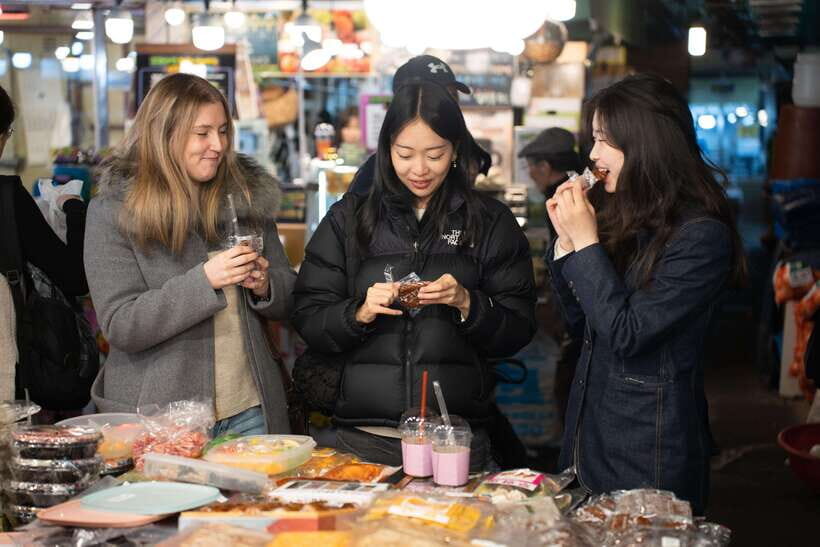
Food tours can sometimes stop at “this is tasty” and “this is popular.” This one goes further in a way that feels tied to the guide’s personal viewpoint.
The guide explains facts behind Seoul’s sights and connects them to how Korea feels day to day. You’ll also gain perspective on the Korean peninsula’s division—along with insights into Korea’s military that come from lived experience as a member of the reserve forces.
That last bit is the special sauce. When someone speaks from personal involvement, it changes the tone. Instead of hearing a debate from a distance, you hear a perspective grounded in responsibility and awareness. The tour’s framing makes it less about taking sides and more about understanding how everyday people think about what’s happening around them.
Also, the guide does this while keeping it understandable. In English, you can follow both the food explanations and the broader context. That’s why the tour is repeatedly recommended: the guide doesn’t just point and eat; he explains, and he keeps the pace conversational.
If you’re the type who likes your travel with a “why” behind it, this part is likely the reason you’ll remember it.
When the food feels like a meal, not snacks
Plan your morning or afternoon like you’re about to eat. The lineup includes eight distinct items, plus water. That’s not a quick sampler. It’s a full market meal, spread across a short walk.
One practical trick: if you want to feel comfortable during the spicy rice cake and still enjoy the sweet pancake and fish-shaped bun, I’d skip a heavy breakfast beforehand. Even better, eat something light earlier in the day and save your appetite for the stalls.
And be ready for the reality of stall eating. You’ll be standing and walking. Your hands will be occupied. Your time will be spent tasting, not sitting down. That’s how you experience a market like a local rather than a museum exhibit.
Finally, don’t overthink menus. The tour notes that the menu items may change based on circumstances. That’s normal for market-based food. What matters is that the included items list gives you a clear expectation: you’re coming for dumplings, rice cake, fish cake, sweet pancake, and a bun—plus the guide’s explanation along the way.
Price and value: what $100 buys you for two hours
At $100 per person, this isn’t the cheapest food tour. But it’s priced like something that includes real local guidance, English storytelling, and multiple tastings in one compact time window.
Here’s how I judge value:
- You’re paying for a guide to handle the food choices for you, which is a big deal in markets where ordering can be confusing.
- The group is small (up to 10), so your guide can actually talk and answer questions.
- The cost includes a full sequence of food items: savory, sweet, spicy, and handheld classics, plus water.
- The guide’s personal perspective on Seoul and the peninsula adds a layer you don’t get with random self-guided eating.
If you’re traveling with someone and you’d spend time figuring out what to order anyway, this starts to look like a smart shortcut. You also save mental energy. You just show up, follow the plan, and eat.
If you’re on an ultra-tight budget or you’re only interested in one or two items, you might find this feels pricier than it needs to. But if you want a guided market experience that actually teaches you something while you eat, it’s not out of line.
Who should book this tour (and who might prefer something else)
This is a great match if:
- you want market food with context, not just a list of dishes
- you like asking questions and hearing real perspective from a guide
- you’re comfortable eating a lot in a short time
- you want English guidance inside a busy place
You might skip it if:
- you don’t want spicy foods at all, since spicy rice cake is part of the included menu
- you’re looking for a pure sightseeing tour with a strict historical timeline (this is not that)
- you prefer sitting down for long stretches rather than standing and walking between stalls
Should you book Hidden Stories & Flavors: Traditional Market Food Tour?
I’d book it if you want a compact, high-return market experience: strong food variety, an English guide who explains as you go, and stories that connect what you eat to how Korea thinks about Seoul and the peninsula today.
If you’re on the fence, here’s the decision rule I’d use: if your ideal day includes tasting several Korean specialties in one go—and you enjoy learning through conversation rather than lectures—this tour should land well. If you want light sampling only, or you’re hungry but hoping to stay in control of portion size, pick your expectations accordingly and plan to eat less beforehand.
FAQ
Where is the meeting point?
You meet at Jongno 5 ga station, Exit 8.
How long is the tour?
The tour runs for 2 hours.
What language is the guide?
The tour is guided in English.
How large is the group?
The group is limited to 10 participants.
What food is included in the tour?
Included items are dumpling, meatball, Korean hotdog, rice roll, spicy rice cake, fish cake, sweet Korean pancake, fish-shaped bun, plus water.
Is this a historical tour?
No. It is noted as not a historical tour.
Can the menu change during the tour?
Yes. The menu items may change based on the circumstances.
What are the cancellation and payment options?
You can cancel up to 24 hours in advance for a full refund. There’s also a reserve now & pay later option (you pay nothing today).